
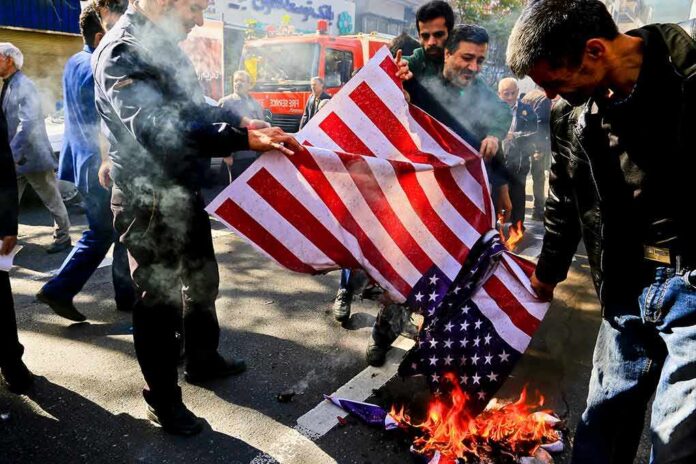
Iran’s regime used a state-run rally in Tehran to burn a giant banner of President Trump, Vice President JD Vance, and Israel’s Benjamin Netanyahu, just after Republicans lost the midterms.
Story Highlights
- Video shows a massive banner of Trump, Vance, and Netanyahu set on fire at a Tehran rally.
- Reports tie the event to a state-organized gathering at Enghelab Square on November 4, 2026.
- Crowds at the anniversary rally also burned U.S. and Israeli flags and chanted hostile slogans.
- Iranian outlets framed the act as a reaction to Republican midterm losses, though motives were state-shaped.
State-Directed Rally Marks Embassy Takeover Anniversary
Reports identify the banner burning as part of a government-organized rally in Tehran’s Enghelab Square on November 4, 2026, the date Iran marks the 1979 seizure of the United States Embassy. The event followed the U.S. midterm elections and drew large crowds, as it often does each year. Coverage called attendees pro-government demonstrators. That context shows the act as regime-choreographed political theater, not a spontaneous protest representing wider Iranian public opinion.
Video published by international outlets shows a towering banner featuring President Trump, Vice President JD Vance, and Israeli Prime Minister Benjamin Netanyahu set on fire as the crowd looks on. Some reports also mention United States special envoy and businessman Steve Witkoff as part of the display, underlining that the image targeted a group of leaders, not Trump alone. The timing, coming after Republican losses, was highlighted by several reports, linking the spectacle to U.S. election news.
Anti-U.S. Chants and Flag Burnings Amplify the Message
Accounts of the rally describe standard hallmarks of Iran’s annual anti-American events. Demonstrators burned American and Israeli flags and chanted “Death to America” and “Death to Israel” as part of the larger show of hostility. The setting aligns with a long pattern in which the regime uses the November 4 anniversary to stage images meant to project defiance abroad and unity at home. The banner burning fit that script and drew attention because it featured current U.S. leaders.
Iranian outlets and officials framed the midterm results as a setback for President Trump and his approach to Iran, claiming United States voters rejected his policy direction. That messaging served the regime’s narrative needs. It paired U.S. political news with Tehran’s yearly ritual to suggest global momentum against American pressure. The rally’s design and chants placed the spectacle within the government’s propaganda cycle rather than a bottom-up civic response.
Why This Matters for U.S. Voters and Allies
The Tehran display shows that hostile regimes watch U.S. politics closely and try to shape the story. Iran’s leaders seized on the Republican losses to mock American leadership and to paint President Trump’s team as weakened. Conservatives should read this as a reminder: adversaries exploit any sign of division. Strong borders, energy strength, and a focused security policy deter foes. Regimes like Iran look for moments when Washington is distracted by domestic fights to push their narrative.
Tehran Protesters Burn Banner of Trump, Vance, and Netanyahu After US Midterm Defeat#Tehran #Iran #USMidterms2026 #DonaldTrump #JDVance #Netanyahu #Geopolitics #MiddleEastCrisis #TNC #TheNewsCircle #TNCNewsPlushttps://t.co/8drILpO4n9 pic.twitter.com/Cd7eTJkxVG
— TNC News Plus (@TNCNewsPlus) November 5, 2026
The rally’s state-run nature also matters. Reports emphasize authorities organized the event and mobilized attendees, which limits what the scene says about everyday Iranians. Still, the images travel worldwide and can affect risk for U.S. partners in the region. Israel saw its leader on the same banner, underscoring how Tehran links its anti-American push with anti-Israel aims. That pairing signals intent, targets, and the continued need for firm, clear U.S. policy in the Middle East.
Sources:
youtube.com, news.com.au, aljazeera.com, economictimes.indiatimes.com, theaustralian.com.au