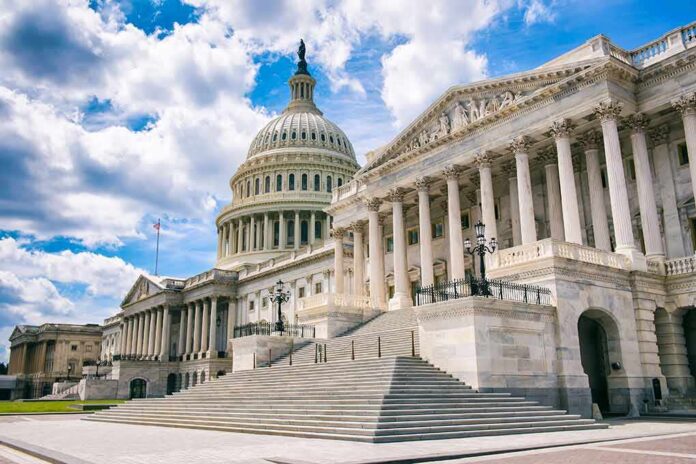
Democrats flipped seven Republican-held Senate seats and seized control of Congress, reshaping the balance of power in Washington.
Story Highlights
- Democrats netted seven Senate seats and won a working majority.
- Major outlets projected Democrats would control the Senate with at least 54 seats.
- Election night trackers showed Democrats leading House and governor races nationwide.
- The midterm date and scope matched the national election calendar on November 3, 2026.
Democrats Capture Senate Control With Multiple Flips
National election desks reported that Democrats flipped seven Republican-held Senate seats, giving them the upper hand in the chamber. Bloomberg’s results page showed a net gain of seven, with no Republican flips offsetting those wins. The Associated Press tallied a 54 to 44 Senate split favoring Democrats, while noting a small number of races still pending calls. CBS News also projected Democratic control of the Senate after identifying flips in key states like Maine, Iowa, Ohio, and North Carolina.
NPR’s live board listed 52 Democrats, two independents, and 44 Republicans, reflecting different counting methods for independents and uncalled contests. Despite these presentation differences, major outlets converged on the same takeaway: Democrats won enough contests to control the chamber. Those gains change the path for judicial picks, agency leadership, and spending debates, because Senate control shapes confirmations and sets the floor agenda for high-stakes votes.
House and Governor Results Extend the Blue Gains
The Associated Press national dashboard displayed Democratic wins across House races and Democratic victories in governor contests, including names like Amy Klobuchar in Minnesota and Josh Green in Hawaii. Live totals showed Democrats leading in the House, strengthening the party’s hand in Washington. While final House margins and the full list of governor flips were still developing during early coverage, multiple outlets aligned on the direction of travel: Democrats expanded power beyond the Senate.
The Associated Press reported named winners in contested states and logged Democratic advances across the map on election night. That scope matters for policy fights over energy, border security, and crime. A House under Democratic control can press for higher spending and softer immigration rules. A slate of Democratic governors can push green mandates and school policies that parents have resisted. Those moves test limits that many conservatives want Congress and states to restrain.
What This Shift Means Under President Trump’s Second Term
President Trump now faces an opposition Congress that can slow or change his agenda. Senate committees run by Democrats can block or stall nominees, rewrite spending bills, and add policy riders. A Democratic House can pass messaging bills on climate, guns, and elections. The White House must bargain harder to secure border enforcement, energy permits, and tax relief. The midterm shift raises the stakes for executive actions and for must-pass deadlines on funding and defense policy.
Historical patterns help explain the change. Midterms often punish the party in the White House. Reviews of past cycles show the president’s party usually loses seats in midterm elections, making this outcome consistent with long-term trends, even if the size of the shift varies by year. Still, the size of the Senate swing stands out. A seven-seat pickup is large by modern standards, and it hands Democrats leverage on courts and agencies for the next two years.
Key Races, Timelines, and Caveats
Election night coverage identified specific flips that built the Democratic path to 54 Senate seats, while two contests were still awaiting final calls in some tallies during early updates. CBS News also described Alaska and Mississippi as unresolved at one point, even as it projected the chamber result. The general election date and national scope matched the Associated Press calendar listing for November 3, 2026, covering Senate, House, and governor contests.
Grok explains :
•A projected 255-seat Democratic House majority (out of 435 total seats) would give soon-to-be Speaker Hakeem Jeffries a large cushion, allowing the party to lose roughly 35 Democratic votes on a given bill and still pass legislation without needing Republican…— Dr Arvind Virmani (@dravirmani) November 5, 2026
For conservatives, the policy road gets harder. Democrats will push spending packages that can fuel inflation pressures, and they will try again on gun limits, green energy rules, and federal rules that reach into schools and speech. The counter is focus and turnout. Policy fights now move to the committee rooms, the states, and the courts. Every call and vote will count as Congress reopens debates over the border, energy, crime, and parental rights — the core ground for the next two years.
Sources:
youtube.com, npr.org, apnews.com, britannica.com