

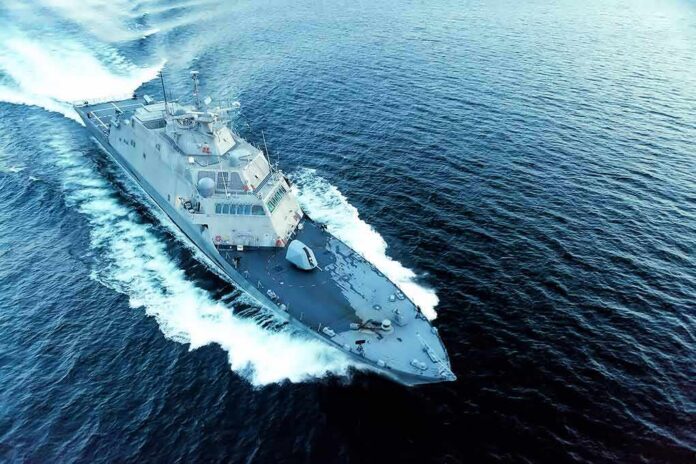
U.S. forces struck Iranian military targets after attacks on shipping near the Strait of Hormuz, escalating a conflict that now threatens global trade and American energy security.
Story Highlights
- U.S. and Israel launched strikes in 2026; Iran hit back, and U.S. forces responded again.
- Washington says Iran planted mines and fired on commercial ships in the Strait of Hormuz.
- The administration says the goal is to keep sea lanes open and protect the global economy.
- Iran vowed “proportionate” retaliation with no geographic limits after new threats.
Confirmed Combat Actions Since February: What Happened
U.S. Central Command reported fresh strikes on September 2, 2026, hitting Iranian air defenses, radars, maritime assets, mine-laying gear, and communications sites after an exchange of fire. ABC News reported the war began with joint U.S.-Israeli strikes on February 28 and noted additional U.S. strikes on July 14. These actions confirm a real shooting conflict, not just rhetoric. The pattern signals a cycle: strike, retaliation, and renewed U.S. action to blunt Iran’s reach and restore deterrence.
The White House and the Pentagon framed the mission as targeted and lawful. The State Department’s legal office detailed “Operation Epic Fury,” which laid out the basis for U.S. action under international law and the right to self-defense. That framework matters for allies, shipping firms, and insurers. Clear legal grounding helps keep a coalition on board and supports the push to protect sea lanes. Precision targets also aim to reduce civilian harm while degrading Iran’s tools of maritime pressure.
Strait of Hormuz: Chokepoint Under Pressure
The State Department said Iran tried to mine the Strait of Hormuz and attack shipping. U.S. forces moved to destroy mines and maritime threats to keep tankers moving. Secretary of State Marco Rubio said Iran kept firing on commercial ships, while U.S. forces guided stranded vessels through the strait. Reuters reported tanker attacks during a period when Iran had effectively closed the waterway, underscoring the risk to energy flows and global trade. The stakes are real for American families at the pump.
When a fifth of the world’s oil normally passes through a narrow channel, any disruption hits wallets at home. That is why U.S. messages focused on “freedom of navigation” and ending efforts to “hold the global economy hostage”. The administration also targeted the financial pipes behind Iran’s military muscle. In July, the State Department sanctioned networks that help the Islamic Revolutionary Guard Corps buy weapons parts, aiming to slow replenishment and raise costs for Tehran. Economic pressure supports the naval mission by choking supply lines.
Iran’s Retaliation Threats and the Risk of Wider War
Iran’s defense minister warned on October 30 that responses would be immediate, effective, and “without geographical limits,” signaling a reach beyond the Gulf if fighting resumes. That message fits Tehran’s past playbook: hit back where America and allies are exposed. Such threats seek to raise the price for protecting sea lanes. U.S. and Israeli planners, according to ABC News, even drew up options to renew joint strikes after the midterms, while the White House denied any attack before Election Day.
This cycle tightens choices. Each strike and counterstrike can push both sides toward a larger fight. President Trump has said the war will be “put away very soon,” but Washington continues to act to keep ships safe and starve Iran’s military networks. The near-term goal is simple: keep the strait open and stop attacks on civilians and commerce. The long-term goal is to force Iran to think twice before using mines, missiles, or drones against global trade lanes.
What Another U.S.–Iran Clash Would Look Like
Another round would likely start at sea and in the air. The United States would target Iran’s radars, coastal missiles, drones, mine layers, and fast boats, as it already has. Ships and aircraft would escort tankers through set routes. Cyber and financial moves would hit procurement chains and command links. Iran would try to strike back with drones, missiles, and proxy attacks, and by harassing ships to raise insurance costs and slow traffic through the strait.
🇮🇷🇺🇸🇮🇱 Iran threatens a wider war as Qatar pursues mediation.
In a statement issued Saturday, October 31, and attributed to Mojtaba Khamenei, Iran warned Washington and Israel that any renewed attack would trigger an immediate response without geographic restrictions.
The… pic.twitter.com/mkGkR2pSd2
— Seals Consulting (@Consulting4502) October 31, 2026
For conservatives at home, the mission is clear: defend free navigation, protect our economy, and back our troops with decisive rules. Every mined channel, every threatened tanker, and every strike on civilians is an attack on basic order. Limited, precise force—paired with sanctions on the Islamic Revolutionary Guard Corps networks—backs up that order. The Constitution tasks our leaders to provide for the common defense. Keeping the strait open does exactly that.
Sources:
realcleardefense.com, state.gov, reuters.com, abcnews.com, cbsnews.com