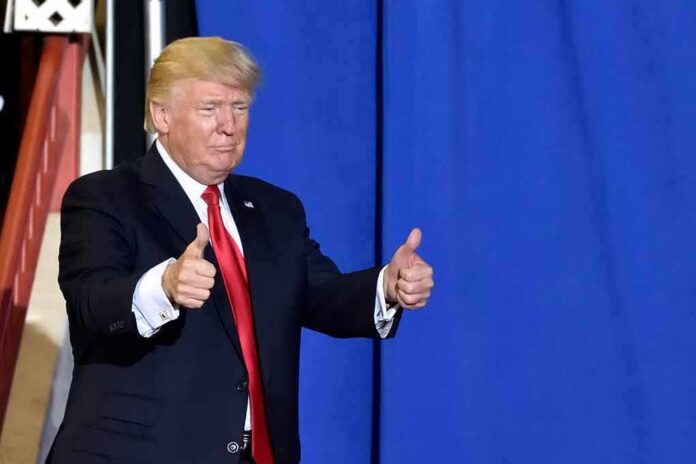
President Trump called into Fox News after Tuesday’s midterm drubbing and told viewers flatly, “The Democrats did a good job,” a rare concession from a president known for claiming total victory no matter the scoreboard.
Story Snapshot
- President Trump phoned into Fox News after Democrats swept House and Senate races, praising their campaign effort.
- He acknowledged the Iran conflict hurt Republicans but insisted voters still valued his foreign policy record.
- Trump held 28 rallies and multiple tele-rallies in the campaign’s final month to shore up the GOP majority.
- Many Republican candidates quietly distanced themselves from Trump as his approval sank into the low-to-mid 30s.
Trump Breaks From Script to Credit Democrats
CNN reported the 2026 results amounted to a “stunning rejection” of the president, with voters turning away from candidates he had personally backed in key races. Trump pushed back on that framing during his Fox News call, saying, “But I don’t view it as a hit on me.” He added that Democrats ran an effective campaign, a notable admission for a president who rarely credits the opposing party.
Trump also conceded that the lingering Iran conflict weighed on Republican candidates. NBC New York quoted him saying, “I think a part of it was Iran, but at the same time, people understood the importance of what I’ve done with Iran.” That statement puts the president on record acknowledging a specific policy drag on his party, even as he defended the decision itself.
A Campaign Built on Rallies and Phone Calls
Trump did not sit on the sidelines this fall. He held 28 rallies across the country between October 1 and November 2, part of a sustained push to protect the thin Republican congressional majority. He also leaned on tele-rallies, phoning into events for individual candidates and declaring the impact “amazing” during one call for Rep. Mike Lawler.
That effort did not stop a sizable chunk of the Republican field from keeping its distance. A Reuters review cited by Axios found candidates in 41 of 62 competitive congressional races either broke with Trump on policy or played down their ties to him, and at least a dozen scrubbed his name or image from campaign websites entirely.
Iran War and Grocery Prices Became Democrat Talking Points
Democrats built their closing message around the war in Iran and the cost of living, and it showed up in the advertising numbers. The Associated Press found at least half of 50 examined races featured Iran-related ads, most of them also hammering household costs, a sign the two issues were deliberately fused into one attack line.
🚨 US MIDTERM ELECTIONS SHOCKER! 🇺🇸 Democrats are making major gains in the 2026 US Midterm Elections and are poised to seize control of the US House of Representatives, potentially putting President Donald Trump's legislative agenda at risk for the final two years of his… pic.twitter.com/EKjtyMMSFk
— DN Josh (@dnjosh10) November 4, 2026
The Boston Globe reported Democrats flipped seats in Ohio, Kansas, Texas, and Iowa by tying Trump’s falling popularity to higher prices from tariffs and the Iran conflict. Those wins came in states Republicans have carried for decades, underscoring how far the political map shifted against the party in a single cycle.
Approval Numbers Tell Part of the Story
Axios and USA Today both tracked Trump’s approval rating sliding to between 33 and 36 percent heading into Election Day, levels that strategists on both sides called a record or near-record low for a president this far from his own re-election. Numbers that low give Democrats a national headwind no amount of local rally stops can easily offset.
History suggests Republicans were never going to have an easy night regardless of candidate quality. The president’s party has lost House seats in 20 of the past 22 midterms since 1938, and both exceptions involved unusual circumstances. Across 22 midterms since 1934, the president’s party has averaged a loss of 28 House seats and four Senate seats, with approval ratings serving as the single strongest predictor of how bad the damage gets.
That pattern matters for conservative voters trying to make sense of Tuesday night. Trump’s own account blends two things that can both be true: his rallies and tele-rallies likely energized core supporters in specific districts, while a national headwind built from war fatigue, grocery prices, and his own approval numbers dragged down candidates who never got the chance to separate themselves from Washington.
Sources:
youtube.com, cleveland.com, abcnews.com, nbcnews.com, gulfnews.com, responsiblestatecraft.org, academic.oup.com