
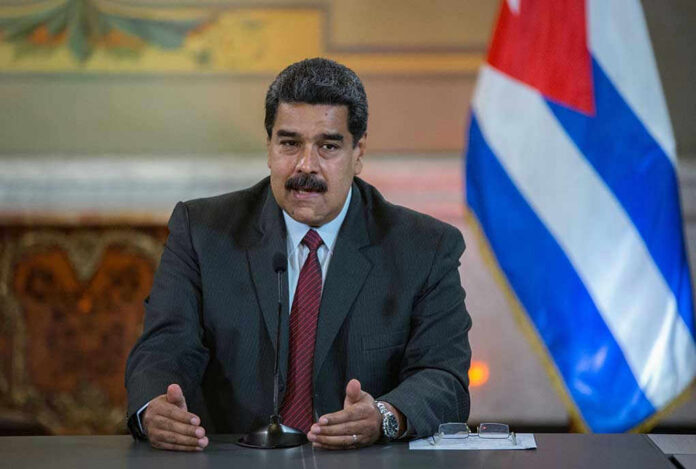
Nicolás Maduro just asked a U.S. judge to toss his drug case by claiming head-of-state immunity, forcing a high-stakes test of American law and resolve.
Story Highlights
- Maduro and his wife asked a Manhattan judge to dismiss U.S. drug charges, citing head-of-state immunity.
- U.S. analysis says head-of-state immunity shields only current, recognized leaders while in office.
- The U.S. position has been that Maduro is not Venezuela’s legitimate president, cutting off immunity.
- The court fight could set a major precedent for prosecuting foreign leaders accused of crime.
What Maduro Asked The Court To Do
Maduro’s lawyer told a federal judge in Manhattan to dismiss the narcotics case. He argued that a head of a foreign state cannot be tried in a U.S. court. His filing also said the alleged acts were tied to official duties, which he claims boosts immunity. News reports confirm the request came alongside similar arguments for his wife, Cilia Flores, in the same case. These moves aim to end the prosecution before any trial can begin.
Reuters reported that Venezuela’s attorney general echoed this defense. He argued the United States lacks authority to prosecute and that Maduro still holds protecting status as the nation’s leader. This position tries to anchor immunity to his claimed office. It also seeks to frame the case as a foreign policy overreach. The filing sets up a direct clash between immunity doctrine and U.S. criminal law in a New York courtroom.
The Core Legal Question: Who Counts As A “Head Of State” Here?
The Congressional Research Service explains that status-based head-of-state immunity blocks U.S. criminal cases against current heads of state, but only while they are in office. That rule turns on whether the person is the sitting, recognized leader. Earlier U.S. statements tied to this saga said Maduro did not qualify because the United States does not recognize him as Venezuela’s president. If recognition fails, the legal shield likely vanishes in U.S. courts.
Legal commentary adds a second limit. Even if recognition applied, conduct-based immunity does not cover private crimes like drug trafficking. It covers official acts, not cartel deals. One U.S. law analysis says Maduro is not entitled to head-of-state immunity because he is not a sitting head of state. It also says drug trafficking is not an official act under any sensible reading of law. That argument gives prosecutors a clear lane if the judge adopts it.
Why This Fight Matters For U.S. Law And Security
Reuters framed the case as a test of American power to try foreign leaders accused of crime. If the court accepts Maduro’s claim, future cases may stall whenever a foreign strongman points to a title. If the court rejects it, prosecutors gain a stronger hand against officials who use office to hide crime. The decision will ripple well beyond Venezuela. It will shape how cartels, foreign regimes, and corrupt elites read American resolve.
JUST IN — MADURO SEEKS DISMISSAL
Nicolás Maduro and his wife are seeking dismissal of the U.S. drug-trafficking indictment, arguing they have immunity as Venezuela’s “first family.” Prosecutors oppose the claim as the case moves forward.#WashingtonEye pic.twitter.com/6xfGBP50vp
— Washington Eye (@washington_EY) September 3, 2026
For conservative readers, the stakes are simple. No title should shield narcotics conspiracies that flood our streets. Borders and laws mean little if a foreign leader can claim a pass in U.S. courts. The law already draws a fair line: protect recognized leaders in office for real state business, not for drug crimes. That balance guards sovereignty while keeping accountability. The court now has the chance to affirm that common-sense rule.
What Each Side Must Prove Next
Maduro’s team must convince the judge that he was the sitting, recognized leader at the key times and that the doctrine applies in U.S. court. They also suggested his actions were official duties, which strains belief in a narcotics case. The United States will argue he is not recognized as Venezuela’s president, so status immunity fails, and drug trafficking is not an official act anyway. Prior U.S. positions back that view.
Expect the judge to focus on recognition, timing, and the nature of the alleged conduct. The recognition question tracks U.S. policy and practice. The conduct question tracks settled logic: selling cocaine is not governing. If the court rejects both immunity theories, the case proceeds to the facts. If it accepts either, parts of the indictment could be at risk. The filings so far suggest the government’s path is stronger under U.S. law.
Bottom Line For Americans
This is more than a courtroom skirmish. It is about whether America can hold foreign power brokers to account when they help poison our communities. The legal tools already exist to do that, without breaking international norms. Recognize true leaders; do not bless criminal cover. The court should press forward, let the evidence be tested, and show that no one stands above U.S. law inside a U.S. courtroom. That is how sovereignty and justice stay strong.
Sources:
insiderpaper.com, aljazeera.com, congress.gov, dplf.org, auilr.org, voanews.com