
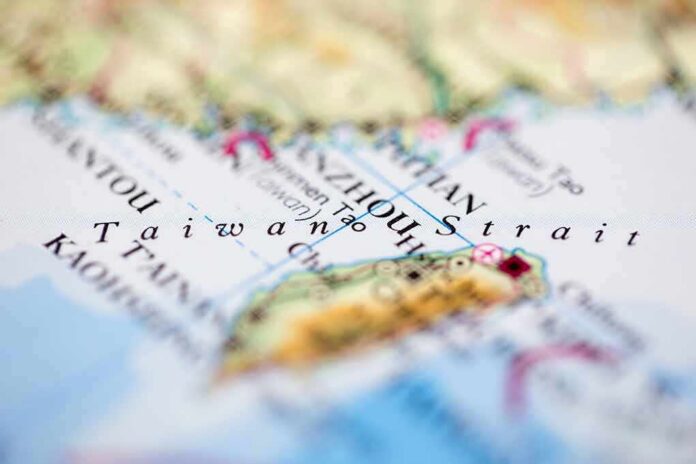
China sent a record 244 government ships swarming around Taiwan in July, and the Trump administration is watching a coercion campaign that could threaten global trade routes and American allies.
Story Snapshot
- Taiwan’s Coast Guard counted 244 Chinese government vessels in July, up from just 30 in May.
- China expanded patrols into new waters east of Taiwan, calling the moves lawful “jurisdiction” enforcement.
- Taiwan says Beijing is trying to normalize control over the waters and pressure shipping traffic.
- Taiwan answered with a $7.6 billion drone plan and a record defense budget for 2027.
Record Ship Count Signals Escalating Pressure
Taiwan’s Coast Guard Administration logged 244 Chinese government vessels around the island in July. That number jumped from 55 in June and just 30 in May. About 60% were coast guard ships, with the rest research vessels and other government craft. Those totals don’t even count China’s warships, meaning the real military footprint is larger.
Taiwanese officials call this a sustained “gray zone” campaign, not routine patrols. The Taipei Times reported the buildup is “the latest in a series of Chinese activities aimed at increasing gray zone pressure on Taiwan.” This is a slow squeeze designed to wear down Taiwan’s defenses without firing a shot, and it should worry anyone who values sovereign nations standing up to communist bullying.
Beijing Pushes East, Claims Legal Authority
China’s patrols have expanded east of Taiwan, widening the area under pressure. Chinese state media quoted officials saying the goal is to “fully exercise China’s maritime administrative law enforcement jurisdiction” and “safeguard national rights and interests.” That’s Beijing’s polite language for asserting control over waters it doesn’t own.
China’s coast guard called a Friday patrol east of Taiwan “routine law enforcement.” A spokesman said the Xiushan task group has been “strengthening control over the relevant waters to effectively ensure orderly navigation and activities” since July. Taipei rejected that framing outright, condemning the patrol as a political operation built to expand Beijing’s control.
Research Ships Raise Deeper Concerns
Chinese research vessels like the Tong Ji and Xiang Yang Hong 03 drew special attention from Taiwanese officials. Reports describe these ships conducting seabed studies and deep-sea trench surveying, escorted by coast guard vessels and maritime-militia-linked assets. Mapping the ocean floor near Taiwan isn’t just science. It could help China track submarine routes or prepare for future military operations.
Al Jazeera reported fears that these expanded patrols may be a dry run for a containment strategy that could cut Taiwan off from outside trade and aid. That’s a chilling scenario for global markets that depend on Taiwan’s semiconductor exports, and it’s exactly the kind of communist aggression conservatives have warned about for years.
Taiwan Responds Without Taking the Bait
Taiwan isn’t shooting first. Officials say the Coast Guard Administration uses a “shadowing and monitoring” strategy to keep Chinese vessels out of Taiwan’s jurisdictional waters without giving Beijing an excuse to escalate further. One official explained the approach is “designed to deny Chinese vessels access to Taiwan-controlled waters while avoiding the use of force”.
Some reporting notes Chinese vessels generally stay outside Taiwan’s 24-nautical-mile contiguous zone, even as they push closer with “joint combat readiness patrols.” That distinction matters. It shows Beijing is calibrating pressure carefully, testing limits without triggering outright conflict, a classic communist tactic of incremental encroachment.
Taiwan Boosts Defense Spending in Response
Taiwan isn’t sitting still. The government unveiled a $7.6 billion drone procurement plan alongside a record 1.1 trillion New Taiwan dollar defense budget planned for 2027. That kind of spending shows Taipei treats this maritime buildup as a genuine, material threat, not just diplomatic noise.
Analysts who study China’s decades-long gray zone strategy say this fits a pattern going back to 1995, when Beijing began using non-military coercion to pressure Taiwan without crossing into open war. That long history should remind Americans why standing firm with allies against communist expansion matters, and why weakness only invites more pressure down the road.
Sources:
zerohedge.com, yahoo.com, taipeitimes.com, swedenherald.com, cnn.com, news24.com