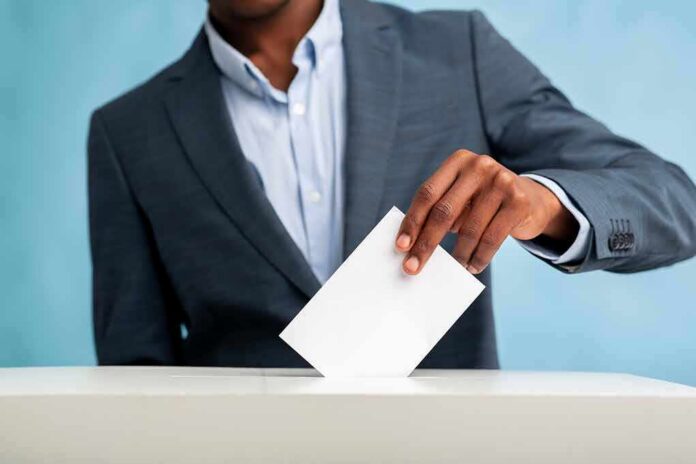
Nearly 125 million Brazilians turned out in October 2022, and that flood of ballots decided one of the tightest presidential races in the country’s history — ending conservative Jair Bolsonaro’s government by less than two points.
Story Snapshot
- Brazil’s Superior Electoral Court recorded 124,252,796 voters out of 156,454,011 registered, a 79.41% turnout rate.
- Leftist Luiz Inácio Lula da Silva beat Bolsonaro 50.9% to 49.1% in the October 30 runoff.
- Second-round turnout topped first-round turnout for the first time in the court’s recent record.
- Brazil’s roughly 79-80% turnout rate has held steady since 2002, so 2022 was not a historic outlier.
A Razor-Thin Vote Ends A Conservative Government
Brazil’s Superior Electoral Court, known as the TSE, reported that 124,252,796 of 156,454,011 registered voters cast ballots in the October 30, 2022 runoff. That works out to a 79.41% turnout rate. Court president Alexandre de Moraes called it a “massive participation” by Brazilian voters, and the final tally handed the win to Lula over sitting president Bolsonaro by a margin of less than two percentage points.
Reuters reported the final result as 50.9% for Lula against 49.1% for Bolsonaro, a gap thin enough that a shift of roughly one million votes could have flipped the outcome. The loss ended Bolsonaro’s four years in office and returned Lula, a former two-term leftist president, to power in South America’s largest economy.
Official Numbers Behind The Historic Turnout
The TSE’s final count showed 118,552,353 valid votes, plus 3,930,765 null votes and 1,769,678 blank votes cast in the runoff. Those numbers matter because they show the size of the electorate that decided the race was not just large in raw terms, but large enough that turnout swings could have changed who runs Brazil.
Reuters tracked the count as it happened, reporting on October 2, 2022, when the TSE had only begun publishing first-round results. That early coverage relied on the electoral authority’s own released numbers rather than campaign claims, giving voters and outside observers a real-time, official view of how the race was shaping up before the runoff even began.
How This Turnout Compares To Brazil’s History
A scholarly review of the 2022 vote found turnout ran about 79% in the first round and 80% in the second, numbers the researchers described as similar to Brazil’s turnout in prior elections. Since 2002, Brazilian turnout has held steady around 79%, well above the recent global average turnout rate near 63%.
That context matters for how the “massive turnout” headline gets read. The raw number of voters, nearly 125 million, is the largest in Brazil’s history simply because the country’s population and voter rolls have grown. But as a share of registered voters, 2022 tracked close to the pattern Brazil has followed for two decades, rather than marking a sudden surge.
International election researchers note that turnout comparisons across countries depend heavily on how the denominator is counted. Groups like International IDEA track turnout both against registered voters and against the full voting-age population, and those two measures can produce very different percentages for the same election depending on how accurate a country’s voter rolls are.
What stands out most is that second-round turnout actually beat first-round turnout, a reversal of the usual pattern where voter interest fades between rounds. The TSE flagged that shift as notable, since runoff elections typically see fewer voters show up than in the initial round weeks earlier.
Why Conservatives Should Watch This Record
For American conservatives who watched Bolsonaro’s four years in office, the 2022 runoff is a reminder of how thin the margin can be between a center-right government and a return of the left. A result decided by under two points, out of nearly 125 million ballots, shows how every single vote counted in one of the Western Hemisphere’s biggest democracies. The same lesson applies heading into any closely watched American election cycle.
Sources:
streetinsider.com, tse.jus.br, checamos.afp.com, reuters.com, exame.com, idea.int, en.wikipedia.org, electionguide.org