
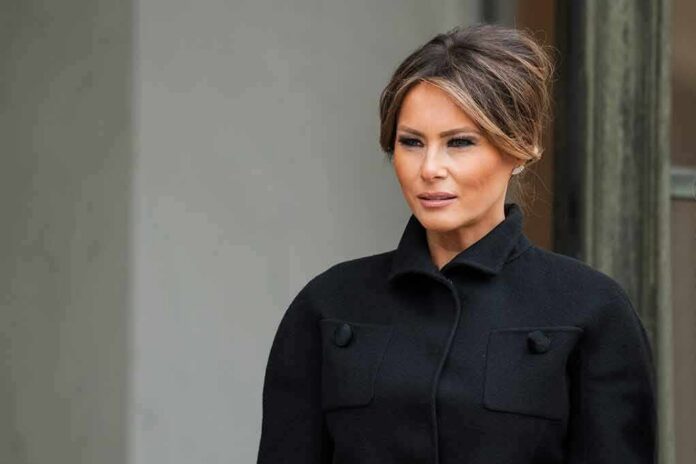
A White House statement credited First Lady Melania Trump with securing a localized ceasefire in Oleshky to open a path for aid and evacuations.
Story Highlights
- The White House said Melania Trump secured a Russia–Ukraine ceasefire in Oleshky for aid and evacuations.
- Major outlets reported the pause as temporary, with start dates reported as October 27 or October 29.
- Ukraine and Russia confirmed participation in the limited truce, focused on humanitarian relief.
- Critics argued the Pope also played a role; a Ukrainian official called it a joint process.
White House Credits Melania Trump With Oleshky Ceasefire
The White House stated on October 23 that First Lady Melania Trump secured a localized ceasefire between Russia and Ukraine in the occupied city of Oleshky to allow humanitarian aid and civilian evacuations. The announcement described a pause in military action inside the city limits. The aim was to move food, water, and medicine to trapped residents and prepare safe routes for the elderly and families. The statement framed the effort as focused, temporary, and tied to strict humanitarian goals.
Associated Press coverage reported that both sides agreed to the Oleshky pause for relief access, echoing the White House’s humanitarian focus. Reports said the agreement’s scope was limited to the city. The plan centered on getting aid in and people out, not on changing front lines elsewhere. This kind of targeted ceasefire is common in war zones when a full peace deal is out of reach. The test now is simple: do aid trucks roll, and do civilians move to safety without fire.
Start Time, Scope, and What We Know Now
Media reports described the truce as temporary and localized. Outlets cited two different start times: Russia and Ukraine reportedly pointed to October 27, while the White House announcement pointed to October 29. ABC News said the duration was not publicly set, reinforcing that this was a short, practical pause, not a treaty. These details matter for accountability. Clear timing and rules help aid groups plan convoys and help commanders keep forces from firing by mistake.
For families in a city short on food and medicine, even a narrow window can mean life or death. If the pause holds, aid workers can reach seniors, hospitals, and children first. If both militaries honor the clock, buses can move people who choose to evacuate. Past conflicts show that local ceasefires save lives when leaders set tight goals and keep politics out of the lanes. Implementation on the ground—not headlines—will decide the outcome.
Credit Disputes and How to Weigh Them
Some critics argued that Pope Leo XIV helped start this effort and should share credit. The Independent reported claims that the Pope reached out to both leaders earlier, and a Ukrainian negotiator said the deal grew from work by both the First Lady and the Pope. This does not undercut the White House’s statement about Melania Trump’s role; it suggests a multi-track push that converged. In high-stakes talks, overlapping channels are common and often useful.
Conservative readers should watch two things now: whether the ceasefire actually protects civilians, and whether aid actually reaches those in need. If the pause holds, that is a win for the people of Oleshky and for American leadership that values practical results over posturing. The point is not who gets the headline. The point is saving lives, proving that focused American engagement can reduce suffering, and showing that our leaders stand with families under fire.
Why This Matters for American Interests and Values
American strength includes moral clarity and smart action. A limited truce that opens a safe lane for the weak reflects both. The First Lady’s involvement tracks with a tradition of personal diplomacy that supports national goals while keeping the focus on people, not politics. When Washington cuts through noise to help kids and seniors survive a war zone, that honors the conservative belief in local action, limited scope, and measurable results grounded in reality.
What to know about the Melania Trump-brokered ceasefire in Russian-occupied Oleshky
Via @AP https://t.co/u5YRx1RZMl— KRGV CHANNEL 5 NEWS (@krgv) October 25, 2026
The next steps should be strict. Aid groups need secure windows, clear maps, and firm rules of engagement. Commanders on both sides must enforce the pause at the street level. Monitors should document convoy movements and evacuation counts. If the pause breaks down, officials should publish why. If it works, they should extend it as needed. Results will speak louder than spin, and the American people deserve proof that this ceasefire saved lives when it counted.
Sources:
youtube.com, whitehouse.gov, afp.com, aljazeera.com, cnbc.com, politico.com