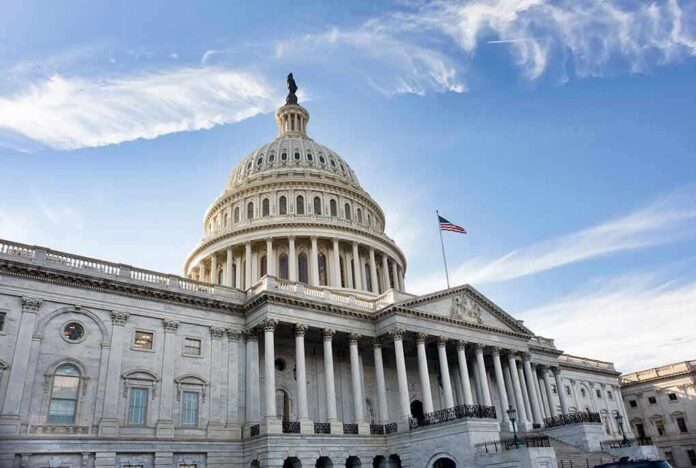
Forecasts now predict Democrats could seize one or both chambers of Congress, threatening to stall President Trump’s agenda and stack committees against conservative reforms.
Story Highlights
- Multiple forecasters rate Democrats favored for the House and competitive for the Senate.
- Democratic control would hand them committee gavels, subpoena power, and a blockade on nominees.
- President Trump points to Republican achievements as the case to hold Congress and keep reforms moving.
- History shows midterms usually punish the president’s party, raising stakes for turnout.
What The New Forecasts Say About Control Of Congress
Recent election models show Democrats favored to flip the United States House of Representatives and competitive in the United States Senate. Decision Desk projections reported by a major outlet give Democrats strong odds for the House and a narrow edge for the Senate fight. Veteran handicappers echoed similar views, with estimates of a Democratic House gain large enough for control and a tight Senate map. A peer-reviewed forecast likewise projects a likely House loss for Republicans, while leaving Senate control within reach for either side.
Several news analyses summarize this landscape in clear terms. Democrats are rated as favorites for both chambers, though the Senate remains close because of the map and incumbents. A respected nonpartisan analysis estimates Democrats could gain five to fifteen House seats, enough to tip the chamber if the high end lands. These projections are not results, but they frame the stakes: if Republicans underperform, committee gavels, investigations, and the calendar could shift overnight.
Why Control Matters For Trump’s Agenda And Your Priorities
Control of a chamber decides who runs committees, which hearings move, and what bills get a vote. If Democrats take the House, they gain subpoena power and can drive investigations that distract and delay core policy plans. If Democrats take the Senate, they can slow or block judicial and executive branch nominees and choke action on border, crime, and energy reforms that conservatives back. Even with veto power, the White House would face gridlock and fewer conservative wins.
Analysts explain that even one Democratic chamber can sharply constrain legislation while forcing more reliance on executive actions. That shift invites more court fights and more uncertainty for business, families, and local communities. It also risks stalling work on lower energy costs, border enforcement, parental rights, and protections for the Second Amendment that many voters want. The bottom line is simple: committee gavels and floor control shape what becomes law and what dies in the inbox.
Trump’s Case: Run On Results, Not Rhetoric
President Trump argues Republicans can hold Congress by running on tangible results that affect paychecks and security. His past record highlights lower jobless claims, strong growth, and major tax relief designed to help working families and small businesses. That message aims at voters who feel squeezed by high prices, high energy costs, and chaos at the border. The pitch is clear: keep Congress in conservative hands to secure judges, close loopholes, and protect constitutional rights.
The contrast also reaches process and oversight. A Democrat-run House or Senate would devote time to investigations and slow-walk confirmations. That means fewer conservative judges on the bench and more delays on key department leaders. For many readers, that is not theory; it is how Washington power works. Elections decide who sets the agenda. Agenda control decides whether border walls get built, energy permits get approved, and schools answer to parents or to bureaucrats.
History’s Warning And The Path Forward
History shows the president’s party usually loses seats in midterms. Over decades, the president’s party has lost an average of roughly two dozen House seats in these cycles. Those long-run numbers help explain today’s forecasts. But history is not destiny. Turnout, candidate quality, and local issues can shift close races by a point or two. That swing can decide control and, with it, the fate of courts, border policy, gun rights, and spending discipline.
Conservatives who want lower inflation, secure borders, affordable energy, and strong families have a clear choice. Support the candidates who will pass the bills, confirm the judges, and stop the left’s overreach. Forecasts are not votes. Ballots cast by informed citizens still carry the final word. If Democrats win either chamber, expect investigations, bottlenecks, and blocked nominees. If Republicans hold, expect more action on the issues that matter to households and small businesses.
Sources:
time.com, nbcnews.com, latimes.com, cambridge.org, yahoo.com, newsnationnow.com, theconversation.com, riotimesonline.com, npr.org, cfr.org