

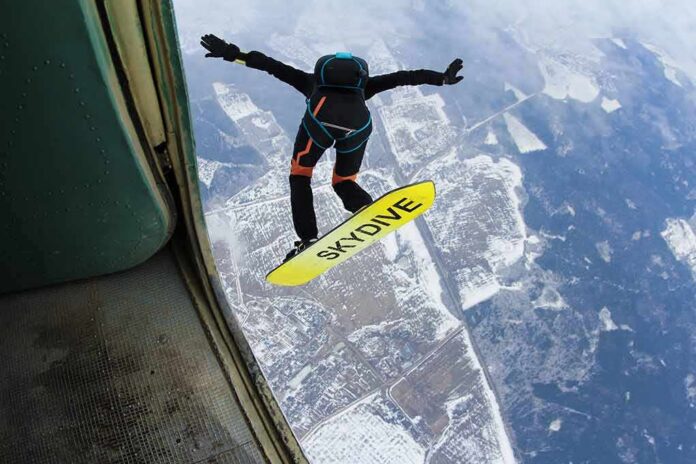
A British skydiver fell about 10,000 feet while unconscious and survived after trees broke her fall.
Story Highlights
- Witnesses say a midair collision knocked the skydiver out cold at about 10,000 feet.
- Neither main nor reserve parachute slowed the descent enough, but trees cushioned impact.
- Doctors expect a full recovery after serious injuries, calling the survival “incredibly fortunate”.
- Industry data show skydiving deaths are rare and have trended down with better training and gear.
Unconscious Freefall And A Miracle Landing
Reports from international outlets describe a midair collision that knocked a British woman skydiver unconscious at roughly 10,000 feet. With no ability to pull a handle, she dropped toward the ground at high speed. Local accounts say a stand of conifer trees slowed her descent and kept her alive. Earlier cases show similar survival when trees or soft ground dissipate force. A decade-old United Kingdom incident also cited faulty chute deployment and a hard landing after a 10,000-foot jump.
Ambulance and medical staff in prior survival cases said patients were “incredibly fortunate” and likely to recover, a description that fits this fall’s outcome as well. Coverage of the current case notes serious injuries and a hospital stay, followed by strong signs of recovery. A Korean-language report quotes the jumper expressing a desire to return to the sport after healing. That mix of grit and grace underlines why these stories capture public attention worldwide.
What Likely Went Wrong In The Sky
Published accounts point to a common chain: a collision or canopy issue leaves a jumper unstable or unable to act, a main parachute malfunctions or fails to slow enough, and the reserve does not fully correct the problem. In some incidents, a hard opening or line twists compound the emergency. In this case, the reported knock-out removed any chance to fix malfunctions in time. That left terrain—especially tall, dense trees—to spread out the impact over distance.
Medical and engineering reviews of skydiving accidents stress that most severe injuries happen under canopy or on landing, not in the freefall itself. Loss of control, packing mistakes, low turns, and high-speed landings show up again and again in case files. Training and gear have improved those odds. But an unconscious jumper cannot run checklists or cut away. That is why automatic devices and tight safety culture matter, even when freak collisions occur.
Risk In Context: Safer Than Headlines Suggest
National safety summaries show skydiving fatalities at or below roughly half a death per 100,000 jumps in recent years. The United States Parachute Association reported nine deaths across about 3.88 million jumps in 2024, the lowest rate on record at 0.23 per 100,000. That signals long-term progress from better instruction, equipment checks, and emergency procedures. The sport still carries real risk, but the data say deadly outcomes are uncommon events.
Skydiver survives 10,000ft fall after being knocked out pic.twitter.com/uLBQDGQ9Ro
— The Sun (@TheSun) September 7, 2026
For readers, two truths can sit together. First, a fall like this is stunning and rare. Second, safety systems have improved, and most jumpers finish the day without harm. Responsible operators invest in training, gear maintenance, and emergency drills. Personal responsibility matters, too: follow briefings, respect weather calls, and speak up about gear concerns. That culture—rooted in discipline, not hype—saves lives when the unexpected happens.
Why This Story Resonates
This survival tale speaks to core values our audience respects: courage, preparedness, and the will to live. Nature, not a bureaucrat, granted the final margin here—the trees broke the fall. Skilled first responders and solid medical care did the rest. The lesson is simple and American: train hard, respect risk, and trust proven systems over feel-good talk. When life turns fast and unforgiving, facts, checklists, and grit beat slogans every time.
Sources:
mirror.co.uk, bbc.com, theguardian.com, sportschosun.com, telegraph.co.uk, nypost.com