
President Trump has halted planned strikes on Iran after saying a tough peace deal outline has won backing from Israel and key Middle Eastern allies, putting diplomacy — not bombs — in the driver’s seat.
Story Snapshot
- Trump says he canceled scheduled U.S. strikes on Iran after talks reached Iran’s top leadership and key deal points were approved.
- The proposed deal would fully reopen the Strait of Hormuz and end what Trump calls Iran’s nuclear threat, while keeping a U.S. naval blockade in place until terms are met.
- Trump says Israel, Saudi Arabia, Qatar, the United Arab Emirates, and other regional partners support the pause and the deal framework.
- Iranian officials have not confirmed Trump’s description of progress, and some reports say Tehran flatly denies that a near-term agreement is in place.
Trump Says Planned Strikes Are Off, Deal Points Agreed
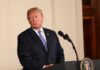
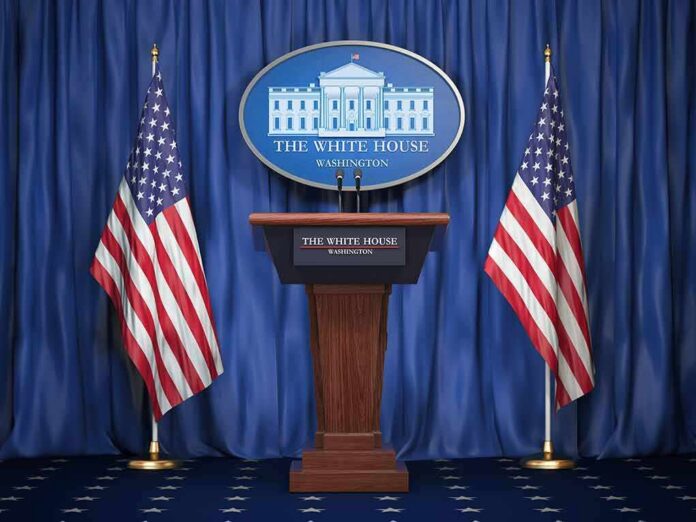
On Truth Social, President Trump told Americans he had canceled U.S. strikes and bombings against Iran that were scheduled for that evening. He said discussions with the Islamic Republic of Iran had been brought to “the highest level” of Iranian leadership and “approved,” and that the United States military was “locked and loaded” but would stand down to make room for a rapid deal. This cancellation came only hours after he warned Iran that the United States was ready to hit the regime “very hard” if it refused to change course.
Trump framed the move as a show of strength, not retreat. He said “discussions and final points” had been approved “in both concept and great detail” by all parties involved, listing the United States, Israel, Saudi Arabia, the United Arab Emirates, Qatar, Turkey, Pakistan, Bahrain, Kuwait, Jordan, Egypt, and others as supporters. In his message, he stressed that the attack was canceled “subject to” rapidly completing a deal, making clear that American force remains on the table if Tehran drags its feet.
What Trump Says Is in the Emerging Iran Deal
According to Trump’s post and media reports, the core of the possible agreement focuses on the Strait of Hormuz and Iran’s nuclear activity. Trump says Iran would “completely, immediately, and safely” reopen the Strait of Hormuz, restoring vital oil shipping lanes that matter deeply to American families through gas prices and global markets. He also claims the deal would mean “an end to Iran’s nuclear threat,” suggesting strict limits or shutdowns on nuclear work that could lead to weapons.
At the same time, Trump insists pressure will continue until Iran proves it is serious. In his Truth Social message, he said the U.S. naval blockade on Iran would remain “in full force” and stay in place until the “transaction” — his word for the deal — is finalized. That means American ships would keep squeezing Iran’s economy even while missiles and bombs are held back. For many conservatives, this approach reflects a mix of hard power and negotiation: talk if enemies are willing, but keep the hammer ready.
Allies’ Unusual Request: Hold Fire for Peace
Trump says he did not pause the strikes alone; he credits Middle Eastern partners with urging restraint. In one post, he wrote that leaders of Qatar, Saudi Arabia, and the United Arab Emirates asked him to “hold off” on a scheduled attack on Iran that was planned for Tuesday, saying they believed a permanent peace deal was within reach. Reports say he told U.S. military officials, “we will NOT be conducting the scheduled attack on Iran tomorrow,” directly tying the decision to those allied requests.
The president has also praised Pakistan’s role in brokering talks. In an earlier two-week pause in bombing, he said Pakistani leaders helped push Iran toward reopening the Strait of Hormuz, and that he agreed to halt strikes if Tehran followed through. This kind of regional pressure matters. Many of these governments once backed softer, globalist approaches that left Iran stronger. Now they appear to be lining up behind a tougher, America-first framework that still aims to avoid a wider war, exactly the kind of burden-sharing many conservatives have demanded for years.
Iran’s Mixed Signals and the Fog of Crisis Diplomacy
While Trump paints a picture of fast progress, Iran’s public line is much less friendly. German outlet DW reports that Tehran “did not confirm” his claims that final peace points had been approved, even as he spoke about a deal being signed “shortly.” Other coverage notes Iranian officials saying no agreement has been reached, despite U.S. talk about a near-term accord. That clashes with Trump’s confident tone and shows why this kind of crisis diplomacy can be hard to read in real time.
🚨 BREAKING: Trump claims he postponed planned US strikes on Iran after Tehran requested time for a deal.
📌 Proposed deal includes reopening Strait of Hormuz & stopping nuclear threat. No Iran confirmation yet.
🇺🇸 #USNews #Trump #Iran #MiddleEast pic.twitter.com/MHI5bEGYMe
— US News Grid (@USNewsGrid) August 2, 2026
There are also signs that the pause in bombing is real, not just talk. Reuters reporting carried by Yahoo says that after Trump called off bombing, the Pentagon abruptly suspended the campaign, and no new U.S. attacks were reported over the next two days. A senior Iranian official claimed Iran would halt its own strikes as long as the United States did the same. That looks less like a signed peace deal and more like a tense standstill: both sides step back from the edge while they feel out whether a serious agreement is possible.
What This Means for Conservative Americans
For many right-leaning Americans, this episode highlights both the danger and promise of Trump’s approach. He is willing to threaten major strikes and even talk about seizing Iran’s oil infrastructure to protect American interests. But he is also willing to slam the brakes if real leverage can force the enemy to the table on terms that favor the United States, Israel, and regional partners. That balance is very different from the old “leading from behind” years, when globalist elites let Iran expand its reach while lecturing Americans about “woke” priorities at home.
At the same time, the lack of clear, written deal text and Iran’s denials mean patriots should watch closely and demand transparency. Trump is betting that maximum pressure plus allied support can force Iran to reopen Hormuz and choke off its nuclear threat without dragging U.S. troops into a massive new ground war. If Tehran stalls or plays games, he has left no doubt that strikes can resume. For now, families see a welcome break from the risk of sudden escalation — bought not by weakness, but by keeping American power ready while pushing hard for a peace that protects our people and our allies.
Sources:
redstate.com, apnews.com, pbs.org, bbc.com, youtube.com, washingtonpost.com, cbsnews.com, npr.org, cnn.com