
Near one of the busiest smuggling corridors on the border, Washington is racing up new wall sections while still offering almost no proof they actually stop cartels from trafficking children.
Story Snapshot
- New border wall sections are going up near San Diego and Tijuana, including areas tied to tunnels and heavy smuggling.[2][6]
- Federal data and Border Patrol videos say barriers cut illegal crossings and smuggling in some zones, but evidence is narrow and local.[3][2]
- Child trafficking claims around this wall segment remain mostly political talking points, with almost no victim-level data to back them up.[3]
- Environmental and Indigenous groups warn these same projects slice through wildlife corridors and sacred lands, often under fast-track waivers that limit public review.[1][6]
New wall builds in a long-troubled San Diego–Tijuana corridor
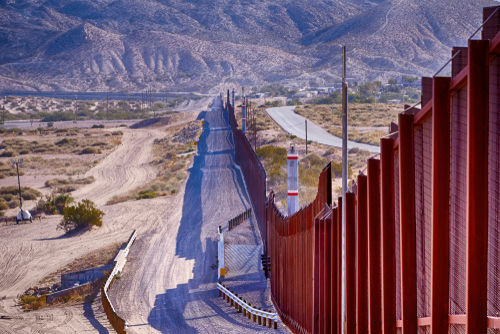
Federal construction crews are again working along the California border near San Diego, including areas by San Ysidro, Otay Mesa, Jacumba, and Smuggler’s Gulch.[2][6] The Department of Homeland Security used special waivers in 2025 to speed projects there, which means normal environmental and public review rules were pushed aside.[1] Supporters say this stretch has been a major route for illegal crossings and cartel smuggling for years, so hard barriers are needed to close long-standing gaps.[5]
Reports from the region describe a mix of new steel wall segments and efforts to close “gaps” between older barriers.[6] Border Patrol leaders have toured these projects and promoted them as progress, pointing to new infrastructure, roads, and lighting on the U.S. side. On the Mexican side, journalists embedded in Tijuana have documented regular patrols by the Mexican National Guard and other forces that aim to deter smuggling of people, drugs, and guns along the same corridor.
BORDER WALL NEAR CHILD TRAFFICKING HOT SPOT
"They trafficked children, they trafficked women, and they trafficked men." A once-open gap near the California-Mexico border that @OscarRamirezTJ says was exploited by cartels and human traffickers has now been closed with new border… pic.twitter.com/gjrpk7Xlb0
— Real America's Voice (RAV) (@RealAmVoice) June 12, 2026
What we know about tunnels, trafficking routes, and walls that “work”
Researchers and law enforcement agree this border strip has long been a hot spot for organized crime, including sophisticated cross‑border tunnels near Otay Mesa used by cartels.[4][5] A study of the Tijuana–San Diego wall history shows repeated cycles of new fencing, more patrols, and then smugglers shifting tactics and routes instead of quitting.[5] A separate analysis of fencing in Arizona found that barriers changed where migrants crossed and increased the risk of death, rather than ending movement across the border.[4]
U.S. officials often argue that walls can still help in specific places. One federal summary says new barriers cut illegal entries and reduced manpower needs in at least one sector.[3] A Border Patrol video from nearby El Centro claims that drug and human smuggling went down where new barriers were installed.[2] These claims suggest walls can matter on the ground, but they are narrow snapshots and do not prove that overall smuggling or trafficking dropped instead of just moving somewhere else.
Do these California wall segments really cut child trafficking?
Politicians and commentators now point to the new California wall as a way to fight child trafficking, often with dramatic language about children, women, and men being sold by cartels. Yet the public record for this corridor does not include solid before‑and‑after numbers on trafficking victims, rescues, or prosecutions tied to this specific construction.[5] No cited source here offers clear data on kidnapped or trafficked children around San Diego that changed once the wall work began.[1][5]
Anti‑trafficking advocates also warn that the issue is more complex than many talking points admit. One group notes that many women and children at the southern border are fleeing sexual violence and trafficking in their home countries, and that shutting them out can leave them even more exposed to abuse.[3] Experts there stress that many traffickers enter the United States legally, and that building a wall by itself will not stop human trafficking.[3] They call instead for stronger victim visas and laws that go after traffickers directly.
Environmental harm, sacred sites, and a system that feels rigged
While many Americans focus on crime and trafficking, groups on the ground say the new California wall is also chopping up land and culture with little debate. Sky Island Alliance reports that the wall cuts through the “Sky Islands” region and is severing wildlife corridors and border communities.[1] Defenders of Wildlife warns that current and planned barriers threaten dozens of endangered species and migratory birds, and that heavy construction, access roads, and noise make the damage worse.
Wildlands Network says closing remaining gaps near Otay Mesa and Jacumba could wipe out last pathways for animals moving between the United States and Mexico, even as officials frame the same work as a security win.[6] Indigenous leaders and local residents have also raised alarms about sacred and cultural sites being bulldozed or blasted in the name of border control. Many on both left and right see the fast‑track waivers and rushed work as one more sign that powerful interests make big decisions first and explain them later, while ordinary families, migrants, and even the land itself pay the price.
Sources:
[1] YouTube – BORDER WALL NEAR CHILD TRAFFICKING HOT SPOT
[2] Web – U.S.-Mexico Border Wall – Sky Island Alliance
[3] Web – Border Wall Construction Restarts in California and Texas – ENR
[4] Web – Mexico–United States border wall – Wikipedia
[5] Web – A Hot-Spot Analysis of the Impact of the Secure Fences Act in Arizona
[6] YouTube – Border wall construction resumes