

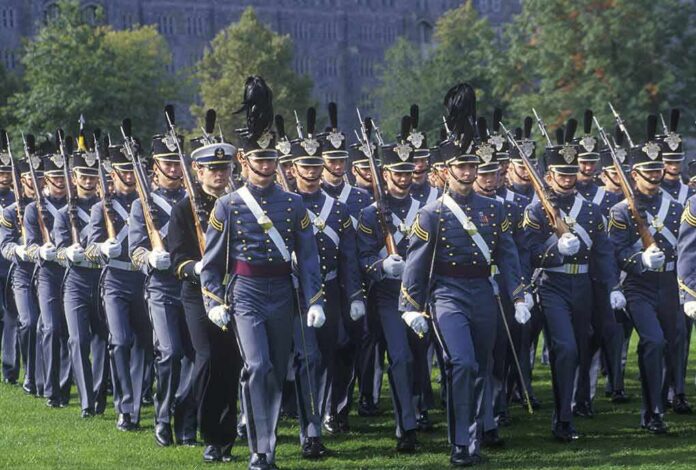
A new Pentagon draft plan would scrap civilian tenure and “ideologically driven” courses at America’s military academies to put warfighting front and center again.
Story Snapshot
- The draft memo orders an end to tenure for civilian professors at service academies and war colleges.
- It demands a line-by-line review of every course, cutting those that do not directly sharpen warfighting skills.
- Defense Secretary Pete Hegseth must still sign off, but the proposal fits his wider push to roll back woke influence in military education.
- Supporters say the plan would protect warrior ethos and American values; critics warn about losing academic freedom and civilian balance.
Pentagon Draft Targets Tenure and “Ideological” Courses
A draft Pentagon memorandum titled “Refocusing the Military Service Academies and Senior Service College on Warfighter Education” calls for abolishing civilian tenure and overhauling the curriculum at service academies and senior war colleges. The memo covers West Point, the Naval Academy, the Air Force Academy and institutions like the Naval War College and Army War College that shape future officers. It has not yet been formally approved, but it marks the most sweeping proposed remake of military higher education in years.
The draft memo argues that tenure, which was designed to protect academic freedom in civilian universities, “more often leads to stagnation, complacency, and inflexibility” inside military schools. It warns that curriculum can drift away from the mission of educating warfighters and instead follow the research agendas of tenured academics. To stop this drift, the memo would end tenure “effective immediately” once adopted and would give Pentagon leaders sixty days to issue guidance on how to unwind existing tenure protections and realign faculty structures.
Line‑by‑Line Curriculum Review for Warfighting Focus
Beyond jobs and contracts, the proposal reaches into the classroom and targets course content itself. It directs a comprehensive, “line-by-line” review of every course taught at the academies and senior service colleges, judging each one by a single test: does it clearly advance tactical, operational, or strategic warfighting. Any course found “non-essential” or “ideologically driven” would be flagged for elimination, clearing space for more training in combat leadership, operational planning, and other direct mission skills.
This push to refocus education around warfighting tracks with other steps President Trump’s Pentagon team has taken in 2026. In February, Defense Secretary Pete Hegseth signed a memo titled “Aligning Senior Service College Opportunities with American Values,” cutting certain senior fellowships and ordering a new list of partner schools that better reflect the warrior ethos and national values. The department has also moved to end Pentagon-funded attendance at some elite universities for graduate programs that officials say do not support mission readiness.
Warrior Ethos vs. Academic Freedom and Civilian Balance
Supporters of the draft say it answers a long‑running problem: military academies have borrowed too much from civilian campus culture and let politics and theory crowd out combat readiness. Some conservative policy papers urge Congress to ban use of race, ethnicity, or sex in academy admissions, require that most coursework focus on warfighting, and abolish tenure at all military schools, arguing that these institutions are tools of national defense, not liberal universities. They also call for most faculty slots to be filled by active-duty or retired officers aligned with the mission.
Just In: Pentagon weights abolishing civilian tenure and overhaul course offerings at the military service academies and senior war colleges that educate future military officers. https://t.co/lbqJuGeqVM
— Ryan Sprouse (@RSprouseNews) July 31, 2026
Critics, including scholars who defend civilian professors at the academies, warn that scrapping tenure and sharply cutting civilian roles could weaken intellectual rigor and honest debate that make stronger officers. Research on West Point and the Air Force Academy shows that carefully chosen civilian faculty can bring deep expertise and still support the military mission when guided by clear standards. They argue the real question is not civilian versus military or percentage targets, but whether every teacher is firmly committed to developing competent, ethical, and adaptable leaders.
Part of a Larger Push to Tighten Control Over Civilians
The tenure proposal also fits a broader pattern of Pentagon moves to make performance and mission alignment more important than long‑term protections for civilian workers. Past policy changes shifted layoff rules to favor performance over tenure and seniority, signaling that civilian employees would be judged mainly by how they help warfighting readiness. More recently, President Trump signed an order creating a new employment category that strips civil service protections from thousands of federal positions, making it easier to remove officials seen as blocking policy priorities.
For conservative readers, the stakes are clear: America’s officer schools sit at the heart of national security, and they should train warriors, not activists. Backers of the new draft believe ending tenure and cutting ideological coursework will help purge lingering woke agendas, restore discipline, and make sure classroom time serves the Constitution, the flag, and real combat skills. The memo is still a proposal, and details of how it would treat current tenured faculty and borderline courses remain to be worked out if Defense Secretary Hegseth approves it.
Sources:
cbsnews.com, usafalibrary.com, congress.gov, media.defense.gov, rand.org, westpoint.edu, esd.whs.mil, csis.org, constitutioncenter.org, apps.dtic.mil, notus.org