

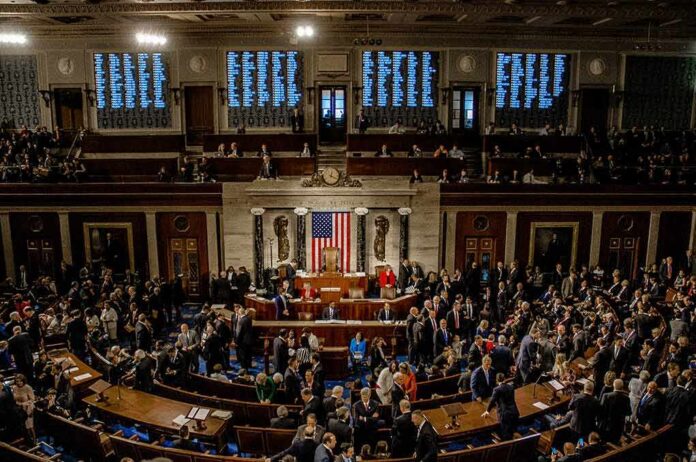
Hours after honoring Lindsey Graham at his funeral, the Senate moved his sweeping Russia sanctions bill one giant step closer to President Trump’s desk.
Story Snapshot
- The Senate voted 86–12 to advance the Lindsey O. Graham Russia sanctions bill just after his funeral, with strong bipartisan support.
- The bill gives President Trump broad new powers to hit Russia’s war economy, sanction foreign buyers of Russian energy, and slap tariffs as high as 500% on Russian imports.
- Key U.S. partners like India, Japan, and European countries that rely on Russian oil and gas could face tariffs up to 100% if they keep buying from Moscow.
- Supporters say the bill honors Graham’s work and helps Ukraine by choking off cash for Vladimir Putin’s war machine, while testing Trump’s America First approach to allies.
Senate advances Graham’s Russia sanctions bill after emotional funeral
The United States Senate advanced the Lindsey O. Graham Russia sanctions bill in a dramatic 86–12 vote only hours after a funeral service for the late South Carolina senator in Washington. The vote ended debate and invoked cloture, meaning the bill is now on a fast track toward final passage in the chamber. Ukrainian President Volodymyr Zelenskyy was on Capitol Hill for the funeral and met with senators as they prepared to vote, underscoring how closely Ukraine’s fate is tied to the measure.
The bill has become a tribute to Graham, who spent his final months pushing for tougher penalties on Russia and the countries that fuel its war economy. Before his sudden death, he announced a breakthrough deal with the Trump administration to finally move the long-stalled package. Senate leaders from both parties then agreed to bring the bill to the floor, framing the vote as a way to honor Graham’s legacy while sending a clear signal to Moscow and its trading partners.
What the Lindsey O. Graham sanctions bill would do
The legislation, now known as the Lindsey O. Graham Sanctioning Russia and Iran Act of 2026, gives President Trump new authority to sanction Russian officials, oligarchs, their family members, foreign nationals, banks, and other financial institutions tied to Russia’s war machine. It targets Russian energy exports and the “shadow fleet” of ships that help evade existing sanctions by moving oil and gas through gray channels. Supporters say the goal is simple: starve Vladimir Putin of the money he needs to keep attacking Ukraine.
Beyond direct penalties on Russia, the bill reaches deep into global trade. It directs the president to impose tariffs of up to 100% on imported goods from the top five countries that buy the most Russian crude oil and natural gas, including major buyers in Asia and Europe. Earlier versions also included a 500% tariff on Russian imports and goods from countries that buy Russian oil, gas, and uranium. The measure further allows sanctions on countries that trade defense items with Russia, which could pull in Iran and others that arm or supply Moscow.
Secondary sanctions and Trump’s leverage over allies
A key feature of the Graham bill is its use of secondary sanctions, which hit not only Russia but also foreign governments and firms that choose to keep doing business with Moscow’s energy and defense sectors. If enacted, the law would let President Trump impose tariffs as high as 100% on countries that remain major consumers of Russian energy, such as India, Japan, and some European Union states, and then decide when to lift those penalties. That power fits with Trump’s long‑standing focus on using tariffs to push allies toward tougher stances on adversaries.
The text also includes waiver authority, allowing Trump to delay or avoid sanctions and tariffs if he certifies to Congress that doing so is in the national interest of the United States. Supporters argue this flexibility helps keep pressure on Russia while giving the White House room to manage key relationships with friendly countries that still rely on Russian fuel. Critics worry that uneven use of waivers could weaken the bite of the sanctions over time, but backers say the clear threat of penalties is itself a strong tool.
Why conservatives are watching this vote closely
For many conservative voters, the Graham bill raises big questions about American strength, economic risk, and constitutional checks on executive power. On one hand, the measure arms President Trump with serious tools to punish Russia and those who help its war machine, answering long‑standing calls for tougher action after years of weak responses and globalist half‑measures. It also pushes allied nations to pick a side, rather than quietly funding Moscow while expecting U.S. protection.
In a bipartisan vote, 86 senators voted to move forward with the Russia and Iran sanctions bill, championed by the late Sen. Lindsey Graham.
READ MORE: https://t.co/8yCLZShHgH pic.twitter.com/iA7nCc9FYA
— ABC News 4 (@ABCNews4) July 29, 2026
On the other hand, broad tariff and sanctions powers always carry risks of government overreach and higher costs at home if allies do not quickly fall in line. Lawmakers backing the bill say its waiver rules and focus on Russia’s energy trade keep the pressure targeted rather than open‑ended. As the Senate prepares for a final vote and the House waits to act after recess, the next key moment will come when President Trump decides how hard to swing this new hammer against both Russia and reluctant partners.
Sources:
congress.gov, whitehouse.senate.gov, abcnews.com, politico.com, cnn.com, youtube.com, axios.com, reuters.com, lgraham.senate.gov, thehill.com, c-span.org