
A deadly U.S. missile strike on an Iranian girls’ school has been quietly acknowledged in internal probes, yet four months later the Trump administration still refuses to say so publicly.
Story Snapshot
- Preliminary U.S. military findings say outdated American intelligence led to a Tomahawk strike on an Iranian elementary school, killing over 150 people, mostly children.
- Evidence from satellite images, missile fragments, and multiple investigations points clearly to U.S. responsibility, even as officials avoid a formal admission.
- President Trump has repeatedly cast doubt on U.S. involvement and suggested Iran was to blame, despite internal inquiries finding a U.S. targeting error.
- Four months on, the Pentagon still has not released its investigation, drawing criticism from former officials and fueling global pressure for accountability.
How the Minab School Was Hit During the Iran War
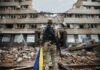
On February 28, at the very start of the joint United States–Israeli air campaign on Iran, a Tomahawk cruise missile slammed into Shajareh Tayyebeh Elementary School in Minab, a coastal city in southern Iran. Iranian authorities say at least 165 to 175 people were killed, most of them young girls in class. The strike happened during attacks on a nearby Islamic Revolutionary Guard Corps naval compound, which had once included the school building but had been split off years earlier.
Open‑source analysts quickly pieced together what occurred. Satellite images showed a precision impact on the school at the same time U.S. forces were hitting the adjacent military site. Video from Iranian state media revealed fragments of a missile with a clear U.S. Defense Department code, matching Tomahawk hardware that only the United States fields in this war. Amnesty International reviewed visual evidence and concluded a U.S. weapon directly struck the school, as part of a wider strike on twelve structures inside and beside the naval compound.
What U.S. Investigations Have Already Found
Inside the Pentagon, investigators moved fast. Within two weeks, a preliminary U.S. military inquiry found that American forces were responsible and that a targeting mistake caused the school strike. Officials told reporters that U.S. Central Command had generated target coordinates using old Defense Intelligence Agency data, which still tagged the school building as part of a naval base long after it became a civilian campus. Separate reporting describes a missed analyst note from 2019 that flagged the site as a school, but that update never reached the live targeting database.
These internal findings line up with outside reviews. Journalists at The New York Times, the Associated Press, and Bellingcat analyzed satellite imagery, videos, and public military statements and all concluded that U.S. forces were very likely behind the strike, acting on outdated intelligence. Amnesty International’s legal team says the United States failed to take “all feasible precautions” to avoid hitting civilians and appears to have violated the basic rules of war that protect schools and other civilian sites. Yet despite this strong and consistent picture, the Pentagon has kept its own report under wraps and stresses only that the inquiry remains “ongoing.”
Trump’s Public Denials and Pentagon Silence
President Trump’s public stance has sharply diverged from what investigators and analysts have found. As stories emerged tying the strike to a U.S. Tomahawk and outdated American data, Trump repeatedly told reporters, “I don’t think it was us,” and suggested Iran might be responsible instead. He has also said it may never be possible to know who is at fault, even though his own military’s preliminary work points squarely at a U.S. targeting error. This messaging has angered critics who say the White House is dodging a hard truth instead of leading on accountability.
Defense Secretary Pete Hegseth has kept to a narrow script. He confirms that a command investigation is underway, led by a general outside Central Command, and promises that it will be shared when finished. At the same time, former U.S. officials have gone on record to fault the Pentagon for refusing to acknowledge potential American involvement, arguing that this silence erodes trust and undercuts promises to protect civilians. Reports that Hegseth cut back the Pentagon offices that track civilian harm deepen concern that the system meant to catch and fix these failures has been weakened.
Global Pressure, AI Targeting, and What Comes Next
Abroad, the Minab strike has become a rallying point. Amnesty International calls it “the deadliest U.S. air strike against civilians in recent memory” and urges a transparent, public investigation with real consequences for those who planned and carried out the attack. United Nations human rights experts warn that attacks on schools are grave violations that can reach the level of war crimes if deliberate, and India’s ambassador has told the Security Council that “protection without accountability is incomplete,” a clear challenge to Washington’s silence.
https://twitter.com/AryJeayBackup/status/2071881817435590961
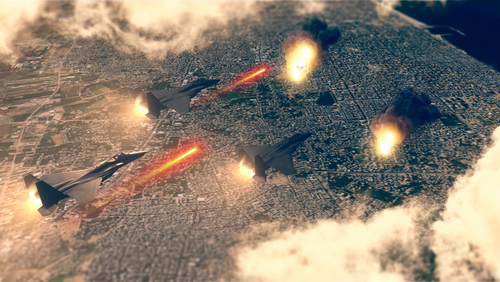
The disaster also exposes deeper problems inside the U.S. war machine. The Iran campaign leaned heavily on artificial intelligence tools like Palantir’s Maven and Anthropic’s Claude to sort thousands of targets in the first days of fighting. Analysts and former officers say old “standing” target sets, high strike tempo, and patchy data links created a perfect storm where a school that had moved out of a military compound years earlier still looked like a legal target on a screen. With the Pentagon now nearing completion of its investigation, Congress, allies, and American families will be watching to see whether the Trump administration owns the mistake, fixes the broken systems, and upholds the values it claims to defend.
Sources:
youtube.com, en.wikipedia.org, kccrradio.com, justsecurity.org, x.com, instagram.com, nytimes.com, facebook.com, amnesty.org, bbc.com, latimes.com, politico.com, smallwarsjournal.com, gatech.edu