
Trump’s new double‑digit tariffs promise tougher action on forced labor abroad—but they also mean many everyday goods at home will stay more expensive for American families.
Story Snapshot
- New tariffs of 10% and 12.5% now hit imports from America’s 60 biggest trading partners, replacing a temporary global 10% tariff that just expired.
- The administration says the duties target countries that tolerate forced labor, aiming to protect American workers and rebuild our trade leverage.
- Economists and past studies find tariff costs are mostly passed on to U.S. businesses and consumers through higher prices.
- Conservative shoppers will feel tariffs at the store in items like food, clothing, furniture, and cars, even as the policy pushes foreign governments to clean up their supply chains.
New Tariffs: What Exactly Just Changed?
On July 24, 2026, President Trump’s new **10% and 12.5% tariffs** kicked in on imports from roughly 60 major trading partners, just seconds after his temporary global 10% tariff expired. These new duties sit on top of already elevated tariff levels built up since 2025, when the average U.S. tariff jumped to one of the highest rates in a century. The White House used the “unfair trade practices” law to justify the move, tying the tariffs directly to foreign governments’ weak policing of forced labor.
The administration divided countries into two groups based on their stance toward forced labor. Nations that have laws on the books but are not enforcing them face the 10% rate; that group includes close partners like Canada, Mexico, India, and the United Kingdom. Countries that have failed to ban forced‑labor imports at all face the higher 12.5% rate, a category that includes China and Vietnam. In plain terms, a wide range of goods—from electronics to clothing—now enter the U.S. with this extra tax baked in.
How Tariffs Show Up in Your Household Budget
Tariffs are taxes on imports, and experience from the last year of Trump’s trade policy shows those taxes almost always trickle down to Americans in the form of higher prices. A study from the Federal Reserve Bank of New York found that U.S. businesses and consumers are paying nearly all of the higher costs, not foreign exporters. Research cited by Al Jazeera and others estimates that pass‑through from tariffs to consumer prices has been close to 90% or more, meaning most of what Washington collects eventually shows up on store shelves.
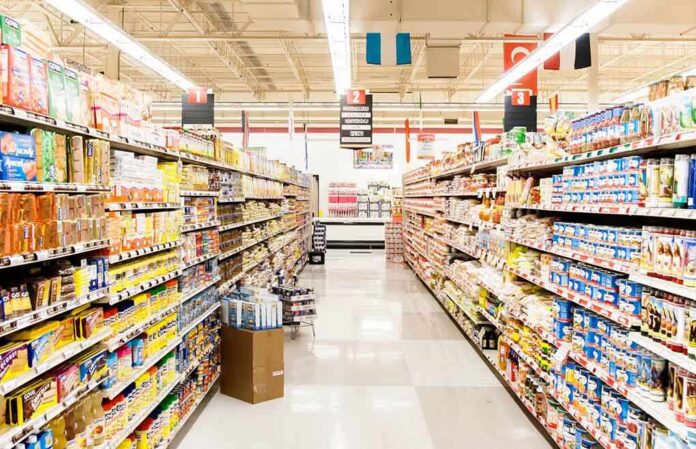
For families, that means tariffs hit daily life where it hurts: food, clothes, home goods, and cars. Analysis by the nonpartisan Tax Foundation and other economists suggests import taxes tend to raise prices most on items with few local alternatives—things like electronics, toys, furniture, and many grocery staples. As earlier Trump tariffs took hold, retailers such as Walmart and Target reported passing at least part of those added costs to shoppers. These new forced‑labor tariffs cover an even broader slice of trade, so the baseline expectation is that they will keep overall prices higher than they otherwise would be.
Inflation, Interest Rates, and “Sticky” Prices
Conservatives know inflation is a hidden tax on work and savings, and tariffs feed into that problem by propping up prices. Financial analysts tracking Trump’s tariff program say these new duties make “inflation stay sticky,” because companies adjust their price lists upward rather than eat the extra costs. When prices stay elevated, the Federal Reserve is more likely to keep interest rates higher for longer to fight inflation. Higher rates then hit mortgages, car loans, and credit cards—big monthly line items for many middle‑class families.
Earlier this year, when the Supreme Court struck down Trump’s emergency‑powers tariffs, economists expected some relief for consumers as those unlawful levies disappeared. The administration quickly replaced them with a legal 10% global tariff that has now rolled into this new forced‑labor structure. In effect, the brief window for lower prices was closed. Instead of a clear drop in costs, households now face a more complex tariff wall that still keeps import prices above free‑trade levels, muting the benefit of the court’s decision for regular shoppers.
Protection, Principles, and the Conservative Trade-Off
Many on the right support tough trade measures when they defend American jobs and punish regimes that abuse workers, and Trump’s team leans heavily on that moral case. The new tariffs follow an investigation that found about 60 foreign economies were failing to keep forced‑labor goods out of their supply chains, undercutting U.S. manufacturers that follow the law. By hitting those imports with extra taxes, the administration aims to pressure foreign governments to clean up their act and level the playing field for American workers and companies.
"BREAKING: #Trump says the U.S. will immediately launch a Section 301 investigation into the #EuropeanUnion [#EU #Europe], accusing it of 'ROBBING' American companies and saying the bloc will face 'a substantial TARIFF.' Why does Trump constantly pick fights with America’s… pic.twitter.com/n33Gb7DaJT
— Fernando Ruano Faxas (@RuanoFaxas) July 24, 2026
At the same time, conservatives value limited government and low hidden taxes, and tariffs cut both ways. Tariff policy has become a central tool of Trump’s “America First” economic agenda, with a broad wall of duties now touching nearly every trading partner. Studies and media coverage from across the spectrum agree that U.S. households end up paying more, even if some domestic factories gain short‑term protection. For Trump‑supporting consumers, the honest bottom line is this: the new tariffs advance a hard‑line stance against forced labor and unfair trade, but they also mean higher price tags on many imported goods, at least until foreign governments cave or domestic production truly scales up.
Sources:
reuters.com, tariffstool.com, wiley.law, cov.com, aljazeera.com, morningstar.com, facebook.com, brookings.edu, budgetmodel.wharton.upenn.edu, cnn.com, cepr.org, nhpr.org