
The U.S. spent up to $50 billion fighting Iran, and analysts say the Iranian government is still standing — raising hard questions about what America actually won.
Story Snapshot
- Operation Epic Fury cost the U.S. between $29 billion and $50 billion, yet Iran’s regime survived and kept most of its missiles.
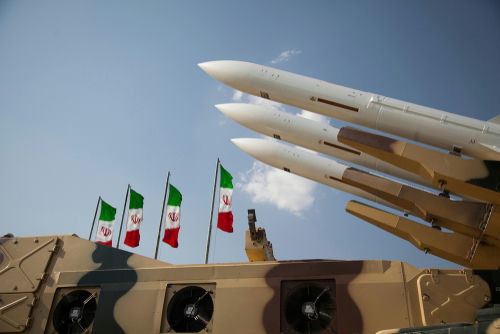
- Iran still holds an estimated 70% of its prewar missile stockpile and has rebuilt access to 30 of its 33 missile sites.
- The U.S. did damage Iran’s nuclear program and degrade its military — but fell short of the key goals of regime change and reopening the Strait of Hormuz.
- Major think tanks and analysts are split: some call it a defeat, others call it a costly partial success.
What the U.S. Set Out to Do — and Didn’t
Operation Epic Fury ran from late February to early May 2026. The stated goals included stopping Iran’s nuclear program, forcing open the Strait of Hormuz, and breaking the regime’s grip on power. None of those goals were fully met. American diplomat Richard Haas called the ceasefire deal a “massive victory for Iran” because the regime survived and got sanctions relief. The Strait of Hormuz was never safely reopened during the conflict.
Brookings Institution analysts, citing classified intelligence, reported that Iran kept about 70% of its prewar missile stockpile. Iran also rebuilt access to 30 of its 33 missile sites. The Center for Strategic and International Studies (CSIS) noted that Iran’s strategy was simply to endure and impose costs — and that strategy worked. The nuclear program was “severely set back,” according to CSIS, but not destroyed. That’s a meaningful difference from the original mission.
The Price Tag and What It Bought
The Pentagon comptroller put the public cost at $29 billion. Analysts say the real number, including repairs and munitions replacement, could reach $50 billion. For that price, the U.S. did degrade Iran’s conventional military capacity. The Brookings Institution confirmed that Iran’s military was significantly weakened, especially in its first few weeks of fighting. U.S. air and missile defense systems performed well throughout the conflict. Those are real results — but they fall short of the decisive outcome Americans were told to expect.
Casualty figures remain disputed. Official counts put total Iranian deaths around 3,636. Other estimates run much higher. The gap between those numbers has not been resolved by any verified, independent source. Without a clear count, it is hard to measure the full human cost of the war — or to claim a clean military victory based on enemy losses alone.
A Pattern Americans Should Recognize
This outcome fits a familiar pattern. Since World War II, the U.S. military has consistently won battles while struggling to achieve its political goals. Korea, Vietnam, Iraq, Afghanistan — the story repeats. Analysts at the Hoover Institution and others have argued that America’s war failures are mostly political failures, not military ones. The troops fight well. The strategy often falls apart at the top.
Scott Jennings says Americans shouldn’t worry about legislation integrating US intelligence with Israeli intelligence because Israel helped stop Iran from “assassinating” President Trump.
The fanciful claim fails to show why the US needs more integration of current levels to…
— AF Post (@AFpost) July 10, 2026
That should frustrate every taxpayer. Fifty billion dollars, thousands of lives, and Iran’s government is still running Tehran. The nuclear program took a hit, but it wasn’t eliminated. The regime didn’t fall. American voters deserve straight answers — not spin from officials who insist the military “destroyed” Iran’s forces while classified intelligence says Iran kept three-quarters of its mobile missile launchers. Congress needs to demand a full, public accounting of what Operation Epic Fury actually achieved — and what it cost.
Sources:
youtube.com, breakingdefense.com, time.com, thesoufancenter.org