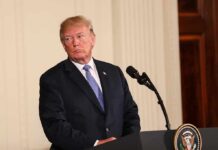

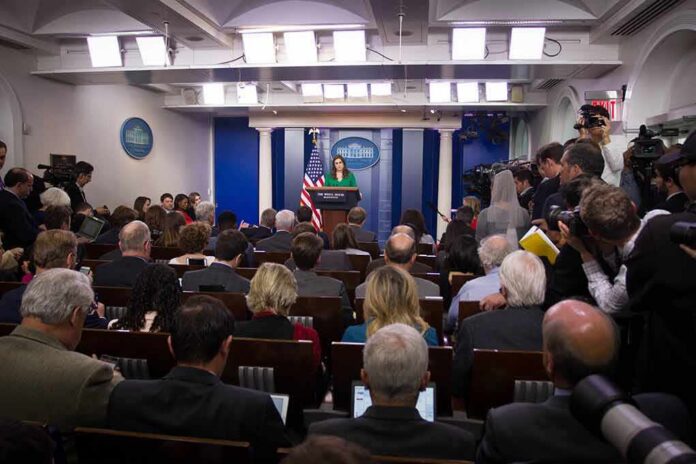
President Trump’s sharp jab at CNN’s Kaitlan Collins at the White House Correspondents’ Dinner — including a comparison to trans influencer Dylan Mulvaney — has reignited his long-running war with “fake news” media and exposed how easily press-celebrity culture drifts away from real issues facing American families.
Story Snapshot
- President Trump used the Correspondents’ Dinner stage to mock CNN’s Kaitlan Collins, calling her award “fake” and comparing her to trans influencer Dylan Mulvaney.
- Trump’s remarks fit a years-long pattern of him challenging CNN’s credibility and accusing Collins of biased, hostile coverage of his administration.
- CNN and establishment media rushed to defend Collins as an “exceptional” journalist, turning the clash into a press‑freedom storyline instead of a debate on media bias.
- Many conservatives see Trump’s roast as a needed reality check on corporate media, while critics claim the Mulvaney comparison crosses into identity‑politics territory.
Trump Turns Press Dinner Into a Showdown Over CNN Credibility
At this year’s White House Correspondents’ Dinner, President Trump did not treat the event as a friendly comedy night; he turned it into a courtroom for media credibility and put CNN’s Kaitlan Collins on the stand. Collins had just received the association’s award for Excellence in Presidential News Coverage under Deadline Pressure for her reporting on a tense Oval Office meeting with Ukrainian President Volodymyr Zelensky and Vice President JD Vance. Trump congratulated her in a sarcastic tone, then called the award “fake” and said she “shouldn’t get the award,” arguing that the honor was built on coverage that was more about attacking him than informing the public. For conservatives who watched years of slanted stories on Russia, Ukraine, and every Trump policy fight, this sounded less like a joke and more like a long‑overdue cross‑examination of the press.
Trump pushed beyond the award itself and used the dinner to call out what he sees as the deeper problem: a press club that celebrates itself while middle‑class Americans struggle with high prices, border chaos, and cultural pressure from the left. By tying Collins’s honor to “CNN fake news,” he reminded viewers that this was not a neutral civic event; it was a party hosted by the same media class that spent years trying to undermine his presidency. For many in the room, that made things uncomfortable. For many watching at home who feel talked down to by cable news, it hit a nerve they recognize from daily life.
The Dylan Mulvaney Comparison and the “Never Smiles” Line
The most explosive part of Trump’s roast came when he shifted from Collins’s award to her demeanor and then to a cultural flashpoint: trans influencer Dylan Mulvaney. Trump described Collins as “a young, attractive woman” who “never smiles,” and said he had known her for years without seeing her look happy. He told her, “Kaitlan, do you ever smile? Smile!” and tied her presence at “CNN fake news” to that grim expression, implying that constant hostility toward him has become part of the brand.
Trump then joked that when he saw the Bud Light can in the now‑infamous ad campaign, he “thought Kaitlan had really made it big,” before saying it was actually Dylan Mulvaney. That single comparison lit up social media, with critics calling it cruel and trans‑related mockery, and supporters saying it nailed how corporate media and woke branding often blur into one. What the record does not show is Collins making false statements in that moment; the clash was about tone, bias, and what Trump sees when hostile questions never let up.
A Long History of Collisions Between Trump and Kaitlan Collins
This dinner moment did not come out of nowhere; it was the latest round in a feud that has stretched across years and multiple presidents. Reports and video clips show Trump clashing with Collins in the Oval Office and briefing room over issues like deportation cases, Jeffrey Epstein records, foreign policy, and sanctions. When Collins pressed him about a disputed deportation, he snapped, “You have no credibility” and said “nobody watches you anymore,” linking his attack to what he called “false reporting.” In another Oval Office exchange over questions about Jeffrey Epstein’s survivors, Trump told her he had “never” seen her smile and described “hatred in her eyes.”
Media summaries and pool footage show Collins as a persistent questioner who keeps pressing when Trump does not accept the framing of a story. Trump, in turn, has called her “stupid and nasty” in posts and told her “don’t talk to me” when he believed she was repeating the same adversarial angle. Supporters argue this is Trump refusing to let a reporter turn every policy topic into a personal legal or moral attack. Critics argue it crosses the line into personal harassment. What is missing from the record so far is a detailed fact‑check showing that her questions were either wrong or fully fair on the merits; most coverage focuses on insults, not accuracy.
Press Freedom Narrative vs. Conservative Media Skepticism
Right after the dinner, CNN and other outlets rushed to defend Collins, describing her as an “exceptional journalist” who reports with “strength and tenacity” from the White House and beyond. The White House Correspondents’ Association framed the night as a celebration of press freedom and treated Trump’s jabs as an attack on that principle. This is a familiar pattern: when Trump challenges a reporter’s credibility, big outlets often answer with awards, statements of support, and language about democracy and a free press. To many viewers, that looks less like neutral standards and more like insiders protecting their own.
https://twitter.com/JerryHawaii808/status/2081572490317566090
Conservative audiences, especially those who have watched their energy bills rise, their communities struggle with illegal immigration, and their values mocked by coastal media, tend to see Trump’s behavior through a different lens. They hear him attacking “CNN fake news” and calling an award “fake” and think about years of selective fact‑checking, soft‑pedaled coverage of left‑wing excess, and hard‑line framing of every Trump policy as a crisis. They may wince at the personal tone, but they also know the press rarely shows the same concern when regular Americans are ridiculed for their faith, their gun rights, or their views on gender.
What This Clash Reveals About the Bigger Fight Over Truth
The Collins episode sits inside a larger struggle over who gets to define truth in American life: elected leaders accountable at the ballot box, or corporate media brands accountable mainly to advertisers and peers. Trump has chosen a clear strategy. When he believes a journalist is pushing a narrative instead of seeking facts, he does not only argue the point; he attacks the messenger’s credibility and reminds his base that ratings and awards do not equal honesty. Collins, for her part, has said she thinks Trump insults her because “he doesn’t like my questions,” and points to a pattern in how he reacts to tough female reporters.
Reasonable people can disagree about whether the Dylan Mulvaney comparison was wise or fair. The documented record shows it happened, but does not prove a detailed policy argument behind it. What the record does show is a presidency still willing to confront media power directly, a press corps eager to defend its own, and a country where many citizens no longer trust legacy outlets to tell the full story. For constitution‑minded conservatives who fear government overreach and cultural bullying, the lesson is clear: stay alert to how narratives are shaped, ask whether reporters are testing power or protecting their own class, and never outsource your judgment to anyone with a camera and a cocktail at the Correspondents’ Dinner.
Sources:
twitchy.com, yahoo.com, usatoday.com, nytimes.com, indiatoday.in, nypost.com, tmz.com, news.meaww.com, people.com, politico.com, youtube.com