

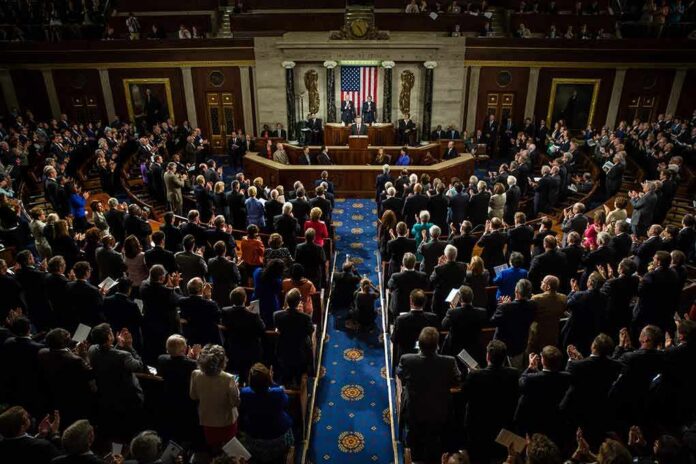
Republicans added a handful of House wins even as Democrats secured a large majority, keeping key districts competitive and the map in play.
Story Highlights
- Live counts credited Republicans with new wins and at least one Democratic-held pickup.
- Democrats passed the 218-seat threshold and hold a sizable House majority.
- Dozens of races remained uncalled as early tallies rolled in, with numbers shifting.
- Pre-election balance was narrow, so late calls still mattered in close districts.
Republicans notch wins and at least one flip amid a wider Democratic surge
Election night and the days after brought mixed news. Republicans put more seats in their column and were credited with at least one flip from Democratic control. CBS News reported that two districts shifted to Republicans, confirming that the party made gains beyond pure defense of held seats. Bloomberg’s live results page listed one Republican flip and tracked a growing Republican total as calls came in. These are race-level wins, even within a cycle that favored Democrats nationally.
Live tallies showed Democrats building a large House edge. Bloomberg’s page displayed 243 Democratic seats and 147 Republican seats in one snapshot, which cleared the majority line for Democrats by a wide margin. National outlets framed the story around Democratic control of Congress, reflecting the chamber-level outcome. The seat map still showed red gains in specific districts, proving Republicans remained competitive in parts of the country despite the national tide.
Why numbers varied: uncalled races and shifting live projections
Different outlets listed different totals because many races were still uncalled. CBS News said dozens of contests had not yet been projected, leaving room for movement in both parties’ tallies. People magazine reported that 68 House races remained uncalled as of November 4, underscoring that the count was not complete and more calls would follow. That lag explains why seats and flips appeared inconsistent across dashboards during the same period.
Interim totals also reflected how each outlet classifies “likely,” “lean,” and “called” races. NPR showed Democrats past the majority threshold, while other tallies displayed different Democratic and Republican counts in the same window. Such gaps were not disputes over facts; they were timing differences in projections and calls. As ballots were processed and verified, late calls added to each party’s totals, though the larger pattern still favored Democrats in the chamber.
Pre-election baseline and what the GOP gains mean for policy fights
The starting House balance was tight. Newsweek reported Republicans at 218 seats, Democrats at 214, one aligned independent, and two vacancies before Election Day. That narrow edge meant every competitive district mattered. Republican flips, even if limited, showed the party held ground in key areas and found openings to grow. Those wins will shape caucus strategy, committee negotiations, and regional clout, even as Democrats hold the gavel for now.
Republican gains signal where conservative messages still connect. Voters in some districts backed candidates who ran on border security, energy independence, lower spending, and safety. Those seats can serve as anchors against a leftward policy push. They also set up targets for the next cycle. When Democrats hold the majority, Republicans need durable red districts and winnable blue-leaning seats to pressure the agenda and defend constitutional rights, from free speech to the Second Amendment.
Reading the map: seat wins versus chamber control
Two truths can be accurate at once. Democrats won the House majority, and Republicans still added real race-level wins, including at least one Democratic-held pickup. Voters often hear the chamber headline and miss the district results beneath it. The map tells that fuller story. Republicans improved in some places while falling short of a national sweep. That mix matters for policy work, budget showdowns, border debates, and oversight in the next Congress.
Conservatives should track these districts closely. The candidates who flipped or held tough seats are the ones who can press for spending restraint, domestic energy production, and tougher border enforcement. As final certifications arrive, the exact count may adjust. But the core picture is set: Democrats have the House majority, and Republicans carved out a set of hard-won victories that keep the fight alive heading into the next campaign cycle.
Sources:
nypost.com, bbc.com, cbsnews.com, bloomberg.com, newsweek.com