
France’s president moved to tighten protest controls after a violent weekend exposed serious public-order failures.
Story Snapshot
- President Emmanuel Macron convened a defence council and promised new decisions before fresh protests.
- Officials planned to allow union-organised marches while restricting unauthorised gatherings and rerouting riskier flows.
- Security chiefs boosted deployments, adding elite police units and soldiers after earlier unrest and looting.
- France’s courts require case-by-case limits on assembly, setting a legal check on broad bans.
Macron Orders Defence Council And Signals Tighter Protest Controls
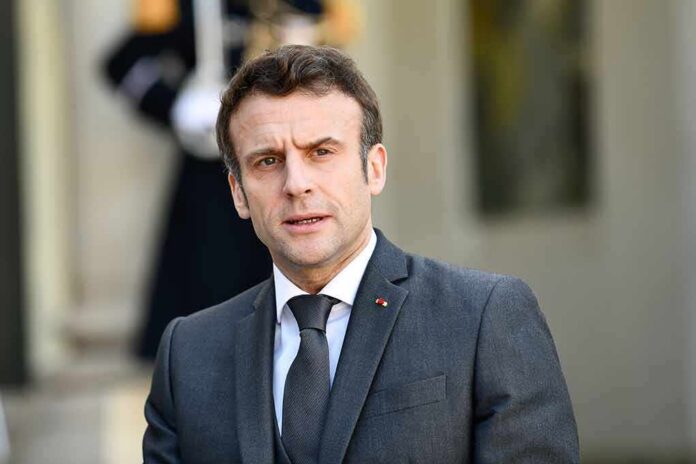
President Emmanuel Macron said a defence council would meet under his chairmanship, with further decisions coming before the weekend demonstrations. Reports said he met intelligence leaders, the prime minister, and key ministers as France braced for new protests. The plan set a clear line: union-organised events could proceed, while prefects could curb unauthorised gatherings. Officials described rerouting protests to protect businesses and sensitive sites after recent street violence and vandalism.
Government messaging stressed public safety and clear rules of the road. Authorities said recognised unions would march on agreed routes, with local prefects empowered to restrict or redirect other protests. The Élysée framed the moves as a balance between liberty and order. The stated goal aimed to prevent roving mobs that break off from marches and target shops, stations, or government areas. The approach followed days of curfews and damage across several cities during the prior weekend.
Security Build-Up After A Weekend Of Disorder
Officials pointed to a larger, more specialised force on the streets. Reports said nearly 60,000 security personnel had already deployed on 17 October. Plans for the next mobilisation included elite police units and soldiers from the Sentinelle mission. A junior interior minister announced a 20 percent increase in law enforcement numbers to deter looting and protect key zones. The reinforced posture aimed to contain flash points and keep marches separate from areas at higher risk.
The tougher posture followed one of France’s worst outbreaks of unrest in years, with violence and theft testing police capacity. Reuters reported curfews in several cities and detailed damage across commercial districts after that weekend. Macron said he would review the failures that led to the chaos. The scale of the earlier deployment, which still saw vandalism, underscored the challenge. More troops and elite units may help, but results will depend on clear routes, swift arrests, and steady command.
Legal Framework And Civil-Liberties Boundaries
French law treats assembly as a fundamental liberty that can face limits only when justified for public order. The Council of State has instructed prefects to decide bans case by case, weighing local risk rather than issuing blanket prohibitions. Courts review whether bans are lawful and proportionate, and have struck down overly broad measures in past disputes. That legal guardrail shapes how authorities authorise, reroute, or block planned and pop-up protests in the coming days.
𝗠𝗮𝗰𝗿𝗼𝗻 𝘁𝗼 𝗖𝗼𝗻𝘃𝗲𝗻𝗲 𝗗𝗲𝗳𝗲𝗻𝗰𝗲 𝗖𝗼𝘂𝗻𝗰𝗶𝗹 𝗔𝗵𝗲𝗮𝗱 𝗼𝗳 𝗙𝗿𝗮𝗻𝗰𝗲 𝗣𝗿𝗼𝘁𝗲𝘀𝘁𝘀
French President Emmanuel Macron is set to convene a Defence Council ahead of fresh nationwide protests on Saturday
The demonstrations follow unrest over the cost of… pic.twitter.com/nhZykeqhQS
— Hivileo.co.ke (@hivileo1) October 22, 2026
Reporting also captured Macron’s rhetoric blaming “seditious” elements on the hard left for trying to destabilise the Republic. The public record did not detail the specific intelligence behind those claims, leaving the politics heated even as police planning moved forward. Officials argued that restrictions target violent actors, not peaceful citizens. The coming weekend will test whether route controls, stronger staffing, and targeted bans can reduce harm while keeping space for lawful speech and assembly.
Sources:
insiderpaper.com, nampa.org, ca.news.yahoo.com, euronews.com, news.cgtn.com, rfi.fr, reuters.com