
Wall Street is buying Los Angeles wildfire insurance claims for as little as three cents on the dollar, while Sacramento’s promised crackdown fizzles.
Story Highlights
- Los Angeles wildfire claims reportedly traded between 3 and 60 cents on the dollar.
- Investors buy insurers’ recovery rights against utilities and can profit from public disasters.
- California leaders tried to curb these sales, but stopped short of a ban.
- A 2025 law gave utilities first refusal on big-fire claim sales, not a full stop.
Discounted Disaster Claims Create Big-Money Bets
Bloomberg reported that hedge funds bought Los Angeles wildfire claims at steep discounts, from about three cents to roughly sixty cents on the dollar. These are not homeowner checks. These are subrogation rights. After an insurer pays a family, the insurer can seek repayment from a third party believed to be at fault, like a utility. Investors now buy those recovery rights and wait for court outcomes, hoping recoveries beat their entry price.
Reports tied specific portfolios to price ranges. Cherokee reportedly placed Eaton fire claims near fifty-five to sixty cents, while some Palisades claims traded near three to five cents. Those numbers show why this market draws heat. If a utility is later found liable and pays more than those entry prices, investors pocket the spread. If it pays less or nothing, investors can lose. Either way, the scene looks ugly to fire survivors who see Wall Street circling a tragedy.
How Subrogation Became a Trading Floor
Subrogation lets insurers step into the shoes of policyholders to chase a responsible party. In California, that often means investor-owned utilities when their equipment is tied to a blaze. Instead of waiting years, insurers sell those recovery rights for cash today. Investors assume the legal risk and the time risk. Energy industry coverage describes this as a specialized market where buyers sit on claims and wait for verdicts or settlements. An Insurance Journal report echoed the same risk-transfer logic.
Supporters of these trades frame them as a liquidity valve. They argue insurers need cash now to handle back-to-back disasters and to keep writing policies. They say hedge funds provide that cash and take the hit if courts do not pay out. Critics answer that outside investors can drive up legal costs and that ratepayers end up footing higher utility bills after settlements. The strongest hard evidence shows prices and laws, not final cost impacts on families or taxpayers yet.
Sacramento Floated a Crackdown, Then Settled for Less
California lawmakers called out hedge fund purchases as a policy problem. They moved to stop insurers from selling wildfire claims to private-equity firms, but the broader effort stalled amid political fights. Governor Newsom and the legislature did not kill subrogation. They did not ban hedge-fund deals outright. Public coverage shows they landed on a narrower step: give utilities a first shot to buy claims before Wall Street does when a fire destroys more than 1,000 structures.
That first-refusal rule became law in 2025 and still governs large-fire situations. It is a speed bump, not a barricade. If a utility passes, claims can still go to investors. Meanwhile, reporting says the market kept moving despite the noise in the capitol. The range of trade prices suggests uncertainty over fault and the size of ultimate recoveries. It also shows why hedge funds are active: high risk, but the chance of a big spread if liability is proven.
What It Means for Ratepayers, Homeowners, and Fair Play
KQED reported that lawmakers tied their push to ratepayer protection, saying legal and settlement costs can raise electricity bills. That is a real concern for families who already face high energy prices in California. But here is the catch: there is no public, audited study yet that isolates how much investor ownership alone changes total costs versus insurers pursuing claims themselves. The data gap leaves room for spin from both sides, and families deserve clear answers.
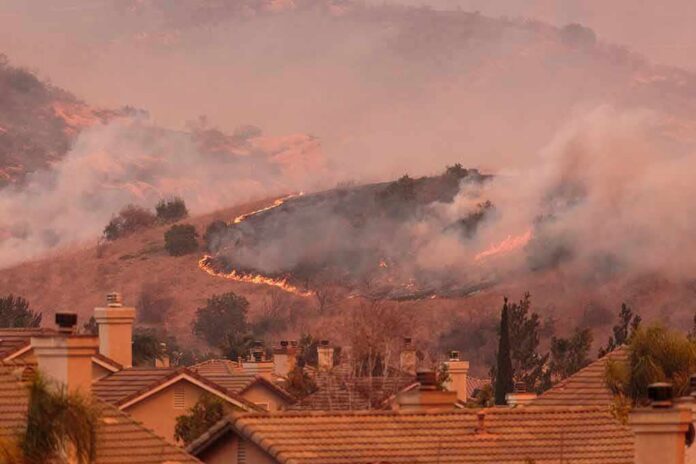
Los Angeles wildfire prompts evacuation order for parts of Santa Clarita https://t.co/Wbw4oM9frN
— Gulf Today (@gulftoday) October 12, 2026
Conservatives should demand sunlight, not slogans. Lawmakers should release bill analyses, utility rate filings, and insurer data so voters can see who pays and who profits. If claim flipping loads costs onto ratepayers, stop it. If it truly lowers costs and speeds insurer stability, prove it. California’s piecemeal fix shows the state knows there is a problem. The next step is simple: open the books, track outcomes, and protect families from hidden wildfire taxes built into their power bills.
Sources:
zerohedge.com, bloomberg.com, briefs.co, kqed.org, energyconnects.com