
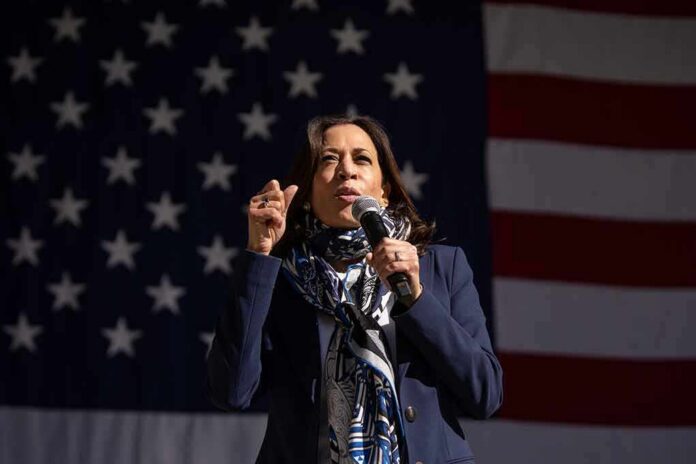
Kamala Harris named her three “most effective” presidents and pointedly left Joe Biden off the list.
Story Highlights
- Harris listed Franklin Roosevelt, John F. Kennedy, and either Lyndon Johnson or Barack Obama, but not Joe Biden.
- The exchange happened at a National Urban League event during a rapid-fire question segment.
- Multiple outlets noted the omission because Harris served under Biden as vice president from 2021 to 2025.
- Ranking presidents is subjective, and picks often reflect political values and audience expectations.
Harris Names Top Presidents, Excludes Biden
Kamala Harris answered a direct question about the three most effective presidents and did not include Joe Biden. Reports from the event cite Franklin Roosevelt and John F. Kennedy on every version of her list. Some outlets heard Lyndon Johnson as the third name, while a Fox News clip referenced Barack Obama in that slot. The moment drew attention because Harris served as Biden’s vice president for four years and has often defended his record.
The exchange took place at the National Urban League conference. National Urban League President Marc Morial asked Harris to rank the top three, and Harris began with Franklin Roosevelt after joking about the challenge. Accounts from the event describe a quick answer format, which often yields short, clipped replies that can fuel debate about intent when names are left out.
Why The Omission Landed With A Thud
Political audiences often read omission as a signal. When a public figure skips a recent ally or boss, commentators treat it as distancing or a message about performance. That pattern tends to spread fast because short answers can look like loyalty tests. Media framing then locks in the narrative before fuller context can catch up, especially on social platforms that reward speed over nuance.
This case fits that mold. Harris did not explain her criteria on stage. She gave three historic Democrats tied to big federal action at home or abroad. Franklin Roosevelt’s New Deal, John F. Kennedy’s Cold War leadership, and Lyndon Johnson’s Great Society are common fixtures in liberal-leaning rankings. Those lists vary by ideology, which is why a “top three” is less a scorecard and more a snapshot of values.
What Her Picks Suggest About Policy Priorities
Harris’s choices elevate presidents known for major federal programs and sweeping domestic policy. Franklin Roosevelt expanded Washington’s role in the economy. Lyndon Johnson drove Great Society laws and large welfare spending. John F. Kennedy inspired a bigger national mission. That tilt can irk conservatives who link those eras to today’s oversized government, high spending, and constant federal reach into daily life. Viewers will see that lineup as a clear statement of preferred tools: more central control, not less.
Kamala Harris Names FDR, JFK, LBJ, and Obama as Most Effective Presidents, Leaves Biden Off the List https://t.co/T90GfqBO9N
— Linda Beus (@lovey2u2) August 4, 2026
Many conservatives also note the contrast with current concerns. Families still battle high prices after years of inflation. Energy costs remain a sore spot. Border security and illegal immigration strain local budgets and public safety. Those priorities push voters toward limited government, stable prices, strong borders, and reliable energy. A list that spotlights the architects of big-government programs underscores that divide, and it explains why the Biden omission became secondary to which models she did praise.
How To Read The Mixed Reports
Coverage differs on the third name. Fox News featured Barack Obama in the trio, while AOL and other write-ups cited Lyndon Johnson, all from the same event prompt. That mismatch likely stems from clip length, audio clarity, or separate references to admired leaders in follow-ups. The shared constant is that Joe Biden was not named. For accuracy, readers should focus on the core overlap and the venue context, which multiple outlets confirm.
Bottom Line For Readers
Harris’s on-stage picks left out Joe Biden and leaned into presidents known for larger federal power. That choice signals priorities that many conservatives reject: more spending, more federal programs, and more central planning. Voters who want secure borders, strong families, local control, and lower costs should see this as another reminder to stay engaged. The debate is not only about names on a list. It is about which governing model will shape the country in the years ahead.
Sources:
facebook.com, foxnews.com, aol.com