
New surveillance footage of a UPS cargo jet losing its engine seconds after takeoff is raising hard questions about years of lax federal oversight and corporate corner‑cutting that cost 15 innocent lives.
Fatal Engine Separation Caught on Camera in Louisville Fireball
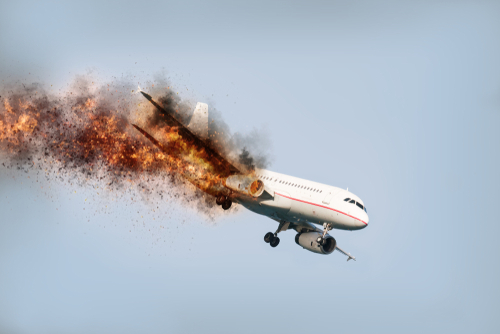
Federal safety investigators have now released chilling surveillance video from Louisville’s Muhammad Ali International Airport showing UPS Flight 2976, a Boeing (McDonnell-Douglas) MD-11 cargo jet, losing its entire left engine and pylon moments after takeoff. The footage captures the engine ripping away in a ball of fire as the aircraft races down runway 17 right, barely clearing the airport perimeter before crashing into nearby businesses and erupting into a massive fireball that killed fifteen people and injured many more.[2][4]
The National Transportation Safety Board (NTSB) timeline describes the November 4, 2025 accident in stark terms: Flight 2976 lifted off around 5:14 p.m. Eastern Standard Time, climbed only about thirty feet above the ground, then slammed into buildings south of the runway after the engine separation.[1][4] The three crew members on board died, along with eleven people on the ground; twenty-three others on the ground suffered a range of injuries as fuel-fed flames engulfed nearby structures.[4]
Investigators Zero In on Metal Fatigue and Pylon Failure
Testimony and technical briefings at the federal hearing indicate that the left engine’s pylon hardware showed classic signs of metal fatigue, especially in the outer race and mounting lugs that secure the engine to the wing.[1] Specialists explained how cracks started in lubrication grooves, slowly grew through the metal thickness, and eventually caused critical lugs in the aft mount to fracture, leaving the aft end of the pylon no longer attached to the wing and shifting impossible loads to the remaining connections until the engine tore free.[1]
Airport surveillance still images released through the NTSB docket show the left engine and pylon already separated from the wing as the aircraft becomes briefly airborne.[4] Investigators say the sequence of events is clear: fatigue cracking progressed over time, the lugs finally failed under takeoff stress, and the remaining mounts could not carry the redistributed load, leading to total separation of the left pylon and engine during rotation.[1][4] That structural failure left pilots fighting a crippled jet, at low altitude, with no room to recover.
Corporate Maintenance Claims Face Hard Reality of Wreckage
United Parcel Service representatives have stressed their maintenance and inspection regime for the MD-11 fleet, highlighting scheduled general and detailed structural inspections of the pylon and procedures for escalating any discovered defects to engineering teams.[3] Executives described a framework where technicians document damage, engineers review it against manuals, and repair orders are issued when problems exceed allowed limits, portraying the system as robust and safety focused.[3] Those assurances, however, now stand against physical evidence of advanced cracking that still went undetected.
Hearing coverage shows that the NTSB is pressing both the operator and Boeing on why cracks in parts holding the engine to the wing were not identified earlier, especially given the catastrophic consequences of mount failure.[2] While final probable cause findings are still pending, investigators have signaled that engine detachment is considered a central initiating factor, even as they continue to examine maintenance records, prior inspection data, and any broader fleet implications for the MD-11 cargo aircraft still in service.[1][3][4]
BREAKING: The NTSB has released new CCTV footage of UPS Flight 2976, showing the moment the left engine and its pylon detached from the wing during takeoff from Louisville.pic.twitter.com/MEkwV1xLee
— MUFFI KAPADIA (@muffikapadia) May 19, 2026
Accountability, Regulation, and What Conservative Voters Should Watch
Seasoned observers of aviation tragedies recognize a familiar pattern: dramatic footage appears first, technical analysis arrives later, and large institutions often try to narrow responsibility.[3] The NTSB itself separates preliminary factual releases from final cause statements because early video can show what happened without fully explaining why it happened.[3] That distinction matters for accountability; if long-term fatigue was allowed to grow because regulators and manufacturers downplayed risk, Americans deserve to know exactly who made those calls and when.
NTSB releases slowed surveillance footage of UPS Flight 2976 crash.
MD-11F’s left engine and pylon detached during takeoff from Louisville on Nov 4, 2025 → plane caught fire and crashed, killing 15 people (3 crew + 12 on ground).
Fatigue cracks in engine mount suspected. UPS… pic.twitter.com/ngZtsDXOb6
— Inside the conflict (@InsidConflict) May 19, 2026
For conservative readers who believe government’s first job is to protect life and liberty—not corporate reputations—these hearings are more than a technical exercise. Families in Louisville lost loved ones because a critical engine mount failed on a U.S. cargo jet taking off from a major American airport.[4] As the Trump administration’s transportation and safety leaders oversee this probe, they face a clear mandate: cut through bureaucratic fog, expose any regulatory complacency inherited from prior years, and ensure that no future crew or community pays this price again.
Sources:
[1] YouTube – NTSB releases new images of UPS plane moments before crash
[2] YouTube – NTSB releases new images and preliminary report on UPS cargo …
[3] Web – UPS Flight 2976 Louisville crash new CCTV footage …
[4] YouTube – UPS #2976 NTSB Preliminary Report! 20 Nov 2025