

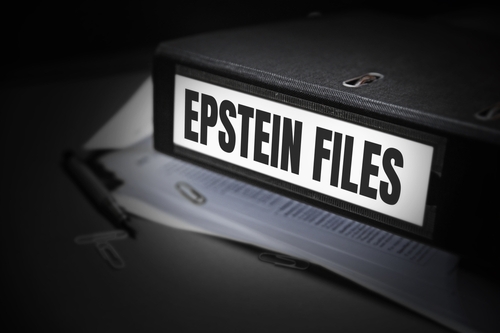
A federal judge has ordered the Justice Department to pull back the curtain on more Jeffrey Epstein files, and the fight over who gets protected — victims or powerful enablers — is exploding again.
Story Snapshot
- Judge orders release of more previously redacted Epstein files, pushing DOJ toward greater transparency.
- Survivors say their names and personal details were exposed while alleged enablers’ names stayed hidden or blacked out.
- Justice Department claims only a tiny share of pages had errors, but outside reviews show “thousands of mistakes.”
- Heavy, inconsistent redactions fuel suspicion that elites are shielded while ordinary Americans pay the price.
Judge Turns Up the Heat on the Epstein Files
A federal judge has now ordered the Justice Department to release more names and details that were previously hidden in the Epstein files, including alleged co-conspirators and interview notes.[3] This order comes after years of slow-walking, heavy redactions, and conflicting claims about what the government is really protecting. The department has released millions of pages, but many files remain sealed or covered in black boxes, keeping the public from seeing who helped Epstein and how deep the network went.[4][6]
The Justice Department has argued that redactions are needed to follow grand jury secrecy, protect minors, and honor court protective orders from past investigations.[11][15] Officials say they are obeying three key court orders and that “all legally releasable materials” have already been made public under those limits.[15] That means even with the new ruling, the department may still try to hold back parts of the story, claiming privilege, secrecy rules, or “ongoing matters” whenever powerful names appear.
Survivors Say DOJ Protected Enablers and Exposed Victims
Survivors and their lawyers say the files prove something every common-sense American fears: the system protects insiders first.[1][2][6] CNN, ABC News, and a Wall Street Journal review found victim names fully visible, including more than forty survivors and over two dozen who were minors when abused, with some names appearing more than one hundred times and even home addresses searchable.[1][2][6] At the same time, names of people described as possible co-conspirators in draft indictments and survivor statements were often blacked out.[1][6]
Attorney Brad Edwards, who has represented Epstein victims for more than twenty years, said the government made “literally thousands of mistakes” in its redaction work.[2][6] He and attorney Brittany Henderson had even provided the Justice Department with a list of about 350 victim names so reviewers could ensure those names were properly hidden, yet the department failed to run basic keyword searches to catch them.[6] Survivors called the release “a betrayal,” saying they were “named, scrutinized, and retraumatized while Epstein’s enablers continue to benefit from secrecy.”[2][6]
DOJ Claims Tiny Error Rate, But Evidence Tells a Different Story
Deputy Attorney General Todd Blanche has pushed back hard, insisting the department took “great pains” to protect victims during the release.[16] He told Congress and the media that about one-tenth of one percent of pages contained unredacted identifying information, and that a team of hundreds of reviewers and lawyers scanned documents looking for victim names and sensitive data.[3][7][8] Justice Department spokespeople say that when lawyers report errors, they quickly pull the bad documents down and repost corrected versions.[3][8]
Yet outside checks show that “0.1 percent” can still mean thousands of pages with exposed names in a multi‑million‑page release, and victim attorneys describe a true emergency.[3][6][8] Lawyers told federal judges that almost one hundred survivors had their names or personal details exposed and pointed to unredacted Federal Bureau of Investigation (FBI) interview reports and emails listing dozens of underage victims where nearly every name was visible.[3][6] The department has not produced a detailed public audit showing which names were redacted, which were missed, and the legal basis for each choice, leaving a troubling gap between its talking points and the lived impact on survivors.[6][8]
Heavy Redactions, Elite Names, and Why Trust Is Breaking Down
Media and watchdog reviews show hundreds of pages that were fully blacked out in the initial release, as well as long lists and records where every name is hidden.[5][7] One public batch included a list of more than 250 masseuses with every name redacted, even where surrounding context suggested the records might reveal who was brought into Epstein’s world.[5] At the same time, some political or celebrity photos and communications were released, while other potentially important names stayed behind thick black lines, creating a sense that redaction standards shift when elites are involved.[6][7][27]
‼️‼️Federal judge orders Acting AG Todd Blanche to unredact and release more Epstein files by July 2.
Judge Emmet G. Sullivan just granted journalist Katie Phang’s motion for a preliminary injunction in Phang v. Blanche.
The court found the DOJ likely violated the Epstein Files… pic.twitter.com/Me5Oh7gfk6
— Maine (@TheMaineWonk) June 26, 2026
Survivors and their lawyers say this mix of over‑redaction and sloppy mistakes looks less like “neutral law” and more like a system captured by insiders.[6] Jennifer Freeman called the redactions “ham‑fisted” and accused the department of “hiding the names of perpetrators while exposing survivors.”[6] For constitutional conservatives, this cuts to the core issue: a government that can decide who gets shielded and who gets exposed is a government with far too much unchecked power. When secrecy, privilege, and executive protections are used to hide the names of alleged enablers, while ordinary Americans’ daughters are left searchable online, trust in equal justice under law collapses.
Sources:
[1] Web – Judge orders release of more Epstein-files names that were redacted
[2] Web – September 17, 2025: Kash Patel’s House testimony on Epstein files
[3] Web – FBI Director Kash Patel clashes with House lawmakers over Epstein …
[4] Web – Epstein files take center stage in FBI director Kash Patel’s …
[5] YouTube – Kash Patel’s Epstein Video Played In Congressional Hearing; Watch …
[6] YouTube – Kash Patel’s Epstein Video Played In Congressional Hearing
[7] Web – WATCH: FBI Director Patel grilled on Epstein files in House hearing
[8] YouTube – Kash Patel drops Epstein bombshell at explosive House hearing
[11] Web – Epstein victims’ lawyers ask judges to force takedown of released …
[15] Web – Should the Government Release More of the Epstein Files …
[16] Web – Justice Department faces continued backlash over limited …