
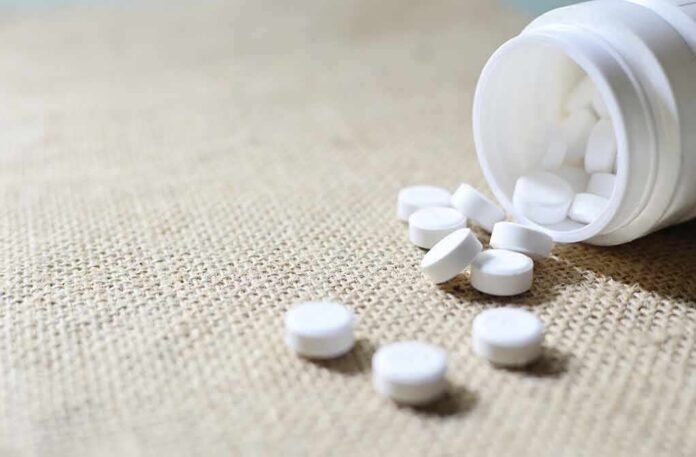
A half-mile stretch of Washington Heights has become a prescription pill bazaar in broad daylight.
Quick Take
- Reports say at least 20 vendors were selling prescription pills across 10 square blocks.
- New York law treats selling prescription drugs without a valid license as a felony.
- Authorities have a long record of chasing similar drug markets in Washington Heights.
- The current report is driven mainly by one newspaper story, not a new official agency release.
What the July Report Says
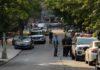
A New York Post report says a half-mile section of Washington Heights was turned into an open-air prescription drug market, with vendors selling painkillers, erectile dysfunction pills, antibiotics, and other medicines from folding tables. A republished version of the story says the area ran along St. Nicholas Avenue between West 179th and 183rd streets and included at least 20 tables. The report describes loose blister packs, bottles, and boxes laid out in plain view.
The story matters because it points to a problem many New Yorkers already know too well: public drug dealing that feels visible, repeated, and hard to stop. The report also says the Department of Sanitation is the lead agency for street vendor enforcement in the city. It adds that unlicensed vendors can face $250 for a first violation, then $1,000 plus $250 per day for later violations.
Why the Allegations Matter
If the reported sales are accurate, the legal risk is serious. The New York Post says selling prescription drugs without a valid license is a Class D felony in New York and can bring up to seven years in prison. The report also says importing and peddling prescription drugs from abroad can trigger federal and state penalties that range from $1,000 to $250,000 in fines and one to 20 years in prison. Those are steep punishments for street-level sales.
That legal backdrop helps explain why this story hits a nerve across party lines. Many conservatives see it as proof that street crime keeps spreading under weak enforcement. Many liberals see another example of a system that lets addiction, poverty, and black-market profit feed each other. The common concern is simpler than ideology: people want streets that feel lawful, safe, and orderly, but repeated drug markets make that harder to believe.
What Past Cases Show
Washington Heights is not new to this kind of problem. A 2016 Special Narcotics Prosecutor release said 13 people tied to the “Six Block” gang were arrested after an open-air drug market was disrupted in the neighborhood. A later Secret Service case in 2023 charged 16 members of a Washington Heights narcotics crew. Separate reporting also said a Manhattan doctor was arrested by the Drug Enforcement Administration and the United States Marshals Service for allegedly supplying oxycodone that was sold on Washington Heights streets.
👁️SPOTTED: A half-mile section of Washington Heights has been transformed into an open-air prescription drug street pharmacy, with brazen vendors illegally peddling painkillers, er3ctile dysfunction pills, and an array of other meds..
The sellers have no fear of being uprooted… pic.twitter.com/b13POeflU2
— Michael Khieu (@kingkhieu) July 21, 2026
Those earlier cases matter because they show a pattern, not just a one-day headline. Reporting from City Limits described Washington Heights as a hub for illegal HIV drug traffic and said street sales had been visible near uptown subway stations for years. That does not prove every claim in the newest report. It does show why residents may see the latest story as part of a longer breakdown in enforcement, not a one-off event.
What Remains Unproven
The strongest gap in the current reporting is official confirmation. The evidence in the search results centers on a newspaper report and a republished version of that report. No contemporaneous police press release, court filing, or agency announcement specifically confirms the July 2026 Washington Heights vendor counts, locations, or drug types. The report also does not show lab tests for the pills sold on the street, so claims about fentanyl, methamphetamine, or counterfeit products are not proven in the material provided.
That missing proof does not erase the concern. It does, however, limit what can be said with certainty. The record here supports a clear claim that illegal prescription drug sales have been reported in Washington Heights, and that the area has a long history of similar activity. It does not yet provide the kind of official, documented enforcement record that would settle how large the market is or how aggressively authorities are responding.
Sources:
zerohedge.com, nypost.com, news.grabien.com, dea.gov, snpnyc.org, ntd.com, secretservice.gov, instagram.com