

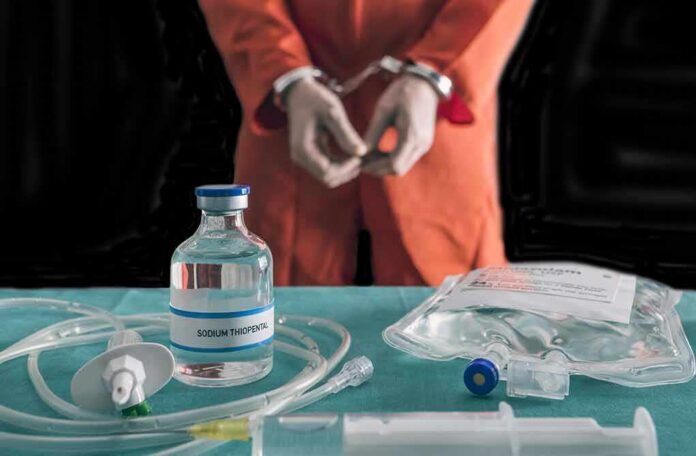
Witnesses say Tennessee gave Christa Pike two lethal drug doses and still failed to carry out the execution.
Story Snapshot
- Media witnesses and attorneys say Pike was still breathing after two pentobarbital doses.
- Courts issued rapid-fire orders: a pause, then permission, then another halt amid the attempt.
- Tennessee’s process closed curtains during key checks, limiting public verification.
- The case spotlights recurring lethal-injection breakdowns tracked nationwide.
What Happened Inside Tennessee’s Death Chamber
Reporters and attorneys said Tennessee officials administered two syringes of lethal-injection drugs to Christa Pike on Wednesday night, yet she remained alive and audibly breathing long after the second dose. Witnesses described staff closing the viewing blinds before medical checks, and the warden later directing media to leave while Pike was still breathing. Attorneys told courts she had a heartbeat and was snoring as they sought an emergency halt, which a federal court granted during the attempt.
State protocol reportedly calls for a second drug set only if the inmate is not deceased after the first set, a waiting period, and a physician exam conducted behind closed curtains. Media accounts said two rounds were used, but Pike did not die during the window observed by witnesses. After the chamber cleared, officials transported Pike for medical care, according to coverage based on attorney filings and witness reports. Officials did not immediately offer full details about what went wrong.
How Courts Cleared, Paused, and Then Halted the Attempt
The United States Supreme Court allowed Tennessee to proceed earlier Wednesday, vacating a lower court stay that had paused the execution that morning. A federal appeals court had first halted the execution to review issues from Pike’s case history, but the high court’s order reopened the path. During the evening attempt, lawyers filed emergency papers reporting that Pike remained alive after two injections. A later court order halted the process while she was still breathing, according to filings and witness accounts.
Local reporting noted Tennessee planned to move forward Wednesday after the Supreme Court’s action and before a midnight deadline referenced by officials. The flurry of orders and the on-and-off execution window produced confusion for observers and families. The end result, according to multiple outlets, was that Tennessee did not complete the execution on Wednesday and the process stopped with Pike still alive.
Why This Breakdown Matters for the Rule of Law
Death-penalty researchers track execution problems and list dozens of lethal-injection breakdowns across the country. Their data show lethal injection has the highest share of visible failures among execution methods, including cases with drug delivery questions, closed-curtain gaps, and prolonged procedures. Tennessee’s reported use of two rounds and the extended timeline align with patterns that have sparked past reviews in other states and calls for stricter transparency and competency standards in the chamber.
Not a minor procedural failure; it goes to the competence and safeguards of the execution process itself.
US death row inmate Christa Pike taken to hospital after surviving two lethal injections, says lawyer https://t.co/uv8Xru7spR
— Harry Wolstenholme (@HarryWolst) October 1, 2026
Conservatives expect government to carry out lawful sentences promptly and competently. Families deserve closure, and citizens deserve a process that follows the rules to the letter. When witnesses report two drug rounds, long delays, and secret checks behind blinds, confidence takes a hit. The fix is not to abandon justice, but to enforce it with clear protocols, public accountability, and leadership that resists activist pressure while insisting the state do the job right—the first time.
Sources:
redstate.com, cbsnews.com, usatoday.com, nbcnews.com, edition.cnn.com, cnn.com, axios.com, nytimes.com, yahoo.com, tennessean.com, hindustantimes.com, newswest9.com, wsmv.com, abc7.com