

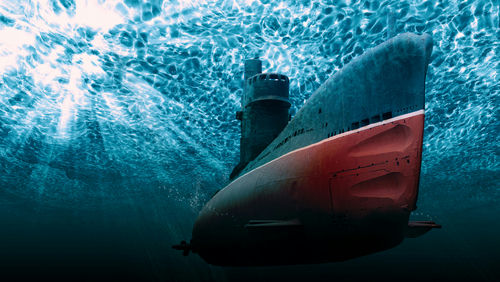
China’s latest nuclear-capable missile shot from a submarine into the Pacific is a loud wake‑up call that Congress cannot afford to hit “snooze” on.
Story Snapshot
- China launched its first publicly acknowledged submarine ballistic missile into international Pacific waters, showing new reach toward the U.S. homeland.
- Beijing claims the test was “routine” training with a dummy warhead, but neighbors and U.S. officials called it destabilizing and irresponsible.
- China gave only hours of notice and vague details, far below norms followed by other major nuclear powers.
- The test fits a bigger pattern of China rapidly building secretive nuclear and missile power while dismissing U.S. concerns as “double standards.”
China’s Missile Test Shows New Nuclear Reach
On July 6, 2026, the Chinese military fired a long‑range ballistic missile from a nuclear submarine in the South China Sea, sending it into open Pacific waters for the first time. Analysts say this test, likely of the JL‑3 system, proves China can reach the continental United States from waters near its own coast, instead of sailing subs across the globe. This gives Beijing a stronger, more survivable sea‑based nuclear strike force, and it shifts the balance of power in the Indo‑Pacific in ways Americans cannot ignore.
China’s state media and the People’s Liberation Army Navy insisted the launch was just part of an annual training program and used a dummy warhead that hit a designated zone in the Pacific. A senior Chinese naval officer stressed the shot was routine, claimed it followed international law, and said it was not aimed at any country. But this “nothing to see here” message clashes with what the missile can do: carry nuclear weapons over intercontinental distance and threaten cities from Los Angeles to Chicago.
Minimal Warning, Maximum Alarm Among Allies
The United States State Department reported that China gave Washington only a few hours of warning, with little detail on the missile type or flight path. Experts note this falls far short of the practices used by other permanent members of the United Nations Security Council, who share clearer information before major launches to avoid panic or miscalculation. Japan, Australia, and New Zealand also received late, bare‑bones notices, leaving little time to prepare air and sea traffic and raising fears about what China may do next.
Regional leaders did not buy Beijing’s “routine drill” line. Australia’s foreign minister called the test destabilizing, and New Zealand’s deputy prime minister labeled it unwelcome and concerning. Commentators across Western media said China was acting like a bully and using a nuclear‑capable missile to send a political message, not just train crews. Taiwan’s security officials shared graphics showing the missile’s path near the Philippines, underscoring how close this shot came to busy sea lanes and populated land.
Symbolic Timing and a Growing Nuclear Build‑Up
The test came the same day Australia and Fiji signed a new defense pact, a deal meant to strengthen free nations in the South Pacific. Analysts say the timing was no accident; launching a missile on that date signals that China wants every capital in the region to see its reach and feel its pressure. This was not a simple factory test at home. It was a very public show of force inside a nuclear‑weapon‑free zone that China itself agreed not to threaten.
U.S. think tanks and Pentagon reports already describe China’s nuclear growth as rapid and opaque, meaning big changes with little transparency. Since 2010, Beijing has worked hard to build more advanced missiles and interceptors, and now it is adding powerful submarine systems to that mix. The July test fits that pattern: new technology, limited warning, vague data, and angry pushback when other nations complain. That is a recipe for missteps in a crisis and for neighbors to arm up in response.
Why Congress Must Act Now
For Americans who care about a strong military and a safe homeland, this test is not just far‑off news. A missile that can quietly leave Chinese waters and reach U.S. soil raises direct questions about missile defense, early warning, and how many warheads Beijing plans to field. China’s foreign ministry brushed off U.S. concerns as “double standards” and “hegemonism,” signaling that polite protests will not change its path. That kind of defiance should stiffen the spine of lawmakers in Washington, not make them shrug.
🚨 China's latest SLBM test is more than a missile launch it's a strategic message.
A stronger sea-based nuclear deterrent gives Beijing greater second-strike capability and adds a new layer of complexity to the Indo-Pacific security landscape.
For India, this underscores the… pic.twitter.com/qL50zciYYa
— BharatVoxx 🇮🇳 (@BharatVoxx) July 12, 2026
Former Trump‑era national security and Federal Bureau of Investigation (FBI) officials have warned for years that China’s military build‑up is designed to challenge U.S. power, not to coexist peacefully. With President Trump back in the White House, Congress now has a partner ready to rebuild America’s nuclear readiness, modernize missile defenses, and push for real launch‑notification rules that Beijing cannot dodge. The missile that splashed down between Nauru and Tonga should be treated as a starting gun, not just another headline. If Congress drags its feet, it is not China that will “blow” this response — it is us.
Sources:
redstate.com, instagram.com, facebook.com, news.usni.org, reuters.com, china-arms.com, cnn.com, cnbc.com