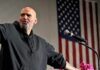


The mayor of Minneapolis chose Memorial Day to publicly honor George Floyd, igniting a values test about what, and whom, civic leaders memorialize.
Story Snapshot
- Mayor Jacob Frey’s visible mourning for George Floyd became a defining image of Minneapolis leadership after 2020 [1].
- City communications under Frey describe a civic plan to “honor George Floyd” through the George Floyd Square project [2].
- Memorial Day messaging centered on Floyd triggered criticism that veterans were sidelined [7].
- Public remembrance now doubles as a policy signal about policing, unity, and urban priorities [2][7].
The Memorial Day Flashpoint And What It Signaled
Minneapolis Mayor Jacob Frey marked Memorial Day by honoring George Floyd, a choice that touched a cultural rail because Memorial Day is dedicated to service members who died in war. Critics argued the mayor blurred a sacred civic boundary by highlighting Floyd on that day rather than keeping the focus on fallen troops [7]. Supporters framed Floyd as a catalyst whose death forced Minneapolis to confront policing and community trust, which, in their view, merited public remembrance in a city still shaped by 2020.
Public reaction followed the pattern that now defines urban politics: every symbolic act becomes a referendum on priorities. The timing turned a local commemoration into a cautionary tale about messaging discipline. Mayors do not only allocate budgets; they allocate honor. On days such as Memorial Day, that allocation reads like a values ledger. Many residents interpreted this ledger as lopsided toward activism and away from the universal rituals that bind a nation at war and peace [7].
Memorial Day 2026 in Minneapolistan
Dhimmi Mayor Jacob Erases Memorial Day to Honor George Floyd in Islamized and Captured Minneapolis
This is what happens when a once-American city is captured and Islamized:
They erase Memorial Day and celebrate a fentanyl criminal who… https://t.co/4dlUogRZBY pic.twitter.com/xkIGeC5pJ1
— Amy Mek (@AmyMek) May 25, 2026
The Image That Won’t Go Away: A Mayor Weeping At A Casket
Video from 2020 shows Jacob Frey at George Floyd’s memorial, pausing before the casket, dropping to a knee, and sobbing [1]. That image cemented a public identity: a mayor willing to emote visibly about a man whose death convulsed his city. For allies, this humanized leadership. For skeptics, it foreshadowed a governing posture they viewed as performative and permissive during unrest. The footage re-enters circulation whenever Minneapolis debates policing, crime, or commemorations, because images outlast press releases [1].
ON THIS MEMORIAL DAY, I CHOOSE TO REMEMBER THAT OFFICER DEREK CHAUVIN IS A POLITICAL PRISONER HELD SIMPLY BECAUSE OF A PHONY NARRATIVE THAT CLAIMED HE KILLED GEORGE FLOYD.
THAT SAME GEORGE FLOYD WAS A CAREER CRIMINAL, WITH 6 PRISON NUMBERS, INCLUDING THE TIME HE HELD A GUN TO… https://t.co/E5bFTuxdtF pic.twitter.com/4geH1nBp57
— Just Jen ℞ 🫡🇺🇸 (@JustJenRX) May 25, 2026
Press remarks after Floyd’s death underscored that the city recognized the killing as a moral and civic rupture [3]. The mayor’s language emphasized accountability and change, aligning City Hall with a wave of policy and cultural shifts. That stance—less procedural, more moral—pleased activists who wanted rapid reforms. It also raised expectations that every subsequent civic ritual would reflect that same moral register, which complicates calendar-bound observances like Memorial Day that carry their own guarded traditions [3].
From Slogan To Street: Institutionalizing Remembrance In Minneapolis
City communications later presented George Floyd Square as a space that “honors George Floyd,” tied to healing, unity, and a flexible-open street design advancing through municipal process [2]. Codifying remembrance changes the politics: a statue divides less than a street closure, because traffic, commerce, and emergency access all live in the policy details. The mayor’s choice to formalize a commemorative footprint effectively turned memory into infrastructure. Critics asked whether the city privileged symbolism over basic services; supporters said shared space is a service [2].
Minneapolis Mayor Jacob Frey honors George Floyd on Memorial Day https://t.co/HBkXCysqFB
— Libby Emmons (@libbyemmons) May 25, 2026
Conservative readers will see a straightforward test: a mayor’s first duty is public order, fiscal prudence, and respect for unifying traditions. Honoring a controversial figure on Memorial Day—when the nation remembers war dead—appears to invert that hierarchy. The strongest factual supports for the mayor’s posture are clear: his documented grief at the memorial [1], his administration’s formal language about honoring Floyd in city plans [2], and his early statements acknowledging the city’s breach of trust [3]. Whether those supports justify Memorial Day emphasis is a judgment call grounded in civic common sense.
What A Calmer Path Would Look Like
Clear sequencing would have defused much of the blowback: lead Memorial Day with robust recognition of fallen troops, then situate Floyd’s remembrance in the city’s ongoing reconciliation efforts on a separate cadence. That approach honors the dead who wore the uniform while acknowledging a local tragedy that changed policy and culture. Cities must carry both truths. Leaders earn trust by ordering those truths in a way that strengthens civic unity rather than testing it, especially on the calendar’s most sacred days.
Sources:
[1] YouTube – Minneapolis Mayor Jacob Frey cries at George Floyd’s …
[2] Web – Mayor Frey Celebrates Major Step Forward for George Floyd Square
[3] Web – Minneapolis Mayor Speech After George Floyd Death | Rev
[7] Web – Why Is This Democrat Spending Memorial Day Honoring George …