

Washington’s top prosecutor just told parents that if their kids join a “teen takeover,” they might be watching summer fireworks from a jail cell instead of a rooftop bar.
Teen Takeovers Force a Federal Line in the Sand
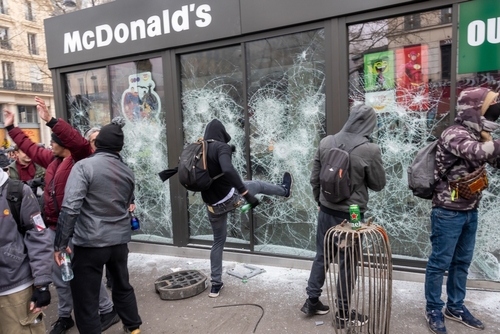
Teen takeovers in Washington, D.C. are no longer just a nuisance headline; they have become the spark for a federal showdown over what parenting means in 2026. These youth flash mobs, often organized by social media, swarm entertainment districts like Navy Yard and NoMa. Residents describe late‑night crowds, brawls, property damage, and businesses locking doors while paying customers hide inside. Complaints piled up, curfews failed to calm the streets, and into that vacuum stepped U.S. Attorney Jeanine Pirro.
Pirro announced that her office will aggressively enforce D.C. Code § 22‑811, the “contributing to the delinquency of a minor” statute, alongside existing juvenile curfew rules. That statute makes it a crime for an adult to enable, facilitate, or knowingly permit a minor to engage in delinquent acts. Her message is blunt: if your kid is out at 1 a.m. in a violent takeover crowd and you knew or looked the other way, you could be the one in handcuffs, not just your teenager.
Why Parents, Not Just Teens, Are in the Crosshairs
Pirro’s initiative shifts the focus from the teens to the people who raise them. She argues that law‑abiding taxpayers should not fund what she calls “chaos caused by parental neglect.” Her office cannot directly prosecute minors for curfew violations—that power rests with the local attorney general—so she is using the tool she controls: parental liability. Federal prosecutors plan to push for parental citations whenever MPD ties a curfew violation to a takeover, with possible jail time, fines, and mandatory parenting classes.
Conservatives will recognize the instinct: accountability starts at home. The logic is simple and rooted in common sense. A fifteen‑year‑old does not teleport to Navy Yard after midnight. Someone gave permission, ignored obvious red flags, or repeatedly failed to respond to warnings. The statute still requires proof of intent or knowledge, which is a high bar. That requirement protects responsible parents who genuinely tried, while targeting those who essentially shrug as their kids roam the city looking for trouble.
D.C.’s Political Tension: Safety Versus Softness
Pirro’s move also exposes a simmering fight between D.C.’s federal prosecutor and its local political class. She publicly accuses the D.C. Council of refusing to “deal with the problem,” arguing their inaction endangers residents and teens alike. For years, the Council has leaned toward leniency in juvenile justice, even as crime concerns grew. Mayor Muriel Bowser has used curfews, but councilmembers resisted tougher measures, wary of being tagged as punitive in a progressive city that talks about decarceration.
That gap between rhetoric and reality is exactly where teen takeovers flourish. Residents in Navy Yard and other hot spots say they are tired of dodging large, unruly crowds while hearing speeches about systemic reform. From a conservative standpoint, Pirro is responding to a vacuum of will. When local lawmakers downplay consequences, they effectively outsource the job to federal prosecutors. That is not ideal structurally, but it is unsurprising in a federal district where the U.S. Attorney already handles much of the local caseload.
Supporters, Skeptics, and the Question of Overreach
Neighborhood reactions are split and revealing. Some residents and business owners welcome the crackdown, viewing it as finally putting teeth behind curfew warnings that teens long ago stopped taking seriously. They see a simple equation: visible consequences lead to fewer flash mobs, fewer broken windows, and fewer nights when restaurants close early because the sidewalk turned into a brawl. From that vantage point, parental prosecutions are not cruelty; they are a late but necessary return to adult supervision.
Civil‑rights advocates and some local leaders answer with a different alarm bell. They warn that broad parental liability will fall hardest on lower‑income families and communities of color, where parents may juggle multiple jobs, unreliable transportation, or absent co‑parents. They question whether prosecutors can fairly prove that a parent “knew” their child would be in a takeover, rather than simply being overwhelmed. Those concerns deserve scrutiny, because any law that relies on police discretion can be twisted if leadership goes soft on standards and hard on optics.
Deterrence, Due Process, and What Comes Next
The initiative stands or falls on two pillars: deterrence and due process. As a deterrent, the concept is powerful. When word spreads that mom or dad can be prosecuted even if the kid is never charged, family conversations change. Curfew stops being a theoretical boundary and becomes a legal one. For conservatives who believe culture is shaped by incentives, this fits the pattern: misbehavior declines when consequences are real, predictable, and publicized, not when warnings are endless and penalties rare.
Due process remains the safeguard. Prosecutors must still prove intent or knowledge, judges must still weigh evidence, and juries—if cases get that far—will bring community standards into the courtroom. The real test will be whether Pirro’s office uses this power selectively and carefully, targeting clear cases of willful neglect, or whether busy dockets and political pressure push marginal cases forward. Measured enforcement could reset expectations; sloppy enforcement would undermine both trust and the core conservative case for order.
Sources:
US Attorney Pirro announces new enforcement measures targeting teen takeovers
Teen takeovers: DC residents react as Jeanine Pirro targets parents for prosecution