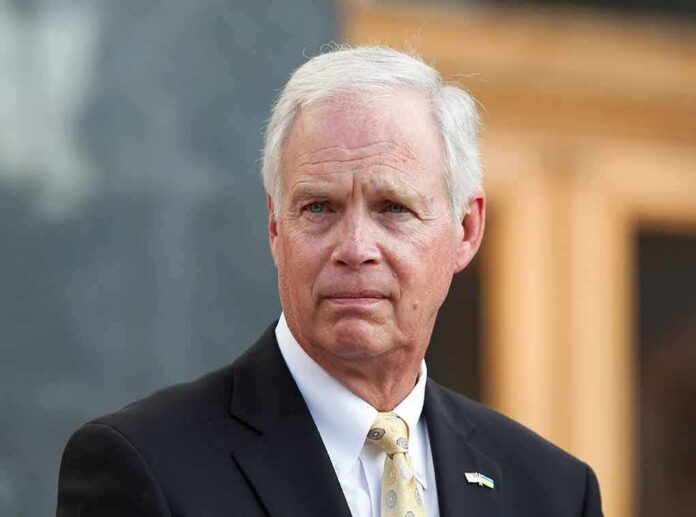
Sen. Ron Johnson warned he will walk out if Senate Republicans rush leadership elections after a “stunning defeat,” demanding a real plan before picking who leads the fight.
Story Snapshot
- Five Republican senators asked to delay leadership elections for a full conference discussion.
- Ron Johnson said he would leave if the vote happened without debate.
- The request met the reported five-signature threshold to force a conference meeting.
- John Thune backed a robust discussion but still aimed to proceed with elections.
Johnson’s Demand: Debate First, Then Vote
Sen. Ron Johnson of Wisconsin moved to slow the Senate Republican leadership elections after a bruising midterm, calling a rushed vote “political malpractice.” Johnson, joined by Sens. Mike Lee, Rick Scott, Ted Budd, and John Kennedy, sent a November 9 letter to Senate Republican Conference Chair Tom Cotton asking to start with a full discussion of what went wrong and how leaders plan to fix it. The senators sought clear plans for a collaborative governing model and a winning strategy against Democrats.
Johnson said he would not take part if leadership pushed ahead without the debate. He told the Washington Examiner, “If you hold the election, I’ll leave the room” and confirmed he would not participate in a quick vote. His stance showed the protest was not just talk. It forced colleagues to weigh transparency and accountability after an election many Republicans called a “stunning defeat” that demands honest review before renewing leadership terms.
The Procedural Lever: Five Signatures Force a Meeting
Reports said Johnson secured the five signatures needed under Senate Republican rules to compel a conference meeting on Tuesday, giving the delay push a procedural foothold. Sen. Mike Lee added two pointed reasons to wait: first, to examine why the party lost; second, to confirm who will sit in the Republican conference before any vote, since Alaska and Mississippi races were still unresolved at the time. This approach asked for order and clarity, not chaos, before Republicans chose who leads them next.
The letter also set a constructive path, not just a protest. The five senators wanted leadership hopefuls to present how they would run a more open, united conference and how they would counter Democrats’ agenda in the new Congress. That model echoes common-sense conservative aims: listen to members, respect voters, and build a plan to stop runaway spending, secure the border, lower energy costs, and defend constitutional rights. The record, however, does not show a timeline or final decision rule for the review.
Thune’s Push to Proceed and the Tension Inside the Room
Sen. John Thune signaled support for a “very fulsome, robust conversation,” yet reports said leadership elections were still expected to move forward and that he had broad support with no declared challenger. Supporters argued Republicans should keep pressing their agenda and draw sharp contrasts with Democrats rather than pause after losses. That posture, while steady, let leadership accept a discussion but resist any delay, keeping the advantage that comes with incumbency and a scheduled, closed-door, secret-ballot vote.
This dynamic created a basic test: Will the party treat defeat as a reason to change how it is led, or will it keep the current team while it talks about lessons learned? Reporting showed no clear majority for a postponement, only the five signatories and a conference divided over timing. The available record tied the push to the defeat but did not prove that a delay alone would change 2028 outcomes, nor did it catalog specific leadership failures to review.
Why It Matters to Conservative Voters
Republican voters want a Senate team that will fight inflationary spending, end border chaos, lower energy bills, and protect the Constitution. A fast, insider vote after a wipeout looks like business as usual. Johnson’s group asked for daylight first, plans second, and ballots last. That order respects the people who expect results, not excuses. It also forces clarity on how to block Democrats’ priorities, from bigger government and higher costs to rules that weaken election integrity.
Supporters of moving ahead said focus should stay on selling the Republican agenda now, not delaying for a postmortem. But a direct, member-driven review does not weaken the message; it strengthens it. It shows Republicans are serious about winning the argument and the votes. The meeting threshold was met, the questions were on the table, and the next step was simple: let members hear the plans, then choose the leader who can deliver, not just manage the calendar.
Sources:
thegatewaypundit.com, rollcall.com, deseret.com, washingtontimes.com, cbsnews.com, bloomberg.com, fresnobee.com, washingtonexaminer.com, newsnationnow.com, yahoo.com, senate.gov, houstonchronicle.com