
Iran’s latest drone strike and toll threat in the Strait of Hormuz shows just how close the world’s energy lifeline is to a full-blown chokehold.
Story Snapshot
- Iranian forces hit the Singapore-flagged Ever Lovely with a one-way attack drone as it exited the Strait of Hormuz, damaging the ship’s bridge but sparing the crew.
- Tehran’s new Persian Gulf Strait Authority is warning that “unauthorized routes” will not be guaranteed safe passage and is moving toward tolls or “fees.”
- The United Nations International Maritime Organization paused its evacuation and escort operations, leaving thousands of sailors stuck and proving Iran can disrupt traffic.
- President Trump ordered U.S. strikes on Iranian radar, missile, and drone sites, while Iran talks like it controls the strait but has struggled to keep it fully closed.
Iran Uses Drones And Tolls To Test Control Of A Vital Waterway
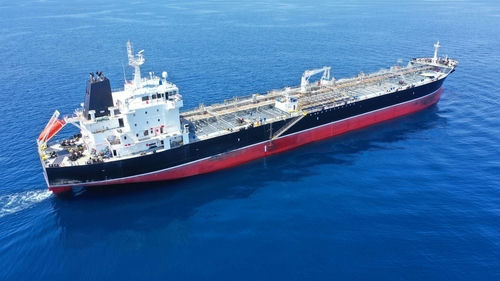
On June 25, Iranian forces sent at least one one-way attack drone into the Singapore-flagged container ship Ever Lovely as it traveled along the Omani coast, just outside the Strait of Hormuz. The drone hit the starboard side of the bridge and upper deck, shattering windows and damaging the superstructure. The United Kingdom Maritime Trade Operations center reported an “unknown projectile” and confirmed bridge damage, but said there were no injuries and the ship continued on. Two U.S. officials told reporters and Fox News that the strike came from the Islamic Revolutionary Guard Corps, backing up what shipping monitors already suspected.
The timing of the strike was not random. Hours before Ever Lovely was hit, Iran’s powerful Revolutionary Guard warned that safe passage through Hormuz would only be assured on routes they had designated, putting Tehran in the middle of every captain’s navigation plans. A newly created Persian Gulf Strait Authority then declared that ships using “unauthorized routes” would move at their own risk and that any consequences would be on the “owner, operator and vessel commander.” Iranian outlets also boasted that three foreign tankers tried to pass without approval and were turned back after warnings, although they offered no hard proof like images or independent logs.
UN Escorts Paused And Global Oil Flows Put In Jeopardy
After the Ever Lovely attack, the United Nations’ International Maritime Organization froze its evacuation and escort plan for ships trapped in the Gulf, saying it could not guarantee safety. Analysts estimate the plan was intended to help more than 11,000 stranded sailors get out of the region, a huge number of people who now sit in limbo because Iran can harass traffic with drones and threats. The pause has no end date, and the agency admits it has not received credible assurances that future transits will be safe. This comes in a waterway that carries roughly a quarter of the world’s traded oil, meaning every disruption hits family budgets through higher gas and energy costs.
At the same time, Iran has tried to turn the crisis into a money lever. Its Persian Gulf Strait Authority signaled plans to impose tolls on traffic, or at least “fees for services” such as mine removal or ship guidance. Tehran’s deputy foreign minister insisted that safe passage “cannot be guaranteed” under any arrangement that does not fully respect Iran’s role as a coastal state, again trying to turn geography into power over global commerce. But this push clearly clashes with a 2023 memorandum of understanding between Washington and Tehran, which called for reopening the strait toll-free for 60 days and did not grant Iran the right to charge for simple transit.
Trump Orders Strikes, Allies Reject Iran’s ‘Interventionist’ Claims
President Trump responded by ordering U.S. Central Command aircraft to hit Iranian coastal radar sites and missile and drone storage facilities near Sirik, Qeshm Island, and Bandar Abbas. Central Command said the Ever Lovely strike “clearly violated the ceasefire” that had opened peace talks, and framed Iran’s behavior as dangerous aggression against freedom of navigation. On social media, Trump told Americans that some attacking drones were shot down but one got through and hit the ship, stressing that the United States would not let Iran close the strait. These actions came as U.S. carrier strike groups and missiles in the region were reportedly restocked and ready, underlining that Washington still has the hard power to reopen lanes if needed.
IRGC says it hit 85 US military targets in Bahrain, Kuwait in response to strikes. Iran, the director of the Strait of Hormuz. Get lost, Trump.
— Saye Elahi (@SayeElahi) July 8, 2026
Gulf Arab partners have lined up behind that message. After meeting U.S. officials in Bahrain, foreign ministers from six Gulf states issued a joint statement rejecting any Iranian tolls, “fees,” or wider claims of control over Hormuz. They called Tehran’s position “interventionist, irresponsible, and provocative,” voicing the same concern many Americans share when one regime tries to tax and threaten traffic through what should be open international waters. Oil prices swung on the news but then dropped more than 3 percent as markets focused on the risk of disruption and the belief that Iran cannot maintain a total blockade against a serious U.S. response. Experts from the Atlantic Council, the Belfer Center, and others note that Iran can cause trouble with mines, fast boats, and missiles, but history shows it cannot keep the strait closed for long when the U.S. Navy pushes back.
Iran’s Chokehold Is Real, But Its Grip Is Weaker Than It Claims
Iran has made threats like this before, in 2011, in 2019, and now again after recent strikes on its nuclear sites. Each time, the pattern is similar: loud claims to control Hormuz, short-term disruption, and then reopenings or pauses once pressure mounts. Reports this year say Tehran has even shifted language from “tolls” to “fees for services,” a sign that its legal and economic claim is not as strong as its rhetoric. Semi-official Iranian media also admitted a Japanese tanker passed through with coordination, proof that passage is still possible when Tehran chooses, even while it talks about blockades.
For American readers, the stakes are simple but serious. Nearly one-fifth of the world’s oil moves through this narrow choke point. When Iran uses drones and legal games to threaten that flow, it is not just about distant shipping lanes. It is about gas prices, home energy bills, and whether hostile regimes can reach into your wallet by attacking free navigation. The Trump administration’s challenge now is to hit back hard enough to protect that freedom, while avoiding endless war – and to make sure any deal on Hormuz defends U.S. interests, blocks Iran’s toll scheme, and keeps this vital artery open without putting America under foreign leverage again.
Sources:
feedpress.me, youtube.com, facebook.com, reuters.com, bbc.com, atlanticcouncil.org, www2.law.umaryland.edu, belfercenter.org, csis.org, strausscenter.org