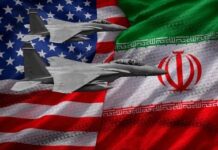


Fresh U.S. strikes on Iranian targets in and around the Strait of Hormuz have pushed oil prices higher again, squeezing American families already battling years of war‑driven inflation at the pump.
Story Snapshot
- U.S. Central Command hit more than 80 Iranian targets after attacks on three commercial ships.
- Global oil prices jumped, adding a new “risk premium” on top of already elevated war‑time energy costs.
- Stock markets were mixed, as investors weighed supply fears against hopes the conflict stays contained.
- Media reports link price spikes to the fighting but give little clarity on how long higher costs will last.
New U.S. Strikes Answer Iranian Attacks on Commercial Ships
U.S. Central Command confirmed that American forces struck more than 80 Iranian targets, including air defense systems, missile sites, and command centers, after Iran attacked three commercial vessels transiting the Strait of Hormuz. The military described the Iranian actions as “unwarranted” and “dangerous,” a clear breach of the ceasefire that had cooled fighting in recent weeks. These ship attacks came just hours before the U.S. response, marking the most assaults in a single day in the fuel‑shipping waterway since late April, according to the United Nations International Maritime Organization.
Iran has repeatedly claimed the right to control shipping through the Strait of Hormuz and has targeted vessels even while peace talks were underway. Earlier strikes included a drone attack on a cargo vessel and hits on tankers that forced the United Nations to pause efforts to evacuate stranded ships. Each time Iran moves against commercial traffic, it not only threatens foreign crews but also tests U.S. resolve to keep this vital route open. The Trump administration has answered with airstrikes on missile facilities, coastal launch sites, and even Iranian‑flagged tankers accused of trying to break a U.S. naval blockade.
Oil Prices Jump Again As Markets Price In Hormuz Risk
Right after the latest wave of strikes and ship attacks, Brent crude oil climbed more than 3% to about $76 per barrel, according to BBC reporting, with other outlets noting sharp gains in oil futures as traders reacted to the renewed pressure on Hormuz shipping lanes. This move fits a now familiar pattern during the Iran war: whenever fighting flares near the strait, futures add a “risk premium” in case tankers cannot pass freely. Earlier rounds of U.S. and Israeli strikes pushed Brent as high as $120 at the peak and above $100 on several occasions, before prices slid back once traffic partially resumed.
Recent market data show how sensitive prices are to both military moves and political signaling. When President Donald Trump declared the ceasefire with Iran “over” and threatened to reinstate the U.S. naval blockade, Brent futures jumped around 6.5% to $79 a barrel, and U.S. West Texas Intermediate rose more than 6%. Reuters and other business outlets reported one‑day gains of 5–7% in response to these threats, marking some of the biggest daily jumps of the year. Yet analysts also note that spikes can fade quickly when traders believe supply will keep flowing, even if under escort or through alternative routes.
Traffic Plummets, Stocks Sway, Consumers Brace for More Pain
Commercial traffic in the Strait of Hormuz has fallen sharply as ship owners react to both Iranian attacks and American blockades, with one CNN analysis citing a drop from about 100 vessels to just 21 over a weekend after heavy exchanges of fire. That plunge offers a concrete story line for media outlets linking oil price gains to conflict, reinforcing the sense that each new strike directly hits supply, even when most Middle East producers keep loading crude and liquefied natural gas. Global stock markets have been mixed, with some indexes retreating on war fears while others hold up on hopes that the fighting stays short of full closure of the strait.
WWNN – 5 AM Bottom-of-the-Hour News
Worldwide News Network Update – I'm Brandon Ison.
nat: (Sound) After a US blockade was reinstated on Iran in the Strait of Hormuz…. a new strike exchange as Iran again targets Bahrain and Jordan, attacking also two tankers associated with… pic.twitter.com/JBEcISax1C
— Worldwide News Network (@WorldwideNNX) July 14, 2026
For American families, the details in trading rooms matter less than the steady climb at gas stations. Since the start of the Iran war, Brent crude has risen more than 55% at its peak, and U.S. gasoline prices have jumped about 50%, with the national average around $4.48 per gallon in one recent reading. Each new round of strikes threatens to add a few more dollars per barrel, and those costs roll straight into diesel for truckers, jet fuel for airlines, and heating bills for households. Conservative voters who spent years fighting “green” restrictions and energy taxes now face a different kind of squeeze: war‑driven risk premiums layered on top of earlier policy‑driven price hikes.
Media Framing, Open Questions, and What Comes Next
Major outlets like BBC, CNBC, NPR, and CBS News all describe oil prices as rising “following” U.S. strikes and Iranian attacks, often implying a direct cause without digging into other forces like inventory levels, seasonal demand, or currency moves. They highlight expert warnings that a full closure of Hormuz for a month could shove prices toward $90–$100 per barrel, which may encourage panic buying and self‑fulfilling spikes if traders assume the worst. At the same time, there is still limited independent verification of some individual ship attacks beyond U.S. government statements, and few reports show precise, minute‑by‑minute price charts tying each jump to specific announcements.
History suggests two hard truths conservatives should keep in mind. First, every time Washington and Tehran trade blows near Hormuz, oil and gasoline jump, and ordinary Americans pay the bill soon after. Second, those jumps do not always last; prices can retreat once markets believe ships will keep moving or alternative supplies will cover the gap. The Trump administration now owns both sides of that equation: defending free shipping and American crews, while also managing the economic shock to workers, families, and small businesses already stretched thin by years of war‑time inflation and earlier energy policy mistakes. Patriots watching these strikes unfold will judge success not only by targets hit, but by whether the cost of driving to work stops climbing.
Sources:
youtube.com, reuters.com, cnbc.com, npr.org, washingtonpost.com, theguardian.com, nytimes.com, cbsnews.com, cnn.com, pbs.org, finance.yahoo.com, jpmorgan.com, apnews.com