

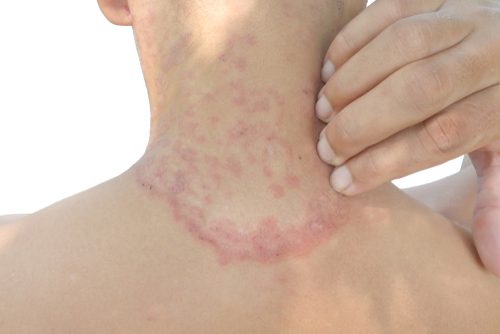
A little-known livestock skin infection now turning up in sexual networks of European men is raising fresh questions about how honestly public health officials level with the public.
Story Snapshot
- A rare animal skin disease called dermatophilosis, or “rain rot,” is appearing in clusters among men who have sex with men in Europe.
- Researchers suspect spread through sexual networks and saunas, but official papers stop short of declaring it a proven sexually transmitted infection.
- The same pattern of slow, cautious messaging that angered people during the 2022 mpox outbreak is emerging again.
- The situation highlights deeper distrust of health authorities and political leaders many Americans already see as serving elites, not ordinary people.
What “rain rot” is and why doctors are suddenly worried
Doctors in France and Spain have confirmed clusters of dermatophilosis, a skin disease long known in horses and other livestock, in groups of men who have sex with men in at least three European countries.[2] The infection, caused by the bacterium Dermatophilus congolensis, usually affects cattle, sheep, goats, and horses and is often called “rain rot” or “rain scald.”[8] Until now, human cases were rare and usually linked to direct contact with infected animals or activities such as horseback riding.[4]
Recent reports describe men in cities like Lyon and Barcelona showing up at sexual health clinics with rashes, pimples, or pus-filled lesions on the face, genitals, thighs, and other areas that touch during sex.[1][4] The clusters are striking because none of the men reported contact with livestock, and many had recently visited saunas or venues for sexual encounters.[1][2] That pattern has pushed researchers to ask whether this livestock disease may now be spreading mainly through close human contact in sexual networks.[4]
What the new research actually shows—and what it does not
In papers published in the Centers for Disease Control and Prevention journal Emerging Infectious Diseases, doctors reported two main clusters: nine cases in Lyon and nine in Barcelona, all among sexually active men who have sex with men and without known animal exposure.[5][7] Genetic testing of bacteria from eight Lyon patients found the samples were closely related, and the authors said this, combined with shared sexual exposures, “suggest[s] interhuman transmission within sexual networks.”[4] The Barcelona team saw a similar genetic link, hinting at a single introduction into that community.[4]
At the same time, the official reports use careful language and label sexual spread as “suspected,” not proven.[5][7] The World Health Organization has said it views the risk of a large epidemic as low right now.[2] All reported human cases so far have been mild and have either cleared on their own or responded well to common antibiotics.[2][4] That means this is not another COVID-style crisis. Still, the combination of an animal disease appearing in tight sexual networks, in multiple countries, without animal contact, is enough to concern both doctors and ordinary citizens who are tired of feeling like they are told the full truth only after the fact.[4]
Echoes of the mpox outbreak and the communication trust gap
Health reporters and scientists have already compared these dermatophilosis clusters to the early days of the 2022 mpox outbreak, which also spread mainly through networks of men who have sex with men.[1][2] In that episode, many people on both the left and the right felt that officials danced around basic facts about who was most at risk and how the virus was spreading, out of fear of stigma or political backlash. That left regular citizens feeling misled, and it fed the belief that “experts” care more about optics and careers than about straight talk.
The pattern now looks familiar. Researchers describe clear links to sexual venues, saunas, and travel for sex across European cities, but official language stays vague and technical.[2][4][6] Meanwhile, tabloids and social media fill the gap with scary headlines about “gay livestock disease” and “sexually transmitted rain rot.”[1][3] Conservatives see another example of elites hiding uncomfortable truths. Liberals upset with the system see more proof that institutions manage public opinion instead of leveling with people. Both sides end up more convinced the system protects itself first.
What this means for ordinary people and sexual health
For now, experts say most people face very low risk from dermatophilosis, and there is no sign of a broad outbreak.[2][4] The disease appears mild in humans, treatable with antibiotics, and not easily spread outside very close skin-to-skin contact. Still, the cases are a reminder that dense sexual networks, anonymous encounters, and crowded venues like saunas can help new or rare infections move through communities before anyone knows the rules of the game.[4] That was true for mpox, and it may be true here, even if this infection stays small.
For men who have sex with men, the same common-sense steps that reduce other sexually transmitted infections can help here: paying attention to new rashes, using protection when possible, avoiding sex or close contact when you have unexplained sores, and going quickly to a sexual health clinic if something looks off.[5] But the bigger story reaches beyond any one community. Many Americans already think public health and political leaders downplay risks when it suits them, then overreact when they are covering themselves. Each new, confusing outbreak—and each careful, lawyered statement—adds to that distrust.
Why this strange horse disease fits a bigger pattern of broken trust
Whether you blame “woke” politics, corporate donors, or the deep state, more people on both the right and the left now agree on one thing: the people in charge are not fully honest when new threats appear. They worry about markets, elections, and reputations first, and about clear guidance for ordinary families second. The dermatophilosis story is small compared with inflation, the border, or endless wars. Yet it hits the same nerve because it feels like one more example of experts talking around the truth.
During the COVID pandemic and later with mpox, Americans watched shifting rules, censored debates, and changing definitions about what counted as “misinformation.” Many concluded that the system protects insiders while average citizens are asked to “trust the science” that they are not allowed to question. Now, with a rare animal disease possibly changing its path through human sexual networks, the official line is again cautious and narrow, while outside voices race ahead.[2][4] In a country founded on self-government and open debate, that growing gap between what people see and what institutions say may be the real long-term health risk.
Sources:
[1] Web – ‘Rain rot disease’: the latest sexually transmitted infection among …
[2] Web – Rare Livestock Skin Disease Found in Gay Men in Europe
[3] Web – Animal skin disease confirmed in clusters of European men who …
[4] Web – Researchers in France and Spain have diagnosed several men who …
[5] Web – Human infections of dermatophilosis have been reported previously …
[6] Web – Suspected Sexual Transmission of Dermatophilosis among Men …
[7] Web – Suspected sexual transmission of dermatophilosis reported in Spain …
[8] Web – Suspected Sexual Transmission of Dermatophilosis among Men …