
Europe just ran its first real-world test of putting boots on the ground in Ukraine after the war ends, and Washington was barely in the room.
Quick Take
- Roughly 2,800 troops from 11 European countries drilled in Nowa Deba, Poland, starting November 9 for two weeks.
- France and the United Kingdom led the exercise, built around the so-called Coalition of the Willing, operating entirely outside NATO’s command structure.
- The drill tested command coordination, troop movement, and logistics for a future “reassurance force” inside Ukraine.
- Deployment would only happen after a ceasefire and a formal request from Kyiv.
- Reports disagree on whether 2,800 or nearly 5,000 troops took part, and whether 10 or 11 nations joined.
Europe Rehearses a Mission Without America in the Lead
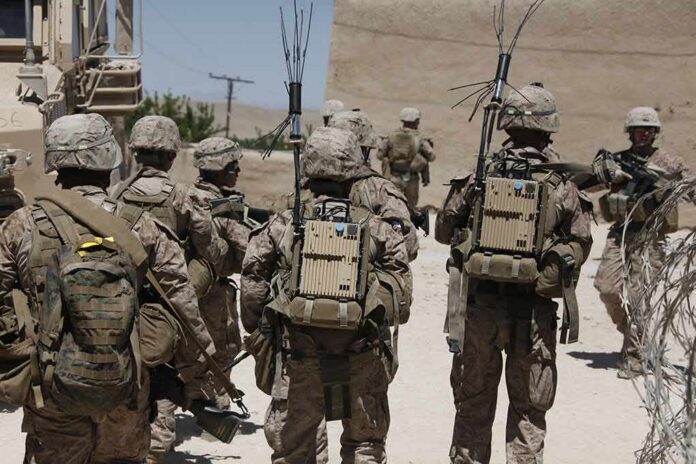
Troops from Belgium, Estonia, France, Germany, Lithuania, the Netherlands, Spain, Sweden and the United Kingdom gathered at Nowa Deba in southeastern Poland. Poland handled logistics, and Turkey took part remotely from Istanbul. The exercise began November 9 and ran two weeks, built around a simple question: can these nations actually move and fight together if asked to enter Ukraine after a ceasefire.
France and the United Kingdom ran the show, not the North Atlantic Treaty Organization (NATO). The drill fell under the Coalition of the Willing, a separate arrangement built outside NATO’s chain of command. That detail matters. It means European leaders are building a parallel military structure for Ukraine’s future, one that does not automatically carry NATO’s mutual-defense guarantees or clear American backing.
What the Troops Actually Practiced
Soldiers tested command and control, how fast units could move troops and gear, and how well different militaries could coordinate under one plan. The Kyiv Independent reported this was the coalition’s first major practical test, not a paper exercise. Lieutenant General Tom Bateman, identified as commander of the proposed multinational force, said the mission would focus on rebuilding Ukraine’s military, helping reopen its skies safely, and clearing mines from the Black Sea.
Those are concrete jobs, not vague promises. But the drill happened entirely on Polish soil. Nothing in the available reporting shows troops testing these tasks inside Ukraine itself, under the conditions they would actually face once deployed there.
The Numbers Don’t Quite Add Up
Here’s where the official story gets murky. Most outlets, including the Associated Press, put the headline figure at roughly 2,800 personnel from 11 countries. But at least one report claimed nearly 5,000 servicemen participated, with no explanation for the gap. Another count listed only 10 European nations rather than 11. Nobody has reconciled these numbers, and no official roster has been made public.
That kind of inconsistency should raise an eyebrow for anyone tracking how much money and manpower Europe claims it’s ready to commit. If organizers can’t agree on how many troops showed up to their own drill, taxpayers and allies alike have reason to ask how solid the rest of the plan really is.
Conditional on a Ceasefire That Hasn’t Happened
Deployment depends entirely on two things that haven’t occurred yet: a ceasefire in Ukraine and an official green light from Kyiv. That makes this drill preparation, not action. European governments are rehearsing a mission whose final size, rules of engagement, and legal mandate remain unsettled. For a continent that spent years leaning on American muscle for its own defense, running a major security operation without the United States steering it is a notable shift.
EUROPE REHEARSES POSTWAR UKRAINE MISSION — 2,800 troops from 11 nations drilled in Poland for a force to rebuild Ukraine's army after a ceasefire. Problem: no guarantees yet. Fix: Berlin backs the plan, drill wraps Sunday. EE-0011 #traphabits #aitosi
— trap habits llc (@traphabits101) November 20, 2026
Russia has already made clear it rejects any Western troop presence in Ukraine, ceasefire or not. European officials, meanwhile, remain split on where forces would actually operate, whether inside Ukraine, in neighboring countries, or limited to air and sea support. For American conservatives who’ve long pushed European allies to fund their own defense instead of relying on Washington, this drill is proof Europe is finally trying. Whether it can actually deliver a coherent, battle-ready force is still very much an open question.
Sources:
military.com, fakti.bg, chosun.com, news.liga.net, yahoo.com