

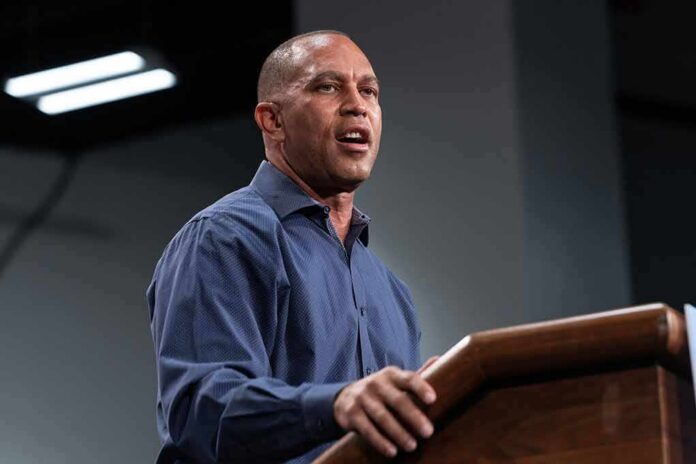
House Democratic Leader Hakeem Jeffries said he supports bringing deported DACA recipients back and giving them “remedial assistance.”
Story Highlights
- Jeffries endorsed efforts to return deported DACA recipients in a PBS interview.
- He tied the plan to cases he says were “unfair” or “unjust” and promised “remedial assistance”.
- He did not explain who qualifies, what “assistance” means, or how returns would work.
- The statement signals a broader Democratic push to reverse immigration enforcement actions.
Jeffries Backs Returning Deported DACA Recipients
On November 10, 2026, House Democratic Leader Hakeem Jeffries told PBS NewsHour he supports efforts to bring deported DACA recipients back to the United States. When asked directly if he backed those efforts, Jeffries answered, “Certainly.” He said people “treated unfairly and unjustly” should receive “remedial assistance” and that damage should be undone. His office posted a transcript of the exchange and repeated the “remedial assistance” promise on an official House website.
Published coverage from national and partisan outlets reported the same core point: Jeffries supports return and some form of assistance for deported DACA recipients. Reports highlighted his link between return and claims of unfair treatment. They also noted his promise to address harms tied to removals under immigration enforcement. Several outlets framed the remarks as a signal that Democrats aim to revisit decisions made during prior enforcement periods and to expand relief for affected individuals.
Key Details Missing From Jeffries’s Proposal
Jeffries did not define who counts as “treated unfairly and unjustly.” He did not say how many people would qualify, what facts would prove unfairness, or who would decide eligibility. He did not identify a legal path for return, such as parole, reopening removal orders, consular processing, or new legislation. He did not name an agency to run the process, a funding source, a timeline, or a review system to prevent fraud or abuse. Those gaps leave practical questions open.
The meaning of “remedial assistance” is also unclear. Jeffries did not say if help would be legal aid, travel support, status relief, cash payments, or some other benefit. That lack of detail has fueled sharper interpretations from commentators, who describe the idea as compensation or an amnesty-style plan. Because the terms are undefined, rival media narratives can fill in the blanks. This ambiguity raises fiscal and policy questions that taxpayers and lawmakers will likely demand answered soon.
Legal Context: What DACA Does and Does Not Do
Deferred Action for Childhood Arrivals is a form of deferred action. It does not give lawful permanent residence or a guarantee against removal. United States Citizenship and Immigration Services guidance says recipients can still face serious consequences if they depart with a removal order or without proper advance parole. That legal line explains why disputes often hinge on case-by-case facts rather than blanket claims of protection. This also shows why any return policy would need a clear legal basis and careful screening.
🚨 JEFFRIES BACKS FUNDING RETURN OF DEPORTED DACA RECIPIENTS WITH TAXPAYER COMPENSATION
House Democratic Leader Hakeem Jeffries says he supports bringing previously deported DACA recipients back to the U.S. and providing them taxpayer compensation.
The proposal raises question
— Yuval 🇮🇱🇺🇸 (@liquidunprot) November 11, 2026
Jeffries framed his plan around “undoing damage” he links to unfair treatment. But he has not presented names, case files, or court rulings showing wrongful deportations. He has also not tied his proposal to a draft bill or administrative plan. Until those exist, the idea remains a political commitment without a roadmap. If Democrats pursue it, they will need to define standards, set due-process steps, prevent abuse, and explain costs and oversight to the public.
What This Means For Border Security and Taxpayers
A return-and-assistance program could clash with border enforcement goals if standards are vague or broad. Clear rules would be needed to avoid turning a narrow remedy into a wider entry channel. Taxpayers would likely ask what “assistance” costs, who pays, and how long support lasts. The Trump administration has pressed for firm borders, fast removals for lawbreakers, and tight spending. Any plan that reverses removals or funds benefits will face tough scrutiny on security, fairness, and price.
What To Watch Next
Watch for a formal proposal from House Democrats that defines eligibility, legal authority, and funding. Look for whether the plan requires new legislation or relies on existing powers such as parole or reopening orders. Expect debate over how to verify claims of unfair treatment and how to protect public safety while handling individual cases. These details will show if Jeffries’s pledge becomes a limited fix for specific cases or a broader policy shift with national impact.
Sources:
thegatewaypundit.com, yournews.com, fedfront.com, breitbart.com, mediabias.news, meridian.news, pbs.org