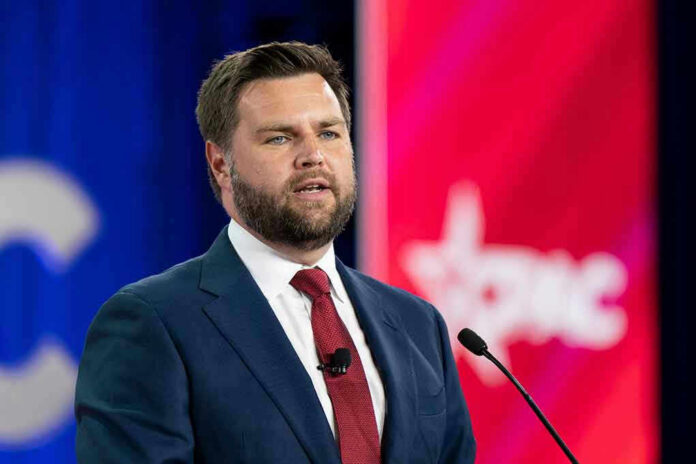
President Trump publicly pushed back on Vice President JD Vance’s post-election war blame, warning that many Republicans “didn’t like” Vance’s comments even as he acknowledged Iran was “a part of” the midterm losses.
Story Snapshot
- Vance said “the reason we lost is the war,” pointing to voter switch after fuel and cost spikes.
- Trump agreed Iran played a part but defended the policy as necessary to stop a nuclear threat.
- Reports show Democrats won back both chambers in 2026, intensifying the blame debate.
- Vance has not released the polling he cited, leaving key evidence unseen by the public.
What Vance Claimed About The Midterm Defeat
Vice President JD Vance posted that “the reason we lost is the war,” saying many 2024 Trump-Vance voters chose Democrats in 2026. He pointed to the Iran conflict and the hit to family budgets. He listed four voter concerns: ending the war, inflation and cost of living, putting America first, and a change in the United States–Israel relationship. The comment followed a sweeping Republican loss, with reports saying Democrats took both chambers of Congress.
Vance’s claim landed hard because it named a single, top cause. It also said the president himself agreed. Vance referenced a respected pollster but did not publish any details. No questionnaire, sample, or tables were shared. That gap makes the claim hard to judge from the outside. It does not make it false. It does mean voters and lawmakers cannot verify how much the war moved votes compared with inflation or candidate quality.
What Trump Said: Iran Was A Factor, But Stopping A Bomb Comes First
President Trump said Iran was “a part of it,” tying some losses to higher fuel costs and war weariness. He then made the core case: stopping Iran from getting a nuclear weapon mattered more than short-term politics. He said he would make the same call again. He framed the strikes as limited, necessary, and aimed at removing a grave danger to the United States and its allies.
Trump’s position sets a clear standard. Security comes first. Elections still matter, but they cannot override the duty to protect Americans. Supporters heard a familiar message: peace through strength. Critics argued the policy hurt at the ballot box. The disagreement is real, but it is about tradeoffs. Trump accepts a political cost now to avoid a larger disaster later. That rationale is the heart of his defense.
Why The Dispute Matters For Conservative Voters
Republicans value winning so they can secure borders, cut spending, and guard liberty. They also value a president who defends the nation. The Vance-Trump clash sits in that tension. Vance points to household pain and says many right-leaning voters broke. Trump points to the nuclear threat and says leadership means doing what is right even when it hurts. Both frames speak to core conservative instincts about strength and accountability.
"Victor Davis Hanson is one of the wisest and smartest people with common sense and understanding. He rebukes JD Vance and his friend Tucker who have been blaming and attacking Israel and even attacking Trump himself.
JD Vance has been a liability for the Trump…
— Commander Listless 🇺🇸🏴☠️ (@SCReid_10XCoach) November 6, 2026
Two facts ground the story. First, Democrats gained Congress in a broad defeat. Second, Vance has not released the polling he cited. Without public data, there is no way to separate war effects from inflation, candidate issues, or local factors. Readers should weigh what is known: Vance’s assertion, Trump’s partial agreement, and the policy defense. Until data arrives, the cleanest takeaway is this: Iran likely mattered, but how much remains unclear.
Bottom Line For The Right: Fix The Pain, Keep The Strength
Conservatives should press for two tracks. Track one: relief at home. Lower energy costs, rebuild domestic supply, and end the policy mix that fuels inflation. Track two: credible strength abroad. Maintain pressure that blocks an Iranian bomb while avoiding open-ended missions. Those goals are not opposites. They are the balance that wins elections and keeps America safe. Trump signals he will not trade security for polls; Congress must now deliver kitchen-table wins.