

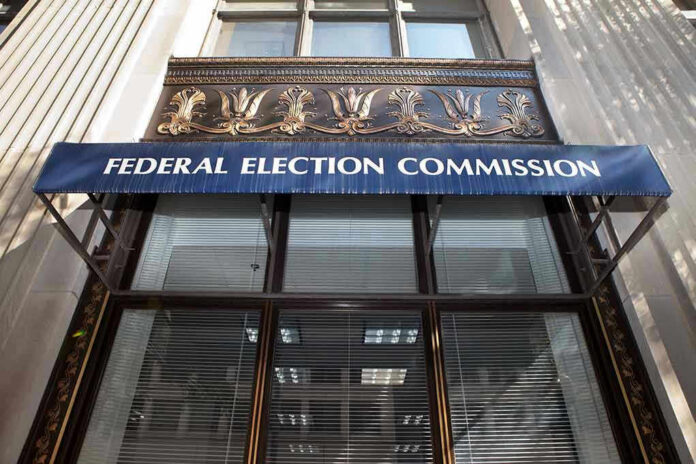
Hackers forced the Federal Election Commission to shut its electronic filing system one week before the midterms, stalling legally required spending reports while officials worked to restore service.
Story Highlights
- The Federal Election Commission took its campaign-finance filing system offline after an attempted breach.
- The shutdown began around 10 p.m. Eastern on October 26, days before the November 3 vote.
- Mandatory 24-hour and 48-hour spending disclosures were delayed during the outage.
- No public information shows data was accessed, stolen, or altered.
Filing System Taken Offline After Attempted Breach
The Federal Election Commission said its electronic filing system was offline while information technology staff worked to restore service. An agency email reviewed by Reuters described a “bad actor” trying to breach systems, prompting a shutdown of public-facing services as a defensive step. Officials said the affected platform handled campaign-finance submissions, not voting or ballot systems. The outage focused on filings used to disclose last-minute political spending, which are required by federal law.
Reuters and Forbes reported the disruption began shortly after 10 p.m. Eastern on October 26, about a week before the November 3 midterm elections. That timing limited real-time visibility into late cash flows to campaigns and outside groups. According to reporting, previously filed reports stayed accessible to the public, but new submissions could not be processed while the system was down. This created a transparency gap as the final stretch of spending ramped up before Election Day.
Transparency Impact Without Evidence Of Vote Interference
Published accounts said the outage blocked mandatory 24-hour and 48-hour independent expenditure and other time-sensitive reports. Watchdogs, journalists, and voters use those filings to see who is funding ads and ground efforts in real time. While the filing portal was impaired, sources reported no impact on voting machines, ballots, or vote tabulation systems. That separation matters: this was a disclosure disruption, not a vote-count event, based on available information.
International Business Times reported there was no public information establishing who was behind the attempt or whether any data was accessed, stolen, or altered. That leaves attribution and technical details unresolved in public view. By the evening of October 27, officials said they had identified the problem and were implementing a fix. The agency had not, at that time, provided a final restoration timestamp in the cited reports. A single sentence caveat: facts on data access had not been publicly established as of those reports.
What Officials And Campaigns Faced In Real Time
Election-law deadlines do not pause for cyber trouble, so campaigns and political committees faced pressure to comply while the system was offline. The reported shutdown affected both direct uploads and submissions through commercial compliance tools that rely on the Federal Election Commission’s services. That meant treasurers and vendors had to wait for restoration or use any alternative channels the agency provided, which were not detailed in the cited reporting.
2/5 — FEC SYSTEMS TARGETED
A hacker attempted to breach Federal Election Commission systems, according to an email reviewed by Reuters. The FEC temporarily took its electronic filing system offline while staff worked to restore it.https://t.co/cb9jSP7N7V
— The Informed Citizen (@informedbrief) October 28, 2026
The episode highlights a core risk for election-adjacent systems: even an attempted intrusion can force a defensive shutdown that hinders transparency when voters are paying closest attention. Since 2016, officials and researchers have warned that hostile actors, foreign or domestic, probe election-related networks near key dates. The pattern includes attempts and outages, not only theft or alteration. Agencies urge resilience plans so disclosures continue even if one portal must be taken down.
What Comes Next For Accountability And Resilience
Federal officials are expected to review logs, validate system integrity, and reconcile delayed filings when service returns. A clear record of what failed and why would help rebuild confidence, including whether any unauthorized access occurred. Practical steps could include posting a timeline, providing guidance for backlogged reports, and publishing a high-level after-action summary. The goal is simple and urgent: protect lawful speech and disclosure, keep the process open, and deny hackers a win over public transparency.
Sources:
thegatewaypundit.com, reuters.com, ibtimes.co.uk, forbes.com, yahoo.com, bostonherald.com