

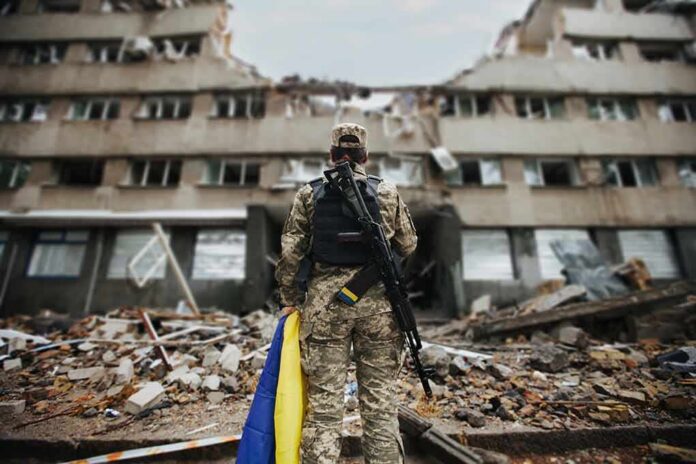
Overnight Russian drone and missile strikes hit Kyiv and its region, killing at least three people, Ukrainian officials said.
Story Snapshot
- Ukrainian authorities reported two deaths in Kyiv city and one in the wider region.
- Officials said drones and missiles struck overnight, injuring others and damaging sites.
- Similar barrages on Kyiv in recent months have caused deaths and hospital damage.
- United Nations monitors say explosive weapons drive most civilian casualties in Ukraine.
Confirmed Deaths In Kyiv And The Surrounding Region
Ukrainian authorities reported that drones and missiles struck Kyiv and nearby areas overnight, killing at least three people. The Kyiv City Military Administration said two people died in the capital. Regional police reported one woman killed and eight injured in the wider Kyiv region. The Associated Press said the attack came early Saturday and involved both drones and missiles, citing those officials. The initial death toll may change as crews clear debris and assess damage.
Reuters reporting from earlier barrages shows a clear pattern of deadly strikes on the capital. On September 24, an overnight attack used ballistic missiles and drones. That strike killed two people, injured eight, and damaged a maternity hospital and a nearby medical facility in Kyiv. Those details reinforce that the capital remains a frequent target and that civilian sites can suffer when debris falls or when missiles hit close to neighborhoods.
What We Know About The Targets And Weapons
Local officials described a mixed attack using drones and missiles, which is a common Russian tactic against Ukraine’s cities. Mixed salvos try to overwhelm air defenses by pairing fast ballistic or cruise missiles with slower drones. The Associated Press account did not list exact weapon models or launch points, and officials did not release a full timeline in the initial update. That leaves some technical details pending, but the core facts on deaths and injuries come from city and regional authorities on the ground.
United Nations human rights monitors have tracked the harm from these types of weapons across the war. In several reporting periods, the majority of civilian casualties came from explosive weapons in urban areas. One United Nations report found that of 1,804 civilian casualties verified in a given period, 712 resulted from missile and loitering munition attacks. Those numbers explain why each large barrage raises the risk to families who live and work near likely targets.
Why The Distinction Between City And Region Matters
Reports often blend Kyiv city with the broader Kyiv region, but the areas are separate in both governance and geography. The Associated Press account distinguished the two deaths inside the capital from the one death and eight injuries in the surrounding region. That split helps prevent confusion as more updates arrive. Past coverage shows how fast-changing numbers from different sites can be mixed if readers assume all impacts happened inside the city limits when some were outside.
🚨 🇺🇦🇷🇺🇺🇸 President Volodymyr Zelenskyy says Russia launched a large overnight missile-and-drone attack across Ukraine, including five ballistic missiles that hit civilian infrastructure in Kyiv.
Zelenskyy said five Russian ballistic missiles struck civilian infrastructure in…
— Ahmad Shah Mohibi (@WarGuy_) October 14, 2026
For readers tracking a months-long pattern, context from earlier strikes helps set expectations. Reuters described multiple barrages this year that killed and wounded civilians across Kyiv, with some attacks damaging health facilities. Those prior events show that air defense successes can still leave dangerous debris, and that critical infrastructure near homes is often at risk during large-scale salvos. This history gives weight to new warnings when sirens sound and officials urge people to seek shelter quickly.
What This Means For U.S. Readers And Policy
Americans watching this war should note two things. First, explosive weapons in cities put families at the highest risk, and that pattern has held over time, according to United Nations monitoring. Second, mixed salvos raise costs for defenders and strain power and medical systems when debris falls. Those facts shape how partners plan aid, from better radar and interceptors to hardened power nodes and more ambulances. Clear reporting on casualties and locations guides those choices.
Sources:
inquirer.com, wwlp.com, reuters.com