
Records from a lawsuit reveal an “Agitator Log” tracking protest encounters outside an immigration facility, raising sharp First Amendment alarms while officials insist it was about safety, not targeting protesters.
Story Highlights
- A records release reportedly includes a 60-entry “Agitator Log” from Minneapolis protest encounters.
- ICE’s acting director denied any protester database in public testimony.
- A later letter acknowledged retaining encounter information for safety and law concerns.
- Prior filings cite protest surveillance tied to immigration enforcement debates.
What The New Records Show In Minneapolis
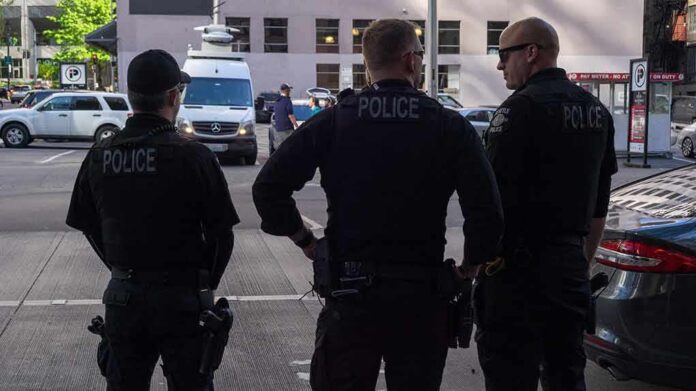
USA TODAY’s records describe a document called an “Agitator Log” with 60 entries from spring 2026 around the Whipple Federal Building in Minneapolis. The entries reportedly include officer notes, vehicles, license plates, car photos, and if local police were contacted. The log references protesters and legal observers. The full government file set and complete metadata are not public, which limits outside review of every entry’s origin and context.
The material reflects information collection, not proven unlawful tracking. The records, as described, do not show arrests or court rulings that found violations. They also do not identify the specific legal basis for each entry, such as trespass, obstruction, or threats. Reporters describe the files from a production obtained through open-records litigation, but the complete, authenticated dataset is not posted for public inspection, leaving some details unresolved.
ICE’s Denials And Its Narrow Justification
At a February 2026 hearing, acting Immigration and Customs Enforcement Director Todd Lyons stated there is no database for protesters and no database tracking United States citizens. That categorical denial set a clear public marker. The agency’s position rejects the idea of a dedicated protester database, a phrase that carries serious political weight and raises First Amendment concerns across the spectrum when true.
In April, Lyons wrote to Congress that Immigration and Customs Enforcement does not maintain a database of United States citizens protesting agency activities. He also wrote that officers may collect and keep information on people reasonably believed to be involved in potential federal-law violations or who pose officer-safety or facility-security concerns, and that such encounter information can be retained as official government records under law and policy. That framing draws a line between protest tracking and incident-based safety records.
Why This Matters For Free Speech And Equal Treatment
Conservatives value lawful protest, even when we disagree with the message. The right to speak, pray, and assemble must not depend on politics. Records that look like running lists of activists or observers risk chilling speech. When the government photographs cars, logs plates, and keeps names, the burden is on officials to show a clear, incident-based reason for each entry, narrow retention rules, and strong oversight to stop mission creep and protect the First Amendment.
In Tuesday’s paper:
'They were tracking us.' ICE tracks protesters in secret database. https://t.co/Zw0Y2MwBdx pic.twitter.com/sqKhtbJDr1
— USA TODAY (@USATODAY) October 13, 2026
The larger record shows earlier protest monitoring tied to immigration enforcement disputes. A filing by the American Immigration Council cites Freedom of Information Act productions about social-media and protest tracking, including spreadsheets from 2018. That history explains why today’s disclosures trigger concern. Americans have seen how “safety” labels can expand quietly. Tight policies, clear definitions, and public audits are needed so legitimate security work does not morph into viewpoint-based lists.
What Needs Clarifying Now
Officials should release the complete “Agitator Log,” with creation dates, authors, access logs, and retention rules, and explain how many entries involved alleged crimes versus peaceful observation. Leaders should spell out when officers can record license plates or take photos, how long data stays, who can see it, and how innocent people can get cleared from files. Clear answers would protect both officer safety and citizens’ rights without feeding claims of secret watchlists.
Bottom Line For Readers
The records show encounter logging around protests; officials deny a protester database and say the focus is law and safety. Both points can be true in part. The test is simple: are systems narrow, audited, and tied to specific incidents, or can they be used to identify and retrieve people for lawful speech near a federal site? Congress and the public should press for sunlight and strict limits so security does not become surveillance of dissent.
Sources:
usatoday.com, npr.org, moneytalksnews.com