

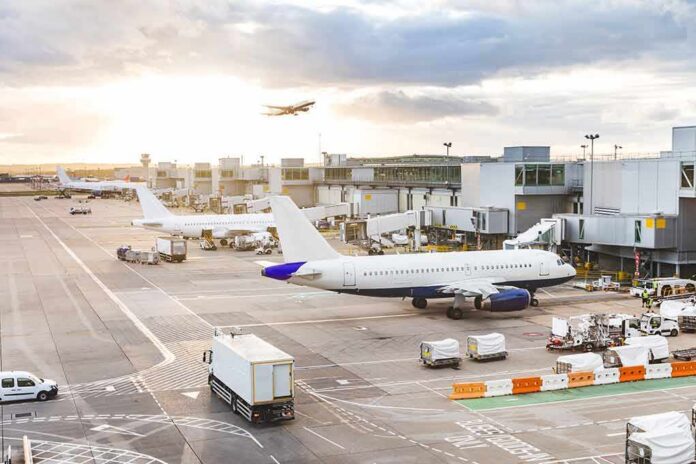
A Flydubai jet bound for Israel squawked emergency codes and diverted to Saudi Arabia, but landed safely with every passenger accounted for.
Story Highlights
- Flydubai confirmed Flight FZ1073 to Tel Aviv diverted to Tabuk, Saudi Arabia, and landed safely.
- The jet broadcast general and unlawful interference emergency codes, prompting security responses.
- Reports from officials and outlets ruled out a hijacking after initial alarms.
- Israeli media and flight data described a sharp descent before the safe landing.
Confirmed Diversion And Safe Landing In Saudi Arabia
Flydubai said Flight FZ1073 from Dubai to Tel Aviv “experienced an incident” and diverted to Tabuk, Saudi Arabia, where it landed safely, with all passengers safe and accounted for. The airline said teams are working with authorities and emphasized passenger and crew safety. The flight’s diversion drew immediate attention due to the route, the destination, and the tense security picture surrounding Israel-bound traffic. The carrier’s statement focused on facts and did not assign a cause pending coordination with officials.
U.S. readers saw headlines about a possible hijack because the aircraft briefly transmitted emergency transponder codes linked to distress and unlawful interference. Aviation trackers noted code 7700 for a general emergency and code 7500 for unlawful interference during the episode before the jet proceeded to Tabuk. Those codes trigger fast security responses across the region, including in Israel, until the crew is on the ground and authorities can assess the situation.
Emergency Codes And Why They Prompt Rapid Responses
Federal Aviation Administration guidance explains that code 7700 signals a general emergency to air traffic control, highlighting the aircraft on radar and mobilizing help. Industry references note code 7500 is reserved for unlawful interference, commonly associated with hijacking, which prompts strict protocols from controllers and security forces. In practice, early emergency signals create brief confusion. Officials later sort out whether the trigger was operational, medical, mechanical, or a security threat unrelated to terrorism.
This pattern played out here. Israeli and international outlets reported the emergency alert sequence, the course change, and the safe landing in Saudi Arabia. A spokesperson for Israel’s prime minister’s office said the incident was not a hijacking, tamping down earlier fears that followed the 7500 code reports. Flight tracking summaries described a quick descent of about 17,400 feet before the diversion, which matched the serious nature of the onboard alarm and the crew’s decision to head for Tabuk.
Reports Point To Cockpit Altercation, Not Terror Plot
Multiple newsrooms, citing officials and sources, reported the trigger was a confrontation between the pilots rather than a terror plot. U.S. News summarized that an airline spokesperson confirmed the diversion and safe landing, while an Israeli official pointed to a brawl between pilots as the reason the aircraft broke off the route. Other outlets echoed the same explanation after the hijacking scare was ruled out by Israeli authorities, tying the emergency codes to the in-flight disruption rather than outside interference.
✈️ A Flydubai flight to Tel Aviv diverted to Saudi Arabia after transmitting hijacking-related emergency code 7500.
⚠️ The Boeing 737 MAX landed safely at Tabuk, with all 150+ passengers accounted for.
🔎 Israeli officials said the signal followed a cockpit altercation;…
— Swarajya (@SwarajyaMag) September 30, 2026
For Americans who prize clear rules and secure borders, this episode is a reminder that systems built on order and quick action still work. The crew sent emergency signals. Controllers responded. A nearby airfield received the plane. Officials then ruled out a hijack. That is how layered security should work. It also shows why sober reporting matters. Early alerts often sound worse than the facts that follow once investigators review cockpit actions and communication logs.
What Comes Next For Passengers, Crew, And The Route
Flydubai said it is working with relevant authorities, which likely includes aviation regulators and security agencies in the region. Passengers will expect rebooking, care, and clear updates. Crew actions will face review under standard company and regulatory procedures. The Dubai–Tel Aviv route remains sensitive, so carriers will re-check training and cockpit protocols. The goal is simple: keep flights safe, keep communication clear, and avoid code entries that spark panic unless strictly required by procedures.
Sources:
youtube.com, news.flydubai.com, dailysabah.com, aerotime.aero, english.ahram.org.eg, english.news.cn, ndtv.com, hindustantimes.com