
Oil jumped as President Trump rejected Iran’s seven-day truce tied to reopening the Strait of Hormuz and easing sanctions, putting energy security back in the spotlight.
Story Highlights
- Trump publicly rejected Iran’s seven-day truce linked to Hormuz access and sanctions relief.
- Reports describe oil and fuel prices rising amid the same conflict environment.
- The Strait of Hormuz moves about one-fifth of global oil, making tensions market sensitive.
- Analysts say geopolitical shocks can add a risk premium to oil prices.
Trump Rejects Iran’s Seven-Day Proposal Tied to Oil Flow
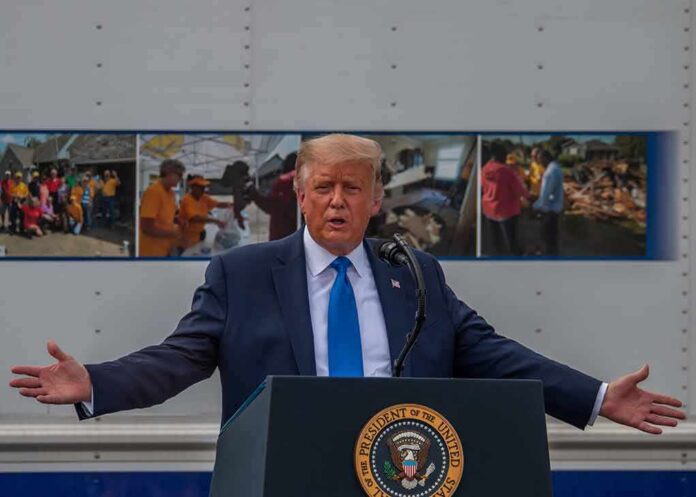
President Trump told reporters he rejected Iran’s seven-day truce proposal, which media reports tied to reopening the Strait of Hormuz and easing sanctions on Iranian oil sales. The reported offer included lifting a naval blockade at Iranian ports, waiving sanctions on crude exports, and unfreezing assets, in exchange for a short ceasefire and talks. Trump’s rejection signaled that the administration would not trade sanctions relief for a brief pause, especially with vital sea lanes and leverage at stake.
Al Jazeera and The Guardian reported the seven-day plan centered on energy-market concessions, including Hormuz access, which directly affects global supply routes. The Strait of Hormuz is a key chokepoint for oil and fuels moving from the Gulf to world markets. Reports described the plan’s economic hooks as central to Tehran’s bid, not a side note. The administration’s decision kept pressure on Iran while seeking a longer, stronger deal rather than a short reset that could fade fast.
Markets React as Risk Premium Returns to Energy
Multiple outlets reported oil and fuel prices rising in the same conflict window, with Brent crude moving higher as traders priced security risks around Hormuz. ABC-linked coverage cited Brent near $95 before the latest headlines, reflecting a market already on edge. PBS highlighted diesel and gasoline strains during the broader escalation, underscoring how shipping fears and refinery issues can hit consumers quickly. While many forces drive prices, a chokepoint dispute often lifts near-term risk costs for crude and transport.
Economists and institutions have long noted how geopolitical shocks add a risk premium to oil, even when final supply losses are uncertain. The European Central Bank found recent conflicts triggered sharp energy spikes in early weeks as markets priced disruption risk. World Bank research estimates geopolitical oil supply shocks can raise prices by about 11.5 percent at the peak, though not always for long. That history explains why a dispute tied to Hormuz can move prices, even without barrels immediately offline.
Why Hormuz Matters for American Families and Businesses
The Strait of Hormuz carries roughly one-fifth of the world’s energy supplies, so any threat there echoes through every fuel bill and freight invoice. When war-risk premiums climb, shippers pay more to insure voyages, and refiners pay more for crude. Truckers then pay more for diesel, and grocery stores pay more to stock shelves. Conservative households feel it in higher prices, and small businesses face thinner margins. That is why the White House views lasting security and leverage as more valuable than a brief pause.
The administration’s stance aligns with core principles: do not reward a regime that uses pressure tactics, do not trade away sanctions for a week of quiet, and do not concede control of vital sea lanes. A short truce that weakens sanctions could invite more brinkmanship later. A stronger, enforceable deal would reduce risk at Hormuz without handing Iran a quick economic win. Reports say talks could follow, but on terms that protect U.S. interests and energy stability longer than seven days.
Separating Signal from Noise in a Crowded Price Story
Reports note several factors behind recent fuel spikes, including refinery outages, product shortages, and other regional conflicts. The truce dispute is one driver among many, but it is the one most tied to a single global chokepoint. That makes it a clear signal for risk managers who hedge supply. The conservative concern is simple: do not let a hostile regime hold the world’s fuel line hostage. A firm stance aims to lower long-run risk and keep costs down over time.
TuneTribune: Monday Update – Rejection Priced, Channel Still Open
Brent reopened toward $106 after Trump called Iran’s seven-day Hormuz/ceasefire paper “not acceptable.” Sunday, to Axios, he still said negotiators should sit this week. That is the split-screen: rejection on the… pic.twitter.com/duXmTd7AON— TuneTribuneOffical (@TuneTribuneOffi) September 28, 2026
Americans need clarity, not spin. The facts are these: Trump said no to a week-long truce connected to reopening Hormuz and easing oil sanctions. Media reports documented higher oil and fuel prices during this conflict window. Hormuz moves about 20 percent of global energy, so traders price the risk fast. History shows geopolitical shocks often lift oil in the short run. The path to cheaper energy is secure routes, real deterrence, and deals that last.
Sources:
insiderpaper.com, aljazeera.com, thehill.com, inquirer.com, aa.com.tr, ecb.europa.eu