

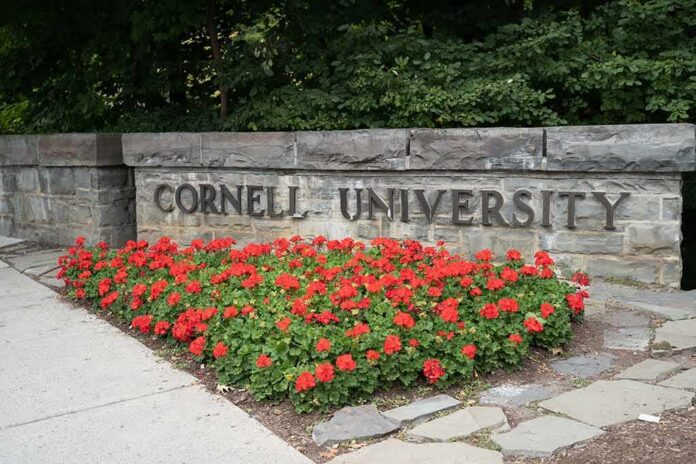
A New York prosecutor will take a Cornell fraternity “gang rape” case to a grand jury after new lawsuit evidence surfaced.
Story Highlights
- Tompkins County’s district attorney plans a grand jury review of the 2024 Chi Phi case with the accuser’s help.
- A civil lawsuit alleges drugging and a group sexual assault at the Cornell fraternity house; Cornell says Chi Phi remains banned.
- Defense lawyers deny the claims and say records and scientific evidence back their clients.
- The district attorney says his office will reexamine evidence that was not available in 2024.
Grand Jury Step Signals A New Phase In The Cornell Case
Tompkins County District Attorney Matthew Van Houten said he intends to present the Cornell Chi Phi allegations to a grand jury with the complainant’s cooperation. He told ABC News that his office wants to review new or previously unseen material tied to a recent civil lawsuit before seeking charges. This marks a shift from 2024, when prosecutors said the record did not support criminal counts. A grand jury review does not guarantee an indictment, but it compels a deeper test of the facts.
ABC and local outlets report the lawsuit alleges the student was pressured to take drugs and then sexually assaulted during hours inside the fraternity house. The filing and press accounts describe crude group messages that prosecutors say they had not seen before the lawsuit arrived in court. Prosecutors now plan to examine those messages and other materials. They aim to determine if the new record clears the high criminal standard of proof beyond a reasonable doubt.
Cornell’s Separate Actions And The Split Standards Problem
Cornell University said it completed its own process under campus rules and kept the Chi Phi chapter off campus. The university also said it supports the district attorney’s choice to let a grand jury hear the accuser’s story. Campus discipline runs on a different burden of proof than criminal law. That split often creates tension for the public: a school may act on conduct rules while criminal prosecutors wait for stronger, tested evidence before filing charges.
That gap is common in campus cases and fuels anger on all sides. Families want equal justice under law. Students want due process and the chance to challenge claims through cross-examination and evidence review. Prosecutors must meet a very high bar in court, while universities move faster under policy standards. The district attorney’s renewed review aims to bridge that gap by testing the new lawsuit record in a formal criminal forum, where sworn testimony and evidence rules apply.
Defense Position: Flat Denials And Promised Records
Defense attorney Jeremy Saland said his client, named in the civil suit, “wholeheartedly” denies the allegations. He also said the defense holds documents, statements, and scientific evidence that support their position and dispute the lawsuit’s claims. Another defense lawyer told ABC that the incident “did not happen,” and one attorney said a client made an immature group-chat comment but did nothing further. These denials will likely appear before the grand jury through testimony or records.
Grand juries hear evidence from prosecutors and may receive limited defense material, depending on state law. Jurors decide if there is probable cause to charge, not guilt. If an indictment issues, both sides will get a full chance to contest facts in open court. If no indictment comes, the district attorney may still explain the decision based on the new evidence review. Either way, this step increases transparency and moves the debate from headlines to sworn fact-finding.
What Conservative Readers Should Watch Next
Watch for what the district attorney introduces as “new” evidence and how it was preserved. Chain-of-custody details, timestamps, and device records matter. Grand jurors will weigh messages, medical records, and witness timelines against firm legal standards. Cornell’s past sanctions show administrative action happened, but only a court can assign criminal blame. The justice system, not campus committees or social media, must decide accountability for any crime alleged here.
SHOULD DA Van Houten/TCDAO RECUSE itself, given PUBLIC COMMENTS about VICTIM, AFTER Tompkins County District Attorney REOPENED the 2024 Chi Phi Fraternity SEXUAL ASSAULT Case after arguable intense backlash over how the DA/ @Cornell handled it or the arguably INADEQUATE… pic.twitter.com/mBwE3rdiGs
— L Ortiz (@l_ortiz81888) September 29, 2026
Also watch for clarity on due process. Strong prosecutions protect victims and the innocent by anchoring claims to testable facts. Fair defense rights ensure the state proves its case. That balance reflects core American values: equal justice, limited but effective government, and the rule of law. The grand jury review is the correct venue to sort rumor from record. Facts, not pressure, should drive the next steps in this serious case.
Sources:
abcnews.com, abcnews4.com, statements.cornell.edu, people.com