

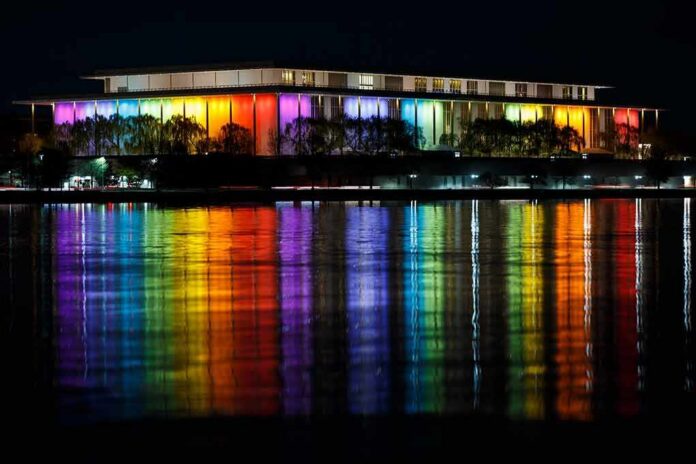
A federal judge said only Congress can name the Kennedy Center and ordered Trump’s name removed and barred from the building and grounds.
Story Highlights
- A judge ruled the Kennedy Center’s name is set by Congress and cannot be changed by the board.
- The order required removal of Trump’s name from the facade, website, and branding within days.
- The ruling cited the 1964 law that made the center a memorial to John F. Kennedy.
- A later order blocked any new Trump inscriptions on the building or grounds.
Judge Says Congress Alone Controls the Kennedy Center’s Name
U.S. District Judge Christopher R. Cooper ruled that Congress set the Kennedy Center’s name by law and the board cannot change it. The court said the center “cannot bear any other formal name” absent an act of Congress. The order struck down efforts to add President Trump’s name to the institution’s title or signage. The opinion stressed that Congress created the living memorial for John F. Kennedy, and only Congress can alter it.
Judge Cooper grounded the decision in the center’s organic statute passed in 1964. That law renamed the planned National Cultural Center as the John F. Kennedy Center for the Performing Arts and established it as a memorial. The statute’s text, which is public, anchors the court’s view that naming authority rests with Congress, not the board or the executive branch. That legal frame explains why the court treated the change as unauthorized, not mere branding.
Order Forces Removal of Trump’s Name From Facade and Branding
The court ordered the removal of letters added to the front portico and directed staff to strip Trump’s name from the building, website, and official branding. The judge also required withdrawal of trademark steps tied to “Trump Kennedy Center.” The timetable gave the center limited days to comply. Reports showed the center moved to take down the added name after the ruling. The remedy makes clear the court saw the act as a formal name change attempt.
In September, coverage described a follow-on order blocking the board from putting Trump’s name on the facade or grounds. That move closed the door on proposals to mark plazas or exterior spaces with Trump’s name while the statute remains unchanged. The court relied on the same legal theory: memorial naming belongs to Congress. That means any inscription that functions like a public memorial name cannot proceed without a legislative act.
Board Votes and Honorary Wording Face the Same Legal Wall
News outlets reported the board previously voted to add language like “Restored and Renovated by President Donald J. Trump” and to name the grounds “President Donald J. Trump Plaza.” Supporters framed these as honorific. The court focused on authority, not intent. If signage or plaza names read as an official memorial name, the statute bars them without Congress. A report tallied an August vote to move forward on signage and plaza naming despite the earlier ruling.
#BREAKING: Kennedy Center board voted Tuesday to close the main building, people familiar with the meeting told AP — citing money problems and the fight over Trump’s name on the venue.
Hours earlier Judge Christopher Cooper blocked putting the name back. Only Congress can… https://t.co/DGhu46aTDN pic.twitter.com/v1kjULzf8E
— The Digital Free Press (@tdfreepress) September 15, 2026
The dispute reveals a core, simple point of constitutional design. Congress created the memorial and holds the keys to its name. Boards manage operations, but they do not rewrite memorial law by vote. For readers fed up with agencies freelancing, this case underscores limits on unelected bodies. If the people want a change, they can press their representatives. Until then, the Kennedy Center’s name remains fixed by statute, as the court enforced here.
Sources:
courthousenews.com, deadline.com, congress.gov, reuters.com, pbs.org