
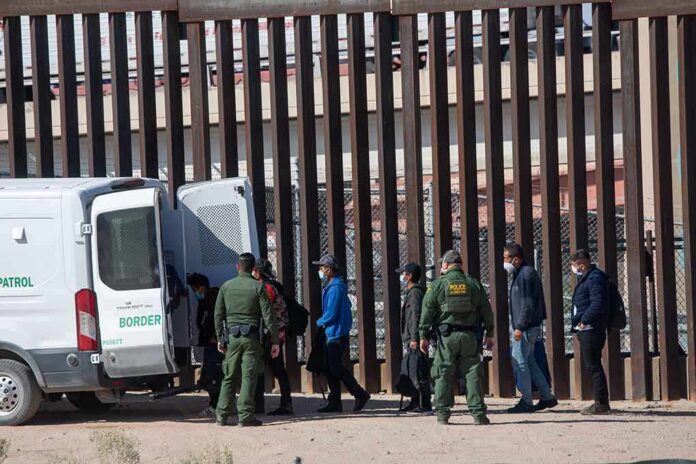
A cable-news crew filming the border got stuck in the Texas desert and needed Border Patrol to haul them out, on camera.
Story Highlights
- An MS NOW team’s vehicle bottomed out in West Texas while filming a border piece.
- Eight Border Patrol agents in four trucks responded and rescued the crew, according to the correspondent.
- The Big Bend region is remote and often requires rescue operations due to terrain and heat.
- The incident underscores why secure borders and capable agents matter, even for media teams.
What Happened in the Big Bend Desert
Mediaite reported that MS NOW correspondent Antonia Hylton said their Jeep Wagoneer “bottomed out in the desert” while filming near the border in Texas’ Big Bend region. She said eight United States Border Patrol agents arrived in four trucks to rescue the crew after nightfall. The segment aired as part of the network’s border coverage. The event unfolded on rough terrain that many Americans never see up close but that agents patrol every day.
Hylton described the scene at a spot where the Rio Grande marks the international boundary, pointing across the river to show how narrow the gap can be. The crew’s trouble highlighted real hazards that locals and agents know well. In that stretch of West Texas, cell service can drop fast, roadbeds turn to sand, and the sun sets behind sharp ridges. When a heavy vehicle sinks, a quick self-recovery is not simple without the right gear.
Why This Area Demands Rescue Readiness
United States Customs and Border Protection records show regular rescues in the Big Bend sector. Agents and National Park Service rangers have pulled stranded people from remote canyons and two-track roads, sometimes after distress calls from far-off spots. Multi-day operations also occur during heat spikes and monsoon storms, when a wrong turn can become a life threat. These cases explain why agents train for search and rescue and stage teams across vast ground.
Border Patrol’s Search, Trauma, and Rescue teams exist because these deserts punish mistakes. Videos and past reports show agents hauling water, using aircraft, and guiding ground units to people in trouble, often at night. In West Texas and beyond, that includes migrants who were left behind, hikers who misjudged distance, and drivers who slid off unmarked paths. The same risks hit anyone in the field, including visiting media crews, when planning and equipment fall short.
What It Means for Border Policy and Public Debate
This rescue is not rare for the region, but it is revealing. It shows how fast the land itself can beat even well-resourced visitors. It also shows the value of having trained Border Patrol agents on duty with trucks, radios, and the will to go. That is what border security looks like in practice: men and women ready to stop smugglers, aid the lost, and protect the line, all on the same long shift.
You wanna hear something funny? 😂
Antonia Hylton and her MS NOW crew drove into the Texas desert to report on how brutal Big Bend is and why a wall would be a mistake.
Their Jeep bottomed out.
Eight Border Patrol agents in four trucks had to rescue them after dark.
And then… pic.twitter.com/DRFR4WrgcP
— Gina Milan (@ginamilan_) September 13, 2026
For many readers, this moment lands as basic common sense. A secure border needs roads, sensors, air support, and people who know the ground. It also needs respect for those who do the job. President Trump’s administration has pushed to rebuild capacity after years of neglect. Scenes like this back up that push. Even critics who question enforcement depend on the same agents when danger hits, as this stranded crew did in the Texas desert.
Sources:
thegatewaypundit.com, cbp.gov, nbcnews.com