
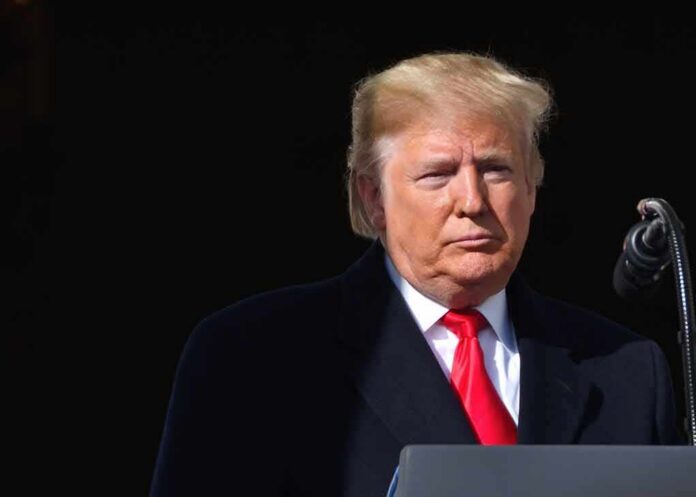
President Trump tied gas price relief to defeating Iran and said the war could end right after the midterms, putting energy costs and national security on the same clock.
Story Highlights
- Trump said oil and gas will drop “right after” the midterms and could fall below $2 per gallon after victory over Iran.
- He framed higher pump prices as the cost of stopping Iran from getting a nuclear weapon.
- Reports show the Iran conflict and Strait of Hormuz fears pushed average gas near $4.22 per gallon.
- Critics say Trump’s timeline sounds political, while he promises fast relief once the war ends.
Trump Links Gas Prices To Ending The Iran War
President Trump told reporters that oil and gas prices will not fall until “right after” the midterm elections, tying relief to an end of the Iran war at that time. He also predicted pump prices could drop below $2 per gallon once the United States wins, making a clear promise many families will watch closely. He repeated that Iran will never obtain a nuclear weapon, placing national security over short-term energy pain in his remarks.
Conservatives who remember record-low prices before global chaos hear a direct deal: end the threat, reopen secure flows, and see relief fast. Trump’s message sets a clear metric voters can judge. He links victory over Iran to market confidence and cheaper fuel. That stance rejects passive acceptance of inflated costs and aims to restore American energy leverage. It also frames strong deterrence as the fastest path to lower prices, not new taxes or green mandates that raise bills.
Why Markets Jumped: Hormuz Risk And Supply Fears
Energy reporters cite the war’s impact on shipping through the Strait of Hormuz and broader conflict risk as key drivers of higher prices, with national averages around $4.22 per gallon as fighting continued. Traders moved fast on fear of disrupted flows, refinery squeezes, and higher insurance costs. That reaction raised costs at the pump nationwide. The price surge aligns with classic oil shock behavior: supply risk first, visibility later. Families feel it within days, not months.
Trump’s team argues that ending the threat will flip expectations and pull prices down. He has said more strikes could come, signaling continued pressure on Iran’s war machine if needed to force a resolution. That posture aims to deter further attacks and speed a negotiated or imposed end. Markets typically price in credible force and clear timelines. If shipping lanes stabilize, wholesale prices often fall quickly and retail follows within weeks, as inventories turn over.
Midterm Timing, Promises, And The Political Firestorm
Trump said the war could end “immediately” after the midterms, which critics cast as political timing, while supporters hear confidence in a rapid close once leverage peaks. He has described high prices as a temporary trade-off to prevent a nuclear-armed Iran, placing safety first and predicting quick relief when the conflict ends. Reporters captured the back-and-forth as Republicans faced voter anger over fuel costs even as the White House pressed for victory.
Some outlets highlighted pushback that his comments risk making gas the defining election issue, but Trump kept the focus on winning and then dropping prices fast. The claim that fuel falls below $2 remains a forecast, not a result. Voters can test it soon. The record supports that he made the promise, tied it to a war end, and linked both to the post-election window. That clarity lets readers weigh trade-offs: finish the mission now, then unlock lower costs for families and small businesses.
What Conservatives Should Watch Next
Readers should track three signals in the weeks ahead. First, watch any ceasefire or capitulation that ends attacks and secures the Strait. Stable passage eases supply fears and pressures wholesale prices. Second, watch official steps that keep domestic production strong while the war winds down. Steady output shortens the lag to cheaper gas. Third, watch whether Iran’s nuclear ambitions are disabled or deterred, since that underpins Trump’s claim that relief will be swift and lasting.
I didn’t forget. Trump inherited falling gas prices and record U.S. oil production from Biden. Since Trump started the war with Iran gas has climbed above $4.30 nationally. He campaigned on cutting prices, so today’s high gas prices are something he owns. https://t.co/swiUxbihLG
— Marlon Dubuisson (@13Dubuisson) September 12, 2026
If the war ends on the timeline Trump set and prices fall as promised, that validates a hard line that puts security first and rejects globalist drift. If prices stay high, markets may still fear supply tightness, or the war’s end may prove messier than hoped. For now, the facts show real price pressure from the conflict and a President staking his word on fast relief after victory. Families paying more today will judge by the receipts they see next month.
Sources:
thegatewaypundit.com, cnbc.com, politico.com, washingtontimes.com, kfbk.iheart.com, nypost.com