

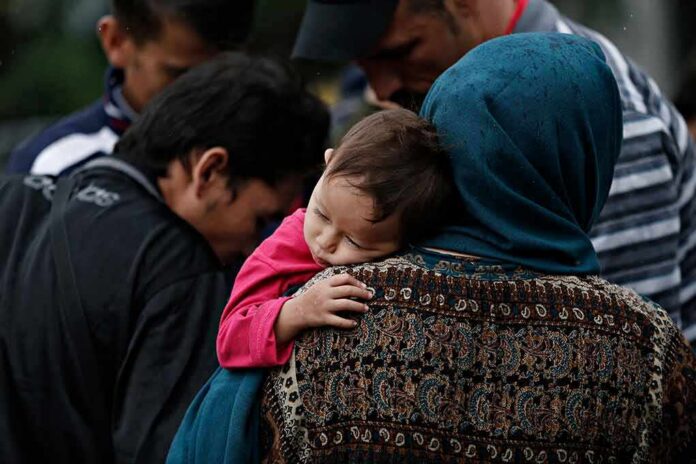
A newly surfaced Department of Homeland Security memo shows officials endorsed separating parents and children to enable prosecutions, reviving a hard debate over borders, law, and basic decency.
Story Highlights
- A 2019 Department of Homeland Security memo backed child-parent separations to pursue criminal cases.
- A 2023 court-approved settlement polices the government’s past separation practices through formal oversight.
- Associated Press reporting says some families were re-separated years later, and court orders forced returns.
- A 2024 Department of Homeland Security form outlines reasons people say they were separated and offers a response path.
DHS Memo Documented Separation As A Prosecution Tool
Department of Homeland Security leadership wrote in July 2019 that the department could “permissibly direct” family separation so adults could be prosecuted. The memo also endorsed an “Option 3” approach as “most effective,” signaling intent to use separation to support criminal referrals. The document came after the 2018 border crisis. It captured in plain language what many suspected: separation was not an accident. It was a deliberate enforcement lever rooted in prosecution-first thinking.
This memo matters today because it frames how to judge past and future cases. Voters want secure borders and humane enforcement. They also want the government to follow the law and respect families. A policy that treats kids as a means to an end violates basic conservative ideas about family and limited government. The memo’s language is clear. It shows a top-down choice that traded family unity for short-term deterrence and court leverage.
Court Actions And Settlements Imposed Guardrails
Families turned to federal courts in 2018. Plaintiffs in Ms. L. v. Immigration and Customs Enforcement and Ms. Q. v. Immigration and Customs Enforcement alleged unlawful forced separation and sought reunification. Judges ordered reunifications and oversight as facts emerged. In December 2023, a court approved a settlement that called the practice illegal and established rules to prevent further abuse, putting the government under formal supervision to ensure compliance. These steps show the system needed outside checks.
Judicial orders have continued to bite. In February 2026, a federal judge directed the government to bring back several separated families who had been deported to Central America, tying the remedy to prior separation litigation and humanitarian parole pathways. Associated Press reporting in June 2026 added that families faced repeat separations, and a settlement restricted most separations until 2031, underscoring the lasting harm and the need for ongoing court oversight. These are not abstract disputes; they affect real parents and children.
What The Government Says Justified Some Separations
Officials have described scenarios that may call for separation. A 2024 Department of Homeland Security supplemental form for separated individuals lists reasons a person might report, including a parent’s criminal history, gang ties, communicable disease, danger to the child, or referral for criminal prosecution at the border. The form invites evidence and promises a written reply within thirty days, offering at least a paper review process. That shows awareness of errors and a channel to challenge them.
Inspector General reviews complicate the picture. The Department of Homeland Security Office of Inspector General found more than half of a small sample of asylum-seeking separations at ports of entry were based only on prior non-violent immigration violations, not on violent crimes, and that this diverged from public messaging at the time. Another review reported that Immigration and Customs Enforcement lacked a consistent process to record whether separated parents wanted their children returned before removal, leading to hundreds of removals without clear documentation of parental wishes. These findings raise rule-of-law concerns conservatives share.
Securing The Border Without Punishing Families
Border security is non-negotiable. Drugs, cartels, and human smuggling threaten communities. But the Constitution and family values demand targeted enforcement that punishes criminals, not kids. The 2019 memo shows separation used to speed prosecutions, not just to protect children in danger. Courts then had to step in. That is a sign the policy overshot. Smart policy focuses on identity checks, criminal vetting, and swift due process while keeping families together when safe and lawful.
She left them.
Fort Worth. Daysi Munoz, the torta mother, got arrested for shoplifting at a Burleson Walmart.
ICE gave her the choice: take her kids to Honduras or leave them here. She left them.
NBC called it family separation. It was her decision.
ICE does not split… pic.twitter.com/SlltAgX9Bq
— Kim "Katie" USA (@KimKatieUSA) August 18, 2026
President Trump’s team now oversees federal agencies. The administration can close loopholes, end confusion, and enforce the law with clarity. Three steps would help: publish clear criteria for any separation with supervisor sign-off; log every decision and give parents a real-time record; and report public data on the new 2024 review process, including outcomes and timelines. Those moves protect children, deter fraud, and restore trust. They also keep agents focused on criminals and cartels, not family units who pose no threat.
Sources:
redstate.com, dhs.gov, theyoungcenter.org, apnews.com, immpolicytracking.org, hrw.org, pogo.org, x.com