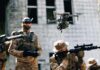


Two innocent journalists were stopped by multiple police cars after an AI-driven license plate system treated flawed data as a “stolen vehicle” hit — and Flock Safety now admits the cameras worked exactly as designed.
Story Snapshot
- Flock Safety’s license plate readers triggered wrongful police stops of two journalists but the company insists the system functioned “as designed.”
- The AI matched partial plate numbers from a bad national database entry, turning one typo into a multi-state dragnet for innocent drivers.
- Flock claims up to 99% accuracy, yet that still means about 200 million misreads every month across its vast camera network.
- Growing evidence shows Flock alerts often lead to false stops and frightening police encounters, raising serious Fourth Amendment and privacy concerns.
Journalists Stopped After AI Flags Press Car As “Stolen”
Automotive journalist Joel Feder and another journalist were driving press vehicles when police suddenly surrounded them, treating both as possible car thieves because of alerts from Flock Safety’s license plate reader cameras. Those alerts came from a flawed entry in the National Crime Information Center database, which listed an incomplete plate number for a supposedly stolen Jaguar Land Rover fleet vehicle. Flock’s system then treated any vehicle whose plate contained those partial characters as a match, even when the rest of the plate did not match at all.
The cameras tracked Feder’s press vehicle for days, flagging it as “stolen” every time it passed a Flock camera, until officers finally moved in for a coordinated stop. According to Flock’s chief communications officer Joshua Thomas, the AI did exactly what police agencies asked: it checked whether those specific characters appeared anywhere in a plate and said “yes,” without checking if extra characters were present or if the full plate matched the stolen record. That design turned one data typo in California into a rolling threat for innocent drivers hundreds of miles away.
Flock Says System Worked As Intended — Critics See Structural Flaws
Flock Safety now defends the cameras by arguing they performed “as designed,” matching partial plates according to law enforcement preferences for hotlist alerts. Thomas compared a camera alert to an alarm system and stressed that “a camera alert does not equal probable cause,” saying officers are supposed to verify every hit before making a stop. The company also highlights its audit logs that track who runs searches, when, and for what case, claiming this helps catch abuse and hold officers accountable.
But the numbers show why many communities are alarmed. Thomas says Flock’s system is about 99% accurate and performs around 20 billion plate reads every month. At that scale, even a 1% error rate means roughly 200 million misreads monthly. Independent reporting and local audits have documented dozens of cases where bad data or misreads led to innocent people stopped at gunpoint, jailed, or even mauled by police dogs. In Oak Park, Illinois, about 40% of Flock-triggered stops in one review turned out to be mistakes tied to bad data or officer verification failures.
False Alerts, Frightening Stops, And A Growing Backlash
Business Insider reviewed police records and lawsuits and found at least a dozen incidents across the country where Flock misreads or poor officer checks resulted in terrifying encounters for people who had done nothing wrong. In one case in Toledo, a Flock camera misread a “7” as a “2” and helped lead to a violent arrest, even though the driver’s car was not the one listed as stolen. A lawsuit there claims it is “commonly known” within the Toledo Police Department that “the Flock system is unreliable and often misreads license plates.”
The Los Angeles Police Department has let its contract with Flock Safety expire after an audit found the company’s license plate reader cameras were incorrectly flagging vehicles as stolen.
The audit documented 161 false stolen-vehicle alerts in two months, each capable of… pic.twitter.com/l6ZKARl5W8
— Straight Arrow (@StraightArrow__) July 18, 2026
Civil liberties groups warn that these systems do far more than catch stolen cars. The American Civil Liberties Union has documented how Flock’s network creates “heat maps” of vehicle movement and links scans to federal databases, allowing long-term tracking of drivers without a warrant. A recent Supreme Court ruling has started to chip away at automatic license plate reader use in some contexts, but Flock’s mass surveillance model continues to spread, now topping 100,000 cameras even as dozens of cities cancel contracts over privacy and misuse concerns.
What It Means For Constitutional Rights And Local Control
For conservative readers who value the Constitution and limited government, the pattern is troubling. A private company built a nationwide camera grid that feeds into federal and local databases, then admits its AI will happily turn partial plate data into sweeping dragnets unless someone forces a change. At the same time, Flock’s own numbers show its system may be sending hundreds of millions of bad alerts every month, while ordinary Americans are the ones pulled over, searched, and sometimes held at gunpoint when those errors reach an officer who fails to double-check.
Some states and cities are beginning to push back. Audits, new statutes, and contract cancellations show growing concern about mass tracking, federal data sharing, and wrongful stops tied to Flock alerts. Yet Flock still frames its tools as simple “investigative leads” and points to audit logs as proof of responsible oversight, even as the real-world record shows repeated misuse, mistakes, and life-altering encounters for innocent people. The journalists’ case makes one thing clear: when AI cameras and national crime databases can turn a typo into a guns-drawn traffic stop, Americans need far tighter limits on surveillance technology to protect their Fourth Amendment and everyday freedom to drive without fear.
Sources:
zerohedge.com, datafordefenders.org, en.wikipedia.org, gadgetreview.com, wnd.com, eff.org, aclu.org, classlawgroup.com, 404media.co, reddit.com