

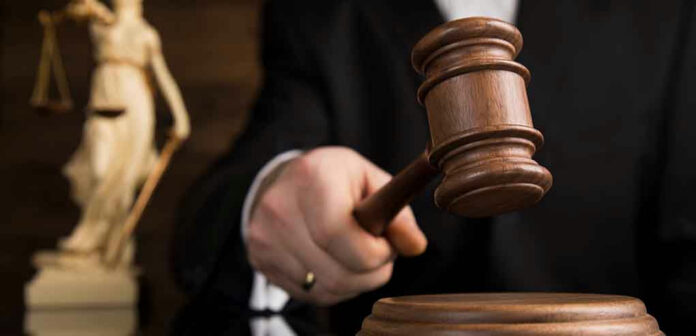
A Supreme Court justice is warning that two powerful legal shortcuts are quietly eating away at Americans’ basic freedoms — and he is calling on the Court to fix its own mistakes.
Story Snapshot
- Justice Neil Gorsuch is targeting plea deals and cellphone tracking as threats to core civil liberties.
- He argues the Court’s past rulings gave prosecutors and police too much power over ordinary citizens’ rights.
- His record shows strong support for gun rights, religious liberty, and free speech, along with key privacy decisions.
- Critics on the left attack him as inconsistent, but new rulings on guns and pleas put his warnings back in the spotlight.
Gorsuch’s Warning: Two “Wrong Turns” That Hurt Freedom
Justice Neil Gorsuch has urged the Supreme Court to clean up two major “wrong turns” he believes have undermined American civil liberties: the way courts handle plea agreements and the way they treat cellphone data and other digital trails. For decades, the Court has allowed prosecutors to push plea deals that require defendants to waive many rights, including the right to appeal, as long as the plea is labeled “knowing and voluntary.” At the same time, older “third‑party” rules let the government access data shared with companies with little warrant protection, which worries privacy advocates and constitutional conservatives alike.
Recent Supreme Court guidance confirms that plea bargaining is still considered constitutional, but it draws the line only when a plea directly blocks a defendant from using a clear constitutional right. Federal guidance from the Department of Justice explains that courts usually uphold appeal waivers and other plea terms if defendants were told what they were giving up and agreed on the record. A newer decision, Hunter v. United States, says courts should refuse to enforce appeal waivers when doing so would lock in a “miscarriage of justice,” showing some growing concern about extreme cases. Together, these rules keep a massive plea system in place while offering only narrow safety valves when things go very wrong.
How Gorsuch’s Record Backs His Civil Liberties Push
Gorsuch’s call to rethink these doctrines fits with several major opinions he has written that many conservatives see as wins for liberty. In 2024, he authored a unanimous decision siding with a marijuana user who was barred from owning guns under a vague federal law, holding that the statute could not disarm people without real proof of danger or intoxication and was inconsistent with the Second Amendment. In that opinion, he drew on the Founders’ own daily alcohol use to argue that simple “status” as a user of a legal or semi‑legal substance cannot erase a person’s right to bear arms. This case built on a wider trend of the Court expanding gun rights for responsible citizens and reining in vague gun control rules.
His record also shows concern for privacy and limits on government searches. As a judge on the Tenth Circuit, Gorsuch wrote an opinion in United States v. Ackerman holding that the National Center for Missing and Exploited Children, which was treated like a private group, actually violated the Fourth Amendment when it opened and reviewed a man’s email without a warrant. In another case, United States v. Carloss, he dissented when the court allowed police to ignore “no trespassing” signs and walk onto a property without a warrant, arguing that officers should have respected the homeowner’s clear effort to keep strangers away. These rulings match his present concern that modern surveillance, especially through cellphone records and digital services, can let the government sidestep the warrant protections the Fourth Amendment was designed to guarantee.
Free Speech, Faith, and the Battle Over Gorsuch’s Reputation
On First Amendment issues, Gorsuch has been central to several major victories for religious liberty and free speech that matter deeply to many conservatives. He joined the majority in Kennedy v. Bremerton School District, which protected a high school football coach’s right to pray on the field after games under both the Free Speech and Free Exercise clauses. He later wrote the majority opinion in 303 Creative LLC v. Elenis, holding that a Christian web designer could not be forced by the state of Colorado to create custom wedding websites celebrating same‑sex marriages, because that would compel speech she did not believe in. These decisions stand squarely for the idea that government cannot bully people into silence or force them to speak against their conscience, a core concern for many readers frustrated by years of “woke” pressure and speech policing.
Neil Gorsuch urges the Supreme Court to correct two wrong turns that undermined civil liberties: its endorsement of coercive plea bargaining and its embrace of dubious Fourth Amendment doctrines. https://t.co/maoCtS9dNc
— reason (@reason) July 1, 2026
Despite this record, major progressive groups and media outlets paint Gorsuch as a danger to civil rights, especially for vulnerable populations. The Alliance for Justice released “The Gorsuch Record,” arguing he is too friendly to corporations and too harsh on workers and people with disabilities. The American Civil Liberties Union has criticized several of his rulings, highlighting cases they say show a “troubling history” when he rules in employment and disability disputes. A New York Times opinion piece claimed that his COVID‑era dissents showed his “true colors” by putting liberty ahead of public‑health rules, which the author saw as reckless. These critics often ignore his strong stands on privacy, gun rights, and speech, but their attack lines shape how many Americans hear his name.
Plea Deals, Cellphone Data, and What Comes Next
For everyday Americans, the fight Gorsuch is now spotlighting has real stakes. Plea bargaining dominates our justice system today, with the vast majority of criminal cases never reaching trial, meaning many defendants feel forced to accept deals to avoid harsh mandatory sentences. When those deals include broad waivers of appeal and other rights, the promise of “voluntary” choice can hide real pressure and fear, especially for people with few resources. At the same time, cellphone location records, online accounts, and cloud email services hold huge amounts of personal information, and older third‑party rules have sometimes let the government access that data with weaker warrant requirements. Gorsuch’s push to fix these “wrong turns” is a call to bring modern law back in line with the plain text of the Constitution — and to make sure efficiency for prosecutors never outranks the basic freedoms our Founders fought to secure.
Sources:
reason.com, empiricalscotus.com, archive.epic.org, brennancenter.org, facebook.com, nytimes.com, aclu.org, ebsco.com, supremecourt.gov, gould.usc.edu, justice.gov