
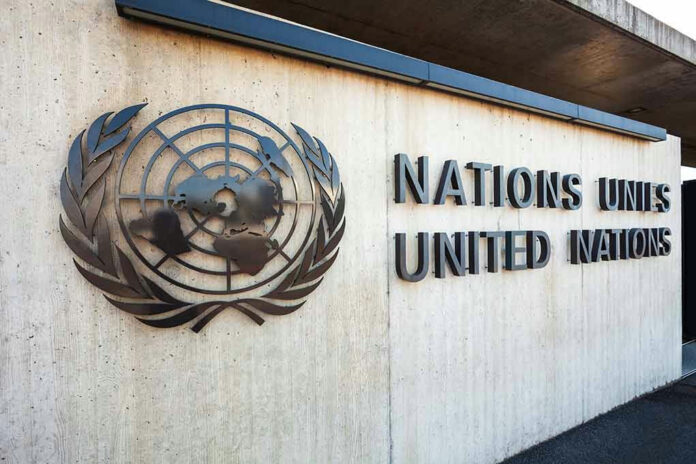
Twenty-two nations just warned Iran to stop plots on their soil, raising fresh alarm about how far covert power games now reach into everyday life.
Story Snapshot
- Twenty-two countries issued a joint warning to Iran over alleged plots on their territory [1][13].
- The statement cites attempts to kill, kidnap, or intimidate people as violations of sovereignty [1].
- Iran portrays its actions as defensive and says it will avoid strikes on neighbors if not attacked [9].
- The warning lands amid a wider U.S.-Israel war with Iran and a fragile ceasefire effort [3][4].
What the 22-Country Warning Says and Why It Matters
United States partners from North America and Europe joined others to warn Iran to stop attacks “on our soil” [1][13]. The joint statement says attempts to kill, kidnap, harass, or intimidate people inside their borders violate national sovereignty and global norms [1]. The language points to alleged plots against dissidents, journalists, and Jewish or Israeli communities. The group did not publish full evidence. The size of the coalition signals rising concern and a move to raise the political cost for any ongoing covert activity.
The warning comes as many citizens doubt that leaders will defend them at home. People on the right and left feel the system serves insiders first. A case like this blends foreign policy and public safety. If hostile actors can reach into communities abroad, everyday families bear the risk. Governments often respond with statements rather than clear results. That gap fuels anger about elite protection for the few and weak protection for the many.
Iran’s Response and Claims of Defensive Posture
Iranian leaders reject charges of broad attacks on foreign soil. Iran’s president, Masoud Pezeshkian, said Tehran would halt strikes on Gulf countries if those states are not used to launch attacks on Iran [9]. That message frames Iran’s activity as defensive and conditional. It does not address specific covert plots named by others. This line seeks to limit blowback from neighbors while keeping pressure on the United States and Israel in the wider conflict.
Officials and analysts describe a pattern called transnational repression across several authoritarian states. These tactics can include threats, surveillance, and attacks against people abroad. The unusual part here is the scale of the public warning, not the concept itself [1][13]. When a large group issues a statement together, it often means they want to deter further actions without disclosing intelligence. That choice can protect sources, but it also leaves the public with fewer hard details to judge.
Wider War Context and the Risk of Spillover
The warning lands during a dangerous phase of the U.S.-Israel war with Iran and its allies [3]. Reports describe cycles of strikes and counterstrikes, with pressure for a ceasefire and fears of new escalation [4]. In this tense setting, alleged plots abroad raise the stakes. Any successful attack on foreign soil could trigger wider retaliation. That risk pressures leaders to act fast, even when evidence cannot be shared openly, deepening public mistrust.
Gulf countries host United States forces but have avoided joining offensive strikes against Iran [5]. Their stance shows the regional bind. They depend on U.S. security, fear war on their doorstep, and worry about being pulled into direct conflict. Iran’s stated terms to spare neighbors if they are not used as launchpads reflect that balance [9]. The 22-country warning adds a new line in the sand, aimed at stopping covert reach before it sparks another front.
What This Means for Americans Watching at Home
Americans see a pattern. Leaders promise safety, but threats keep crossing borders. Agencies warn about plots, yet offer few verifiable details. Citizens pay higher costs for security and war, while elites seem insulated from the fallout. This case speaks to that fear. If governments cannot stop hostile activity on friendly soil, people question what their taxes buy. Clear evidence, steady enforcement, and honest briefings could rebuild trust better than another press release.
Sources:
[1] Web – Twenty-two countries tell Iran to stop attacks ‘on our soil’
[3] Web – Twenty-two countries including the US and European nations warn …
[4] Web – 2026 Iran war – Wikipedia
[5] Web – Israel, Iran halt fighting as Trump seeks peace deal – USA Today
[9] Web – Washington | International Crisis Group
[13] Web – US, UK and 20 other countries warn Iran to stop attacks on foreign …