

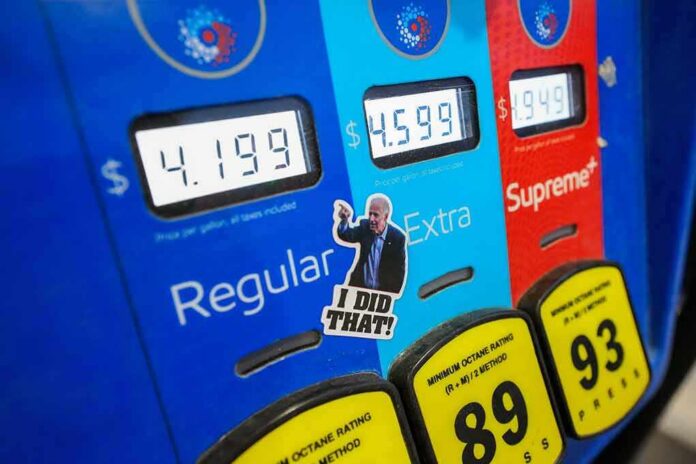
Labor Day gas prices broke the holiday record, topping four dollars a gallon nationwide and straining family budgets.
Story Highlights
- AAA said Labor Day gas prices set a new holiday record, above the old $3.82 mark from 2012.
- AAA reported a national average around $4.14 over the holiday period, the highest ever for this time of year.
- Reuters said prices were expected to exceed four dollars on Labor Day, beating 2012’s level.
- Local reports showed sharp regional jumps, like Philadelphia at $4.19 per gallon.
Record Labor Day Price Breaks the Four-Dollar Barrier
AAA reported the national average gas price has never before been above four dollars on Labor Day, with the prior record set at three dollars and eighty-two cents in 2012. This year, the mark fell. Drivers saw the national average climb above four dollars, setting a new holiday high and confirming the pain many felt at the pump. AAA said Labor Day weekend travelers faced the highest prices ever for this time of year, pinning the national average near four dollars and fourteen cents.
Reuters reported the average price was likely to reach about four dollars and three cents on Labor Day, beating the 2012 record. That aligns with AAA’s tracking through the long weekend. The data shows the surge was not a brief blip but held through the holiday travel window. These figures mark a clear change from recent years when some Labor Days were far cheaper, underscoring how fast costs can swing for working families.
Where Prices Stood Through the Holiday Window
AAA’s daily price board showed the national average holding above four dollars on September sixth, keeping pressure on drivers even after many returned home. That persistence means the squeeze did not end when the grills cooled. Households had to adjust plans, cut back on extras, or delay trips. Many readers wrote us to say they skipped visits with grandkids or canceled boat days because gas alone drained their weekend budget.
Local snapshots showed the jump in clear terms. In Philadelphia, AAA data cited by local media put the average at four dollars and nineteen cents. That was up thirteen cents in a week and ninety-five cents from a year ago. Those kinds of week-to-week leaps hit commuters, delivery workers, and small businesses hardest. When every fill-up costs more, the price of groceries, school supplies, and home goods usually follows.
What Drove the Spike and Why It Matters Now
Analysts and outlets linked the rise to tight supplies and strong late-summer demand, with crude oil trading higher heading into the holiday. Reuters also noted the calendar effect, saying prices were at their highest level this late in the year even if not at all-time peaks. The bottom line is simple: families paid more to travel for a key American holiday, which leaves less for savings, church events, or helping kids and grandkids with school costs.
Drivers returning home from Labor Day weekend trips are facing high gas prices across the Philadelphia region, with the national average for regular gasoline at $4.15 per gallon. NBC10’s @siobhan_mcgirl reports. https://t.co/F5hUVkLOYH
— NBC10 Philadelphia (@NBCPhiladelphia) September 7, 2026
Method details for holiday comparisons can vary by day and time window, but the core fact stands: AAA and major outlets reported a new Labor Day record and prices above four dollars nationwide. For readers who remember filling up for under three dollars not long ago, this feels like whiplash. Energy policy matters. America needs abundant, reliable, affordable fuel. That means more supply, fewer choke points, and permitting that puts drivers, truckers, and families first.
Sources:
zerohedge.com, nextgenauto.us, reuters.com, eciks.org